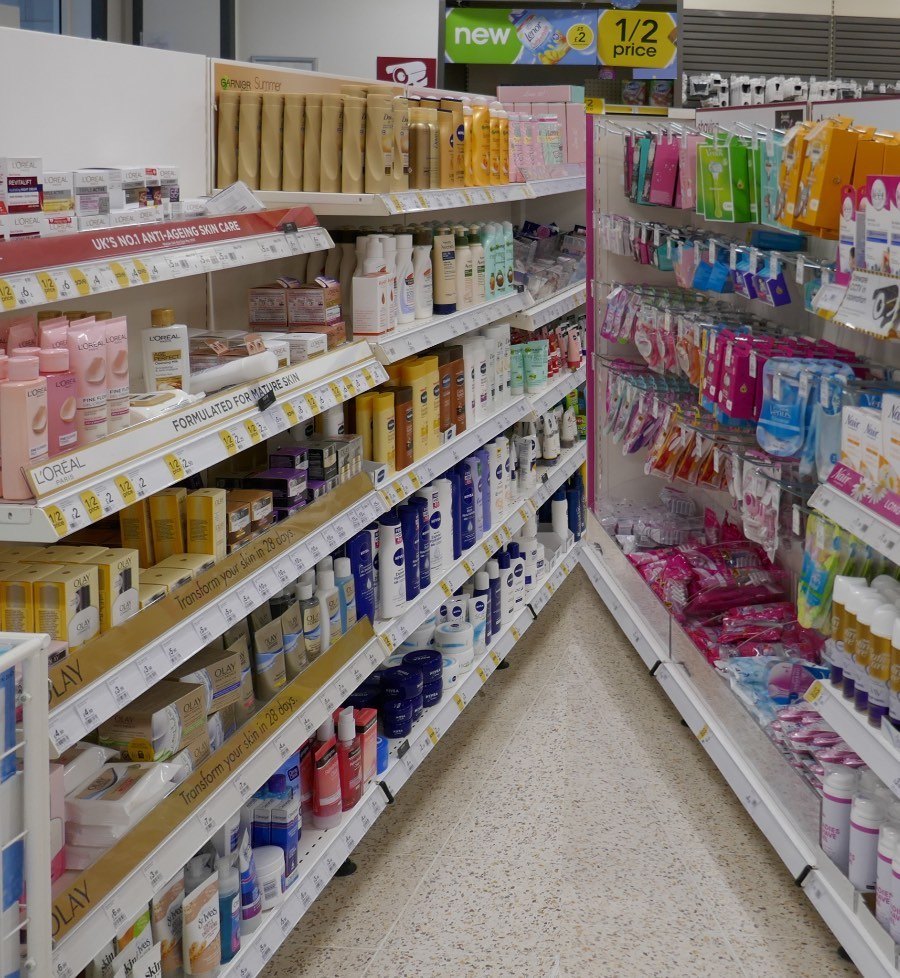
The most efficient way to find skincare products nearby is to decide which product type you need first, then check local retailer inventory or a brand’s provider locator before you go. For most routine shopping, start with the basics: cleanser, moisturizer, and daytime broad-spectrum SPF. Add a serum, exfoliant, eye product, or treatment only when it matches a specific concern and the product category is clear.
- Where to look for skincare products nearby
- What to buy first
- How to compare local skincare options
- When a provider locator is useful
- A focused local shopping plan
- Sources
Where to look for skincare products nearby
The best place to shop depends on whether you need quick pickup, broad comparison, or a product line connected to a provider network.
| Where to shop | Best for | Check before leaving home |
|---|---|---|
| Mass retailers | Affordable basics and convenient pickup | Store location, pickup status, delivery options, size, and price |
| Beauty retailers | Comparing many skincare categories in one place | Product category, pickup eligibility, and whether the item fits your routine |
| Brand provider locators | Finding nearby providers connected with a specific skincare brand | Provider location, hours, and whether product guidance or treatments are offered |
| Specialty online retailers | Comparing premium or professional-positioned products | Size, price, shipping timing, and whether local pickup is available |
Mass retailers for convenient essentials
Large retailers are often the simplest place to replace an everyday cleanser, moisturizer, acne wash, lip balm, or sunscreen. Target’s skincare listings show examples of store-level product details such as price, package size, reviews, “only left” quantities for some items, pickup timing, delivery timing, and shipping estimates.
Use those details to avoid a wasted trip. Confirm that the selected store is the one you actually plan to visit, compare the exact size and product name, and use pickup when the site offers it for the item you want. If Target is your easiest nearby option, this guide to skincare brands at Target can help you narrow the aisle before you shop.
Beauty stores for broader comparison
A beauty retailer is useful when you want to compare textures, routine steps, and product categories side by side. Ulta Beauty organizes skincare across cleansers, moisturizers, sunscreens, serums, treatments, exfoliants, eye products, and masks. Its routine guidance identifies cleansing, moisturizing, and daytime broad-spectrum SPF as a foundation, with a serum or treatment added for concerns such as hydration, acne, or fine lines.
That breadth is helpful, but it can also make a simple trip feel larger than it needs to be. If your immediate need is a moisturizer, compare moisturizers first. If your concern is sunscreen, start in sun protection instead of building an entirely new routine around a display.
Specialty websites for products that are harder to compare locally
Some shoppers use specialty beauty sites to compare premium or professional-positioned skincare before deciding whether to buy online or look for a local source. Dermstore lists examples such as broad-spectrum SPF products, hydrating toners, clarifying serums, retinal serums, eye creams, and antioxidant serums across a wide price range.
A specialty website does not automatically answer the “near me” part of the search unless it offers a local pickup option. Use it as a comparison tool when nearby stores do not carry the formula, brand, or size you want.
What to buy first
If you are starting or simplifying a skincare routine, buy products that perform distinct jobs rather than several products with overlapping promises.
- Cleanser: A product meant to wash away dirt, oil, sunscreen, and daily residue.
- Moisturizer: A product meant to support hydration and comfort.
- Daytime sunscreen: A broad-spectrum SPF product for daytime use.
- One targeted product, if needed: A serum, treatment, exfoliant, or eye product selected for a defined concern such as hydration, acne, fine lines, uneven tone, or texture.
This order matches the basic structure described in Ulta’s skincare routine guidance: cleanse, use a concern-focused serum or treatment if needed, moisturize, and finish with broad-spectrum SPF during the day.
For acne-focused shopping, a separate guide to a basic acne skincare routine explains how to build around one main treatment and supporting basics. Men who want a minimal starting point can use the same general structure; these three skincare essentials for men cover cleanser, moisturizer, and sunscreen as the practical base.
How to compare local skincare options

Once you find products near you, compare them by function, formula details, size, and fit with your current routine.
Match the product to the job
Retail skincare pages often group products by category: cleansers, moisturizers, sunscreens, serums, treatments, exfoliants, eye products, masks, toners, and skincare systems. Those categories matter because products with similar marketing language may serve different roles.
A hydrating serum is not automatically a moisturizer. An exfoliant is not a cleanser simply because it is used near the cleansing step. A sunscreen should be chosen as sun protection, not as a substitute for every other daytime skincare need.
Check active ingredients and product category together
Products for acne, exfoliation, tone, texture, or signs of aging may highlight ingredients such as benzoyl peroxide, salicylic acid, glycolic acid, lactic acid, retinoids, niacinamide, peptides, hyaluronic acid, or vitamin C. Obagi’s product categories and ingredient listings include examples across cleansers, toners, serums and treatments, hydrators and moisturizers, peels and exfoliants, retinol, sunscreens, and skincare systems.
Use the ingredient list to clarify what you are buying, but do not treat a familiar ingredient name as the whole decision. The product type, directions, amount, and intended concern all affect whether it belongs in your cart.
Compare size as well as price
The shelf price is only part of the comparison. Product listings may show ounces, milliliters, unit price, or size ranges. Target’s skincare listings, for example, include package sizes and sometimes unit prices for products such as acne wash and moisturizers. Dermstore’s listings also show sizes for many higher-priced products, including serums, sunscreens, toners, and eye creams.
When two products look similar, compare:
- Ounces or milliliters
- Price per ounce, when shown
- How often the directions say to use it
- Whether it is for face, body, lips, scalp, or eye area
- Whether you need the full size or a smaller option first
Premium pricing by itself does not prove that a product is the right fit. The better local buy is the product that matches your intended step, concern, size preference, and budget.
Verify the exact variant
Closely related skincare products can have similar names and packaging. Before reserving or buying locally, check:
- Full product name
- Brand
- Product category
- Face, body, lip, scalp, or eye-area use
- Active ingredient and strength, when displayed
- Size
- SPF and broad-spectrum labeling for sunscreen
- Fragrance-free or fragranced status, if that matters to your preference
- Pickup, delivery, or shipping option
This is especially useful when a brand sells multiple versions of a cleanser, moisturizer, sunscreen, or treatment.
When a provider locator is useful
Use a brand’s provider locator when you are looking for a specific professional-positioned skincare line or want guidance connected to that brand’s provider network. IMAGE Skincare’s locator says it helps shoppers find an IMAGE Skincare provider nearby for personalized, expert guidance and treatments tailored to skin needs. Obagi’s physician finder is presented as a way to find a skincare physician while the site also organizes Obagi products by categories, concerns, and ingredients.
A locator result should be treated as a starting point, not a complete product availability check. Before traveling, contact the provider and ask:
- Whether the location sells the product line on-site
- Whether the exact product and size you want are available
- Whether you need an appointment
- Whether guidance is offered as part of a visit, treatment, or separate consultation
- What the location’s return policy is
This approach is most useful when you already know the brand you want or when the brand’s own site points shoppers toward local providers rather than ordinary retail pickup.
A focused local shopping plan
Use this process to turn a broad “skincare products near me” search into a practical purchase:
- Name the product type first. Decide whether you need cleanser, moisturizer, sunscreen, serum, exfoliant, acne product, eye product, mask, toner, or another category.
- Set the reason for buying. Replace an empty product, add daytime SPF, target acne, compare moisturizers, or find a specific brand.
- Check local inventory. Use a retailer page that shows store location, pickup, delivery, shipping, size, and price.
- Compare two or three candidates. Look at category, ingredients, size, directions, SPF details if relevant, and price.
- Confirm the exact variant. Similar packaging can hide differences in size, strength, fragrance status, or use area.
- Use a provider locator for brand-specific guidance. Contact the listed location before going if product availability matters.
- Keep the routine focused. If you are starting from scratch, buy cleanser, moisturizer, and daytime sunscreen first. If you already have those, shop for one clearly defined missing step.
The key distinction is simple: local availability helps you find a product quickly, but product function helps you choose the right one. Start with the skincare step you actually need, then use nearby inventory or a provider locator to find the closest practical match.
Sources
- Ulta Beauty: Skincare Products
- Target: Skin Care
- Obagi Medical: Find a Skincare Physician
- IMAGE Skincare: Find a Provider
- Dermstore