Disclaimer: This guide on a new skincare ingredient can make skin feel dry without causing irritation is for general education only and is not medical advice or a medical diagnosis. If you have burning, swelling, a rash, eye pain, vision changes, or symptoms that keep coming back, talk with a dermatologist, doctor, or qualified clinician.
Start With the Clearest Signal
Identify when a new skincare ingredient can make skin feel dry without causing irritation goes wrong, return to the last stable setup, and pause any change that turns inconvenience into damage or pain. Outside help is safer if burning, swelling, spreading redness, or unusual breakouts keep worsening after the newest change is removed.
Why the First Clue Matters
The location and timing of the dry feeling can reveal whether the new ingredient is changing the finish of the skin or disrupting its barrier.
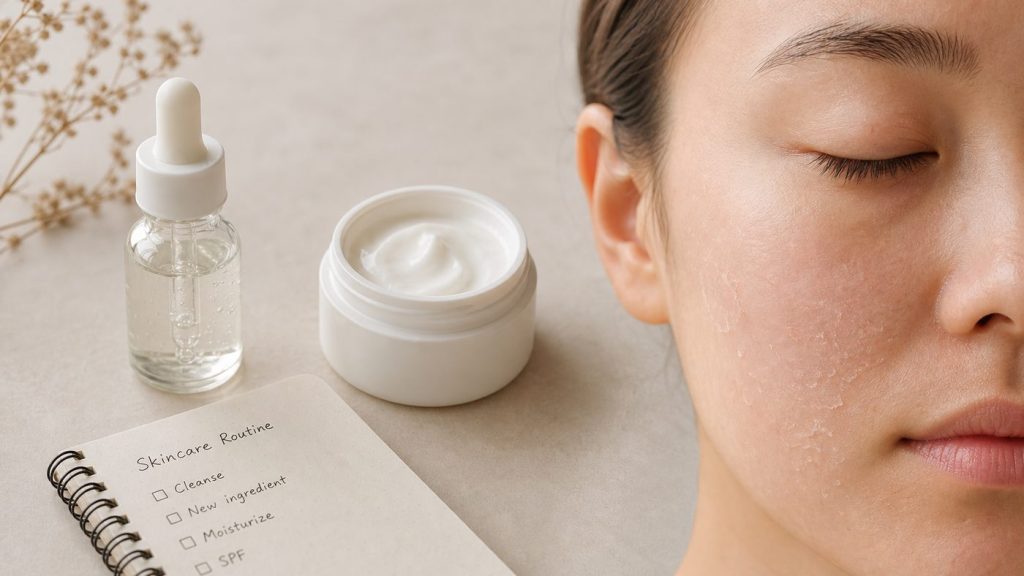
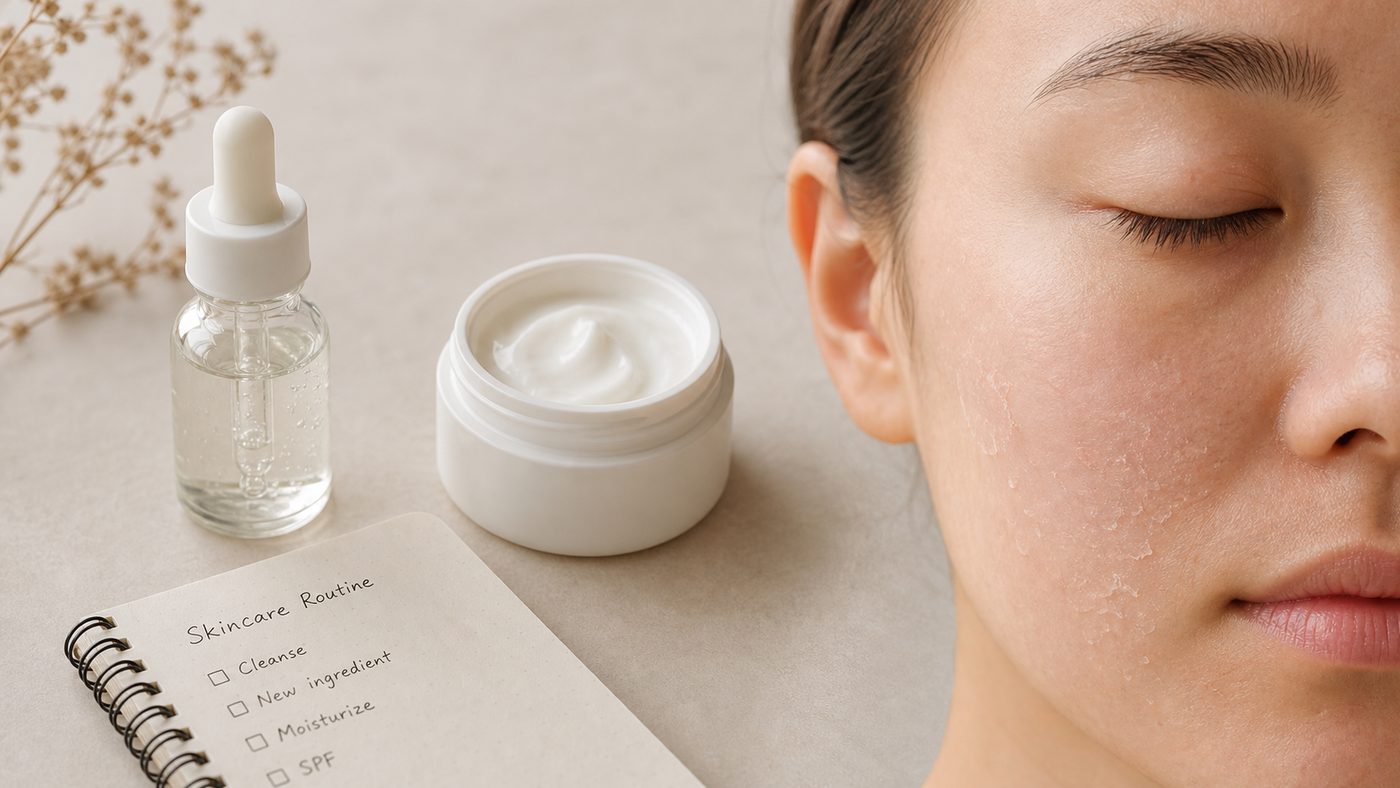
A uniform, temporary tightness that appears as a watery serum dries may come from its film-forming texture. If the sensation fades after moisturizer and does not worsen over repeated uses, the problem may be the formula's finish rather than irritation. Pilling, powdery residue, or a stretched feeling when smiling can point in the same direction.
Patchy flaking deserves more caution. Dryness around the corners of the nose, mouth, or eyes can occur where product migrates or collects. These areas are often less tolerant of retinoids, exfoliating acids, acne treatments, and low-pH formulas. Applying the same amount everywhere can expose delicate areas to more activity than they comfortably handle.
The surrounding conditions matter too. Humectants such as glycerin and hyaluronic acid attract and hold water within a formula and the upper layers of skin. But a humectant serum may still feel insufficient in dry air if it is used without a moisturizer that slows water loss.
This does not mean the humectant is pulling all the moisture out of the skin, a common oversimplification.
More often, the entire formula and routine are not offsetting evaporation well enough for the environment.
Use these distinctions as clues rather than diagnoses:
- Treat mild tightness as a formulation or moisture-balance question when it resolves after moisturizer, remains free of heat or stinging, and does not intensify with continued use.
- Treat patchy flakes as a tolerance warning when they spread with each application, appear beside the mouth or eyes, or make cleansing and moisturizing uncomfortable.
- Treat sudden pilling as a layering problem when products roll into crumbs without causing pain, especially after a water-based serum is covered quickly with a silicone-rich or oily formula.
- Treat color, odor, or texture changes inside the container as a stability problem when a serum becomes much darker, develops an unusual smell, separates, or no longer matches its original consistency.
L-ascorbic acid illustrates the last point. Vitamin C formulas may gradually change color through oxidation, but a substantial shift toward dark orange or brown can indicate degradation. Oxidation may reduce reliability and change how the formula behaves on the skin. Follow the manufacturer's storage and disposal directions rather than trying to compensate by applying more.
Why the Usual Fix Can Backfire
When skin feels dry, the instinctive response is often to add more serum, exfoliate the flakes, or cover everything with a heavy layer. Each move can make the underlying problem harder to interpret.
Ingredient stacking creates another failure point. L-ascorbic acid and niacinamide are not automatically incompatible, despite persistent claims that they must never be used together. Many people can use both. Yet combining several concentrated serums can still be uncomfortable because of low pH, solvents, total product load, or another active in the routine. Chemical compatibility does not guarantee skin tolerance.
Oil-versus-water layering can produce misleading dryness as well. A face oil placed before a water-based treatment may create an uneven barrier that limits spread. Reversing the order may improve application, but several slippery layers can then pill beneath sunscreen.
Long timing gaps are not always required; products usually need only enough time to settle so they are not being rubbed aggressively into one another.
Label directions take priority when an OTC drug or prescription treatment specifies how it should be applied.
A cautionary failure pattern can develop quickly. Consider an illustrative routine in which someone introduces an exfoliating acid, keeps a retinoid on alternate nights, and adds a strong vitamin C serum in the morning. By day 10, dryness has become burning redness.
The person assumes the reaction is purging and continues, but purging does not adequately explain widespread burning, rawness, or stinging from plain moisturizer.
The barrier becomes compromised, and the routine has to be stripped back while the skin recovers.
Purging is mainly discussed with ingredients that accelerate cell turnover and may bring existing clogged pores to the surface. It generally looks like acne in areas already prone to breakouts. Burning, itching, swelling, rash-like bumps, and diffuse redness point away from a simple purge.
The American Academy of Dermatology's acne resources can help explain acne treatment expectations, but a clinician should assess a severe or unclear reaction.
The safer adjustment is usually subtraction, not another purchase. A plain moisturizer already tolerated by the skin may be enough to address mild dryness. Spending money on a richer cream, barrier serum, facial oil, or soothing mask is unnecessary until the new ingredient's frequency, amount, and place in the routine have been examined.
A Small Test Before Changing the Rest
Keep the stable parts of the routine unchanged and reduce uncertainty around the new formula. Do not test through active burning, swelling, hives, or a spreading rash.
Start by checking the product itself. Confirm that it is within its labeled expiration or period-after-opening guidance. Look for unexpected separation, crystals, major oxidation, a changed smell, or a dispenser that may have allowed contamination. Cosmetics are regulated differently from drugs, and the FDA cosmetics information explains the agency's role and consumer reporting options.
If the product is an OTC acne treatment or another nonprescription medicine, follow its Drug Facts label and consult the FDA's OTC medicine guidance.
Then simplify the application:
- Pause other optional actives while evaluating the new ingredient, but continue a tolerated gentle cleanser, moisturizer, and daytime sunscreen unless a clinician has advised otherwise.
- Apply the smallest label-supported amount to dry skin when the directions permit, keeping it away from eyelids, lip corners, and creases where migration can concentrate the formula.
- Reduce frequency rather than diluting the product in its container, because adding water or mixing directly into the bottle can alter preservation and stability.
- Place a tolerated moisturizer after a watery serum when the product directions allow, and avoid sealing a strong active under a heavy occlusive until tolerance is clear.
- Record the application time, other actives used that day, product appearance, and symptoms through the next day, limiting the log to details that can guide a stop-or-continue decision.
Before wider use, the American Academy of Dermatology suggests testing a skincare product on a small area twice daily for seven to 10 days, using the normal amount and thickness. Its skin-care guidance also explains what to do if a reaction appears.
Patch testing can reduce uncertainty, but it cannot guarantee that the face will tolerate a product or predict problems caused by long-term use, sun exposure, or combinations with other ingredients.
If mild dryness settles after lowering frequency and supporting the skin with an existing moisturizer, gradual use may be reasonable. If dryness returns more strongly after every application, that repeatable pattern matters more than enthusiastic reviews or claims that everyone needs time to adjust.
Price does not determine tolerance. A more expensive formula may offer better packaging, a different vehicle, or improved cosmetic elegance, but it can still contain an ingredient or solvent that does not suit the routine.
Paying more makes sense only when a specific formulation limitation has been identified, such as an unstable dropper bottle, an intolerable fragrance, or a texture that repeatedly prevents even application.
Otherwise, changing frequency and removing competing actives costs nothing and provides clearer information.
When Outside Help Is the Safer Next Step
A dermatologist or other qualified clinician can help distinguish irritant contact dermatitis, allergic contact dermatitis, acne changes, eczema, rosacea, and other conditions that can look similar without being managed the same way. Bring the ingredient list, packaging, application frequency, and a record of other products used around the reaction.
The NIH National Library of Medicine provides access to biomedical literature, but individual studies and ingredient reviews cannot diagnose a specific skin reaction.
The questions I wish I had asked sooner
I'm on day 10 and my face still burns when I wash it – what if this is not purging?
I treat burning as a stop signal from my own skin, not as proof that the routine is working. I pause actives for 48 hours, use only a gentle wash and moisturizer, and get help if heat, swelling, or spreading redness keeps building.
I added one active three nights ago and now my skin stings – I'm worried I ruined my barrier, so how do I back out without changing everything?
I remove the newest active first because that gives me the cleanest read. I keep the rest boring for three nights, track tightness after washing, and only re-test on a small jawline patch when the sting is gone.
My cheeks are still red after three days and I'm honestly stuck – when do I stop testing at home?
I stop testing when discomfort is spreading instead of settling. If sleep, washing, or plain moisturizer hurts, I do not add another experiment; I step back and ask a qualified clinician because guessing can make recovery longer.
Back to top