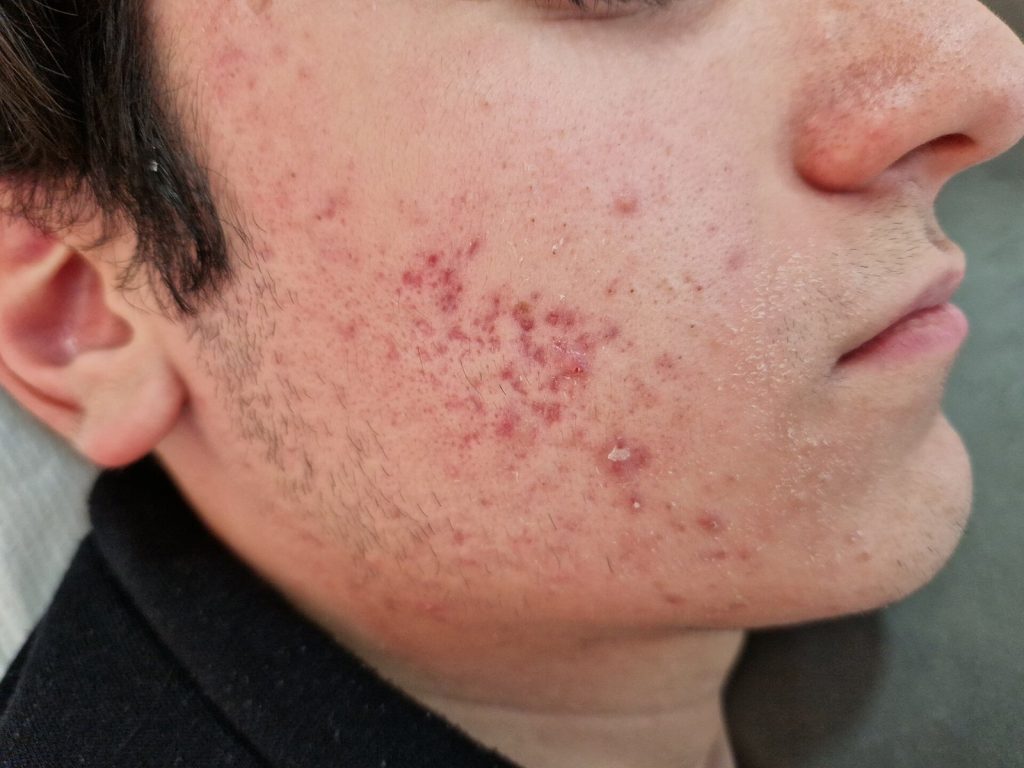
The most useful skincare products for acne are not necessarily the ones that create the longest routine. Start with a gentle cleanser, a lightweight noncomedogenic moisturizer, and broad-spectrum sunscreen, then add one acne treatment chosen for your main concern. Salicylic acid is a practical option for clogged pores and blackheads, benzoyl peroxide targets acne-causing bacteria and inflammation, and adapalene can treat and help prevent recurring acne. Hydrocolloid patches are optional tools for individual pimples, not a replacement for a daily routine.
- The four product roles that matter most
- How to choose an acne-fighting ingredient
- Acne products worth comparing
- A simple morning and nighttime routine
- Common buying mistakes
- When at-home skincare is not enough
- Sources
The four product roles that matter most
An acne routine needs to clean the skin, address breakouts, maintain comfortable hydration, and protect against the sun. That usually means four product roles rather than several overlapping serums and spot treatments.
1. A cleanser you can use consistently
A cleanser removes makeup, oil, sunscreen, and surface debris. It can be a gentle, non-medicated formula or an acne cleanser containing an active ingredient such as salicylic acid or benzoyl peroxide.
A medicated cleanser may suit someone who wants acne treatment built into a familiar step. A gentle cleanser may be the better companion to a leave-on treatment because it avoids adding another active ingredient to the same routine.
If you wear makeup, remove it at night before cleansing. A dermatologist-informed acne routine published by Cosmopolitan identifies cleanser, moisturizer, and sunscreen as the three basic steps, with treatments added according to the skin concern (Cosmopolitan).
2. One targeted acne treatment
The treatment is the step that should match the type of acne you are trying to manage. Salicylic acid, benzoyl peroxide, and adapalene do not have identical roles, so buying all three at once is rarely the clearest starting point.
Choose one primary active, follow the product directions, and evaluate how comfortably it fits into the rest of your routine. Starting several medicated products simultaneously can make it difficult to tell which one is helping or which one is making the routine uncomfortable.
3. A lightweight, noncomedogenic moisturizer
Moisturizer is not only for dry skin. Acne treatments can make comfort and hydration more important, while a lightweight noncomedogenic formula is designed to moisturize without being positioned as pore-clogging.
CeraVe includes a noncomedogenic moisturizer among the basics of an acne routine, while Neutrogena recommends lightweight moisturizing to keep skin comfortable during acne treatment (CeraVe; Neutrogena). These are manufacturer recommendations rather than proof that a particular moisturizer will work for everyone, but they support a useful buying principle: hydration and acne treatment should not be treated as opposing goals.
4. Broad-spectrum sunscreen
Sunscreen completes the basic daytime routine. Look for a broad-spectrum sunscreen or a daytime moisturizer that includes broad-spectrum protection. The ideal formula is one you can apply consistently and comfortably with your other products.
You generally do not need a separate essence, toner, facial mist, scrub, peel, and multiple serums to establish an acne routine. If you prefer fewer steps, this minimalist approach to skincare steps offers a useful framework for separating essential products from optional ones.
How to choose an acne-fighting ingredient
The front label matters less than the active ingredient, its format, and the problem it is intended to address.
| Main concern | Ingredient or product type to consider | What it contributes | Key buying consideration |
|---|---|---|---|
| Blackheads, whiteheads, and clogged-looking pores | Salicylic acid | Exfoliates and helps clear excess oil and dead skin associated with clogged pores | Available in cleansers and leave-on products; avoid duplicating it unintentionally |
| Inflamed breakouts | Benzoyl peroxide | Targets acne-causing bacteria and has anti-inflammatory activity | Decide whether you prefer a wash-off cleanser or leave-on treatment |
| Recurring acne and uneven texture | Adapalene 0.1% | A topical retinoid used to treat and help prevent acne while supporting cell turnover | Follow the product label and keep the surrounding routine simple |
| An individual surface pimple that needs protection | Hydrocolloid patch | Covers the spot and discourages picking | Best treated as a short-term accessory, not a full acne regimen |
| Dryness or discomfort during treatment | Lightweight noncomedogenic moisturizer | Supports hydration and skin comfort | Choose based on feel and compatibility with the treatment step |
Salicylic acid for clogged pores
Salicylic acid is a beta-hydroxy acid commonly used for comedonal acne—the whiteheads and blackheads associated with clogged pores. It helps exfoliate within oily, congested areas rather than functioning only as a surface scrub.
CeraVe’s Acne Control Cleanser and Acne Control Gel both contain 2% salicylic acid, according to the brand. That makes them examples of two different delivery formats, but it does not mean every user needs both products at the same time (CeraVe).
A salicylic acid cleanser is a straightforward choice if you want a wash-off format. A leave-on gel gives the active ingredient a different role in the routine but also adds another product that must work alongside moisturizer and sunscreen.
Benzoyl peroxide for inflamed acne
Benzoyl peroxide is a well-established over-the-counter acne ingredient that acts against acne-associated bacteria, has anti-inflammatory activity, and can help break up clogged material in pores (acne-prone skin product guide). It is sold in cleansers and leave-on products.
For a first purchase, choose the format rather than collecting several benzoyl peroxide products. A wash may be easier to place within an existing routine, while a leave-on product creates a dedicated treatment step. Product strength, directions, and warnings vary, so the package instructions should guide use.
Adapalene for treatment and prevention
Adapalene 0.1% is a topical retinoid available in products such as Differin Gel. Neutrogena describes adapalene as an ingredient that treats and helps prevent acne while supporting cell turnover, which may also improve the appearance of uneven texture and post-acne marks (Neutrogena). CVS also identifies Differin Adapalene Gel 0.1% as an over-the-counter retinoid option for acne (CVS).
Because adapalene already serves as the main treatment step, it makes sense to pair it with uncomplicated supporting products rather than automatically adding exfoliating toners, acid serums, and medicated cleansers.
If you are pregnant, trying to become pregnant, or reviewing a routine for pregnancy, check ingredient-specific guidance before selecting a retinoid. This guide to skincare products to avoid during pregnancy addresses that separate buying decision.
Hydrocolloid patches for isolated pimples
Hydrocolloid patches can cover individual pimples, reduce access for picking, and create a protected environment over the spot. CVS notes that patches come in small circles as well as larger strips and cites their use when a pimple is enlarging or has opened (CVS).
They are most useful as an accessory for a particular blemish. They do not prevent acne across the rest of the face and should not displace cleanser, moisturizer, sunscreen, or an appropriate treatment.
Acne products worth comparing
The examples below illustrate useful product categories. Inclusion does not establish that one formula is universally superior, and manufacturer performance claims may not translate into the same result for every person.
| Product | Category | Why it may fit | What to check before buying |
|---|---|---|---|
| CeraVe Acne Control Cleanser | 2% salicylic acid cleanser | Combines cleansing with a clogged-pore active | Whether you are already using salicylic acid elsewhere |
| CeraVe Acne Control Gel | 2% salicylic acid leave-on gel | Adds salicylic acid as a dedicated treatment step | Whether a leave-on active fits your current routine |
| Differin Adapalene Gel 0.1% | Topical retinoid | Designed to treat and help prevent acne | Label directions, warnings, and compatibility with other actives |
| Neutrogena Oil-Free Acne Wash | Acne cleanser | Offers a medicated cleansing step within the brand’s acne range | The exact active ingredient and directions on the version you are purchasing |
| Neutrogena Hydro Boost Gel Cream | Lightweight moisturizer | Marketed as a light hydrating option that works under acne treatments | Whether the specific formula meets your fragrance and texture preferences |
| Differin Restorative Night Moisturizer | Night moisturizer | Positioned as lightweight hydration that reduces water loss | Whether you need a separate nighttime moisturizer |
| Hero Cosmetics Mighty Patch or similar hydrocolloid patches | Blemish patch | Covers isolated pimples and helps discourage picking | Patch size, adhesion, and whether the blemish is suitable for a patch |
Do not choose solely by brand familiarity. Compare active ingredients, product format, directions, and the role each item will play. If two products occupy the same role, you probably do not need both initially.
Shoppers comparing broader retailer selections can also use this overview of skincare brands at Target to distinguish acne-focused ranges from general skincare brands.
A simple morning and nighttime routine
A workable routine keeps the treatment step clear and the supporting steps predictable.
Morning
- Cleanse: Use a gentle cleanser or a medicated cleanser selected as your primary acne product.
- Treat if directed: Apply your chosen morning treatment according to its label. Skip this step if the cleanser already provides your only acne active.
- Moisturize: Use a lightweight, noncomedogenic moisturizer if it is not already combined with your sunscreen.
- Protect: Apply broad-spectrum sunscreen or a moisturizer with broad-spectrum sunscreen.
Night
- Remove makeup: Use a suitable makeup remover if needed.
- Cleanse: Wash with a gentle cleanser, especially if your main treatment is a leave-on product.
- Treat: Apply salicylic acid, benzoyl peroxide, or adapalene according to the selected product’s directions. One main treatment is a clearer starting point than multiple overlapping actives.
- Moisturize: Finish with a lightweight moisturizer that keeps the routine comfortable.
The central decision is where the active ingredient belongs. If it is in the cleanser, the rest of the routine can remain gentle. If it is a leave-on gel, use a cleanser and moisturizer that support rather than duplicate that treatment.
Common buying mistakes
Buying several acne actives before establishing the basics
A shelf full of treatments can create duplication without addressing cleansing, hydration, or sun protection. Establish the basic routine first, then select the treatment with the best match for the dominant concern.
Treating moisturizer as optional
Removing moisturizer does not make an acne routine more intensive. It removes a product intended to maintain hydration and comfort while treatment products do their job. Look for lightweight and noncomedogenic wording if richer creams feel unsuitable.
Using patches as preventive treatment
A patch covers one spot. It can protect a blemish from picking, but it does not manage clogged pores or recurring breakouts elsewhere.
Shopping by claims instead of active ingredients
Terms such as “clarifying,” “pore refining,” or “blemish control” do not reveal whether a product contains salicylic acid, benzoyl peroxide, adapalene, or no acne medication at all. Read the Drug Facts or active-ingredient panel when evaluating an over-the-counter acne treatment.
Adding products for marks before controlling the routine
Ingredients marketed for post-acne marks can add complexity. CVS identifies glycolic acid, vitamin C, and niacinamide as ingredients that may be considered for discoloration, but those products have a different purpose from a primary acne treatment (CVS). If active breakouts are the immediate concern, establish a tolerable acne routine before expanding it to address leftover marks.
When at-home skincare is not enough
Over-the-counter products are most practical when acne is manageable within a consistent home routine. Seek professional evaluation if the acne is painful, interferes with daily activities, or does not improve with at-home care. CeraVe includes those situations among its reasons to visit a dermatologist rather than continuing to switch products without guidance (CeraVe).
The next useful step is to identify your main concern—clogged pores, inflamed breakouts, recurring acne, or an isolated pimple—and buy only the cleanser, treatment, moisturizer, and sunscreen needed to address it. That creates a routine you can actually evaluate before deciding whether another product has a job to do.
Sources
- CeraVe: Skincare Products for Acne-Prone Skin
- Neutrogena: Acne Products & Treatments
- Acne-Prone Skin: The Ultimate Guide to Products
- Cosmopolitan: Best Skincare Routine for Acne
- CVS: Drugstore Products That Can Help Manage Acne