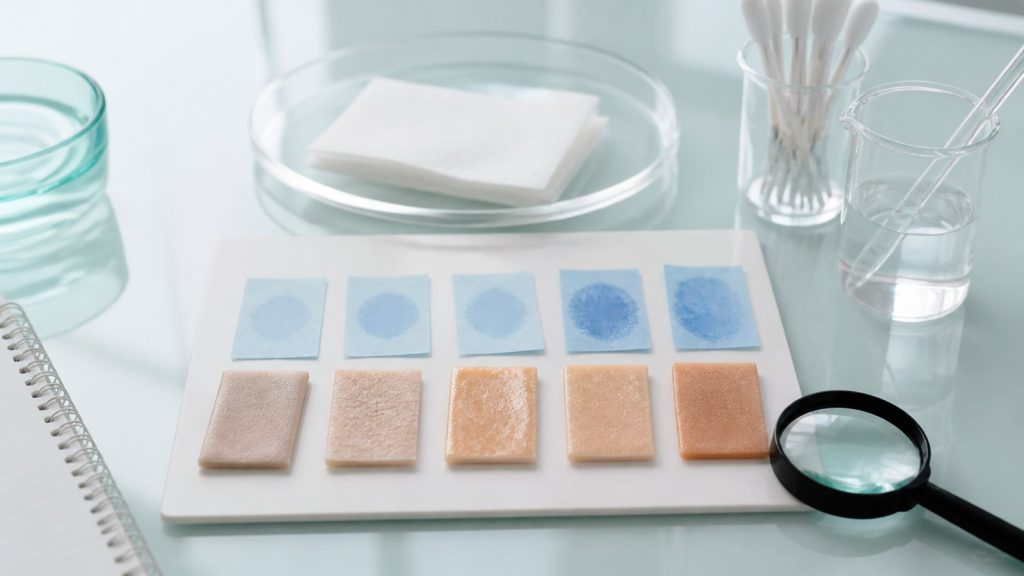
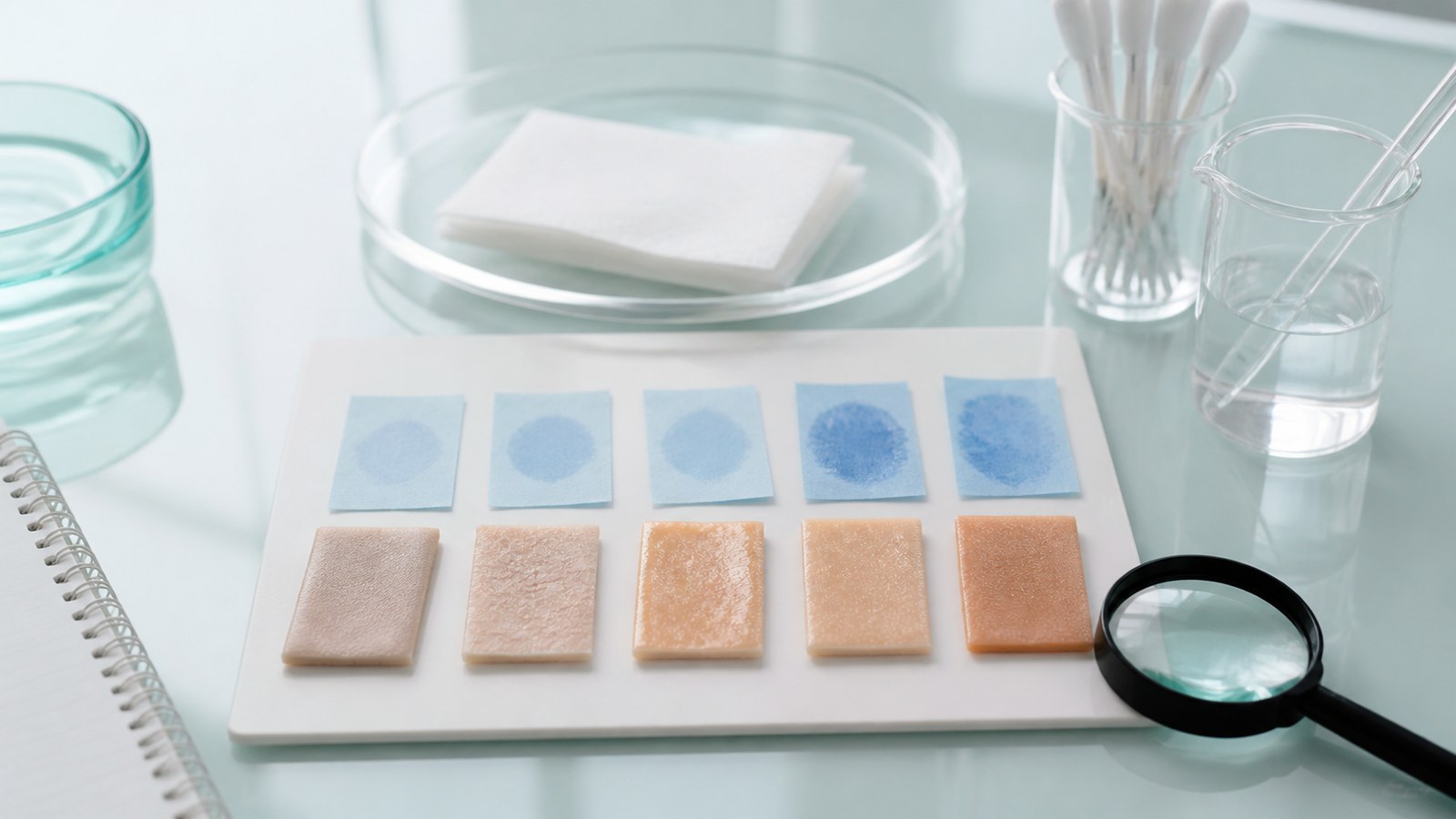
The Answer: Normal, Dry, Oily, Combination, Sensitive
The five basic skin types are normal, dry, oily, combination, and sensitive. These labels describe broad patterns in oil production, moisture retention, comfort, and visible behavior. They are useful starting categories, not medical diagnoses or permanent identities.
Normal skin generally feels comfortable and balanced. Dry skin tends to lack oil and may feel rough or tight. Oily skin produces more sebum and often looks shiny. Combination skin has noticeably different patterns across the face, such as an oily forehead and dry cheeks. Sensitive skin is more likely to react with stinging, burning, itching, or redness after exposure to products or environmental triggers.
Your pattern can shift with age, hormones, climate, season, medication, and cleansing habits. A shiny nose after a humid commute does not automatically mean oily skin, just as temporary flaking does not prove that your underlying type is dry. If you have burning, swelling, a rash, eye pain, vision changes, or symptoms that keep coming back, talk with a dermatologist, doctor, or qualified clinician.
Skin Types Versus Temporary Skin Conditions
Skin type is the baseline pattern your face tends to return to when it is comfortable and not being pushed by weather, over-cleansing, illness, or a new product. A skin condition is a current state that may sit on top of that baseline.
Dehydration is a common source of confusion. Dehydrated skin lacks water, while dry skin generally produces less oil. An oily face can still be dehydrated. It may look shiny but feel tight, show fine surface lines, or develop patchy flakes after washing. Calling that pattern simply "oily" can lead to more aggressive cleansing, which may make the tightness and discomfort worse.
Sensitivity creates another gray area. Some classification systems name only four types – normal, dry, oily, and combination – and discuss sensitivity as a condition or tendency rather than a separate type. The five-type model includes sensitive skin because reactivity can strongly influence how a person reads the skin and selects products. Both models can be useful as long as sensitivity is not mistaken for a diagnosis.
Temporary conditions that can obscure your baseline include:
- Treat recent tightness as a possible temporary condition when it began after hotter water, extra washing, or cold weather; do not relabel your skin from one uncomfortable morning.
- Read new flaking in context when it appears only around the mouth, nose, or one irritated patch; widespread or persistent scaling needs professional assessment rather than a type label.
- Compare shine across separate facial zones when the forehead and nose become oily but the cheeks remain comfortable or dry; do not classify the entire face from the brightest area.
- Pause self-classification when redness, itching, swelling, or pain keeps returning; those symptoms may reflect a skin disorder, allergy, or irritation that a home observation cannot identify.
Acne is also not a skin type. People with dry, oily, combination, normal, or sensitive skin can develop breakouts. The American Academy of Dermatology provides educational guidance on skin care and when symptoms deserve medical attention, while its acne resource explains why persistent acne may require more than a change in basic product texture.
Skin Type Shapes Skincare Product Selection
A skin-type label should narrow your options, not dictate an elaborate regimen. Its main value is helping you avoid obvious mismatches in cleanser strength, moisturizer texture, and product residue.
Dry skin often tolerates creamy, non-stripping cleansing and richer moisture support better than repeated foaming washes. Oily skin may prefer lighter textures and thorough but gentle cleansing. Combination skin often needs restraint: coating the entire face with a heavy layer because the cheeks flake can leave the T-zone congested or greasy, while treating every area like the oily nose can make the cheeks feel tighter.
Sensitive skin benefits from simpler formulas, careful patch testing, and fewer simultaneous changes.
The label has limits. "Rich" does not automatically mean suitable for every dry face, and "oil-free" does not guarantee comfort for every oily one. Cosmetics can vary greatly in formulation, and the U.S. Food and Drug Administration does not preapprove most cosmetic products before they reach the market. Marketing terms therefore cannot replace observation of comfort, residue, and repeat reactions.
One frequent failure pattern starts with a mistaken label. A person sees a shiny T-zone, assumes the whole face is extremely oily, and washes more often or uses hotter water. The cheeks begin to feel tight and develop patchy flaking, yet the nose still becomes shiny. More cleansing follows because that shine is interpreted as proof that the original label was correct.
The outcome is no longer a readable baseline; it is skin behavior mixed with the effects of repeated stripping.
The safer response is to return to the last simple setup that felt comfortable. Avoid scrubbing. Use lukewarm rather than hot water, and stop adding products while the skin is stinging, hot, red, or increasingly tight. This does not diagnose the cause, but it reduces the number of competing variables. Persistent symptoms belong with a qualified clinician.
Spending more is usually unnecessary when the issue is basic classification. You can learn a great deal from the cleanser and moisturizer you already tolerate, consistent lighting, and observations made across several ordinary days. Extra expense makes sense only when there is a clear unmet need, such as a texture that repeatedly leaves uncomfortable residue or a cleanser that predictably causes tightness despite appropriate use.
Price alone does not reveal fit.
How Each Skin Type Typically Appears
The descriptions below are patterns, not pass-or-fail requirements. Focus on what happens repeatedly across the face rather than one pore, blemish, or weather-driven afternoon.
- Normal skin: Observe whether your face stays broadly comfortable when it is clean and protected under ordinary conditions; classify it as normal only when neither persistent oiliness nor recurring dryness dominates. Pores may be visible, and occasional blemishes can occur. "Normal" means relatively balanced, not poreless or flawless.
- Dry skin: Look for recurring roughness, tightness, dullness, or fine flaking when those signs appear across more than one isolated patch; do not assume dryness from flakes that began directly after over-washing. Dry skin usually produces less sebum, so it may have little shine and may feel uncomfortable after cleansing. Cracking, severe scaling, or persistent itching exceeds what a type label can explain.
- Oily skin: Compare shine on the cheeks as well as the forehead, nose, and chin when oil returns consistently during an ordinary day; do not use sweat, moisturizer sheen, or humid-weather shine as the only evidence. Oily skin may have more visible pores and can be prone to clogged pores, but neither feature proves the type by itself.
- Combination skin: Read each facial zone separately when the T-zone becomes oily while the cheeks remain normal, tight, or flaky; avoid forcing the entire face into one category. The contrast may become stronger during seasonal changes. Product residue can complicate the picture, so distinguish natural oil from a slick layer that appeared immediately after moisturizer.
- Sensitive skin: Track repeated discomfort when products, wind, temperature shifts, or washing provoke stinging, itching, burning, or redness; stop the observation if symptoms become painful or persistent. Sensitive skin can also be oily, dry, or combination, which is why the categories overlap. A clinician should evaluate recurring rashes, swelling, or reactions that cannot be connected safely to a temporary trigger.
The strongest distinction is often comfort rather than appearance. Dry and dehydrated oily skin may both flake, but the oily pattern continues to produce sebum. Sensitive and dry skin may both feel tight, but sensitivity is more closely associated with reactivity. Combination skin is defined by contrast between zones, while normal skin lacks a persistent extreme.
Identify Your Skin Type Before Shopping
Use a quiet observation period instead of changing several products at once. This is an informal reading method, not a validated diagnostic test.
- Wash your face with lukewarm water and a familiar mild cleanser on an ordinary day; do not scrub, use unusually hot water, or introduce a new product during the observation.
- Leave the skin bare for about 30 minutes if doing so remains comfortable; apply your usual moisturizer sooner if tightness or stinging develops, because provoking discomfort will distort the outcome.
- Examine the forehead, nose, chin, and cheeks separately in consistent lighting after the immediate washing effects have settled; do not classify your skin from shine caused by sweat or visible product residue.
- Repeat the observation across several ordinary days when weather and activity are reasonably typical; treat one unusually cold, hot, or humid day as limited evidence.
- Record recurring comfort, tightness, flakes, shine, and redness in each zone when the same pattern returns; seek professional guidance if pain, swelling, rash, severe itching, or persistent scaling interrupts the process.
Once you have a likely category, make only modest product-selection adjustments. A dry area may need a more cushioning texture, while an oily area may need less residue. Combination skin does not always require separate products, but it can benefit from applying different amounts to different zones.
Sensitive skin calls for greater caution with any new formula and a patch test performed according to the product directions or clinician guidance.
Do not let reviews overrule your own tolerance. Another person's "lightweight" moisturizer may pill over your existing layers, and a widely praised cleanser may still leave your cheeks tight. Reviews can describe texture, packaging, and broad tendencies. They cannot establish your skin type or predict a reaction.
The questions I wish I had asked sooner
My nose looks like an oil slick by lunch, but my cheeks flake after washing. Am I oily or dry?
That split pattern may fit combination skin, but dehydration or overly aggressive cleansing can imitate it. The label becomes unreliable if the flaking started after washing more often, using hotter water, or trying to remove every trace of shine.
Return to a familiar gentle wash, use lukewarm water, and observe the zones separately once the cheeks feel settled. If the nose remains consistently oily while comfortable cheeks stay relatively dry, combination is more plausible. If tightness, redness, or scaling continues, pause the experiment and consult a dermatologist rather than escalating cleansing.
I bought a heavier moisturizer because I thought I had dry skin, but it pills and leaves greasy residue around my T-zone. Did I get my type wrong?
Possibly, although pilling alone cannot identify skin type. It can happen when too much product is applied, when layers do not sit well together, or when the surface is rubbed repeatedly. Greasy residue confined to the T-zone may also point toward a combination pattern.
Try a smaller amount of the moisturizer on comfortable, slightly damp skin, keeping the layer thinner over the forehead and nose. If the cheeks remain comfortable and the residue improves, buying another product may be unnecessary. Stop using it if it repeatedly causes itching, burning, swelling, or a rash.
My skin becomes tight every winter and shiny again in summer. I am frustrated – do I need to choose a new type each season?
You do not need one permanent label. Seasonal humidity, indoor heating, temperature, and activity can change how much oil and water your skin appears to hold. Your baseline may be combination or oily with winter dehydration, or dry with more noticeable summer shine.
Write down which zones change and whether comfort changes with them. Adjust the amount and texture of products rather than rebuilding everything around a new category. If seasonal symptoms include painful cracking, recurrent rash, or severe itching, a clinician can assess whether a skin condition is sitting underneath those shifts.
A useful skin-type label should make the face easier to read. If it encourages harsher cleansing, constant product replacement, or ignoring persistent discomfort, it is no longer serving that purpose. Treat the five categories as flexible descriptions, protect comfort while observing, and give recurring or painful symptoms the medical attention a cosmetic label cannot provide.
Back to top