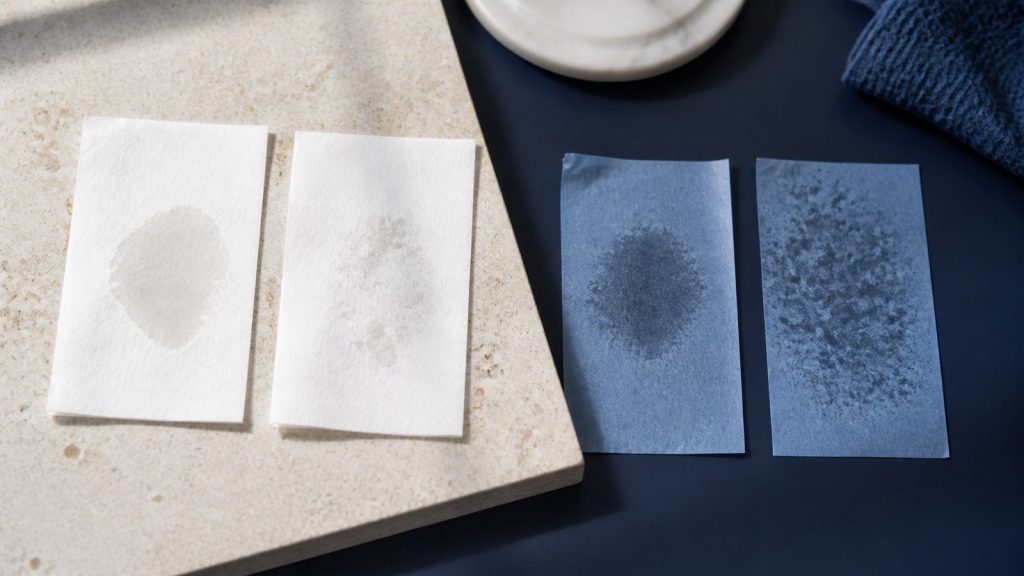
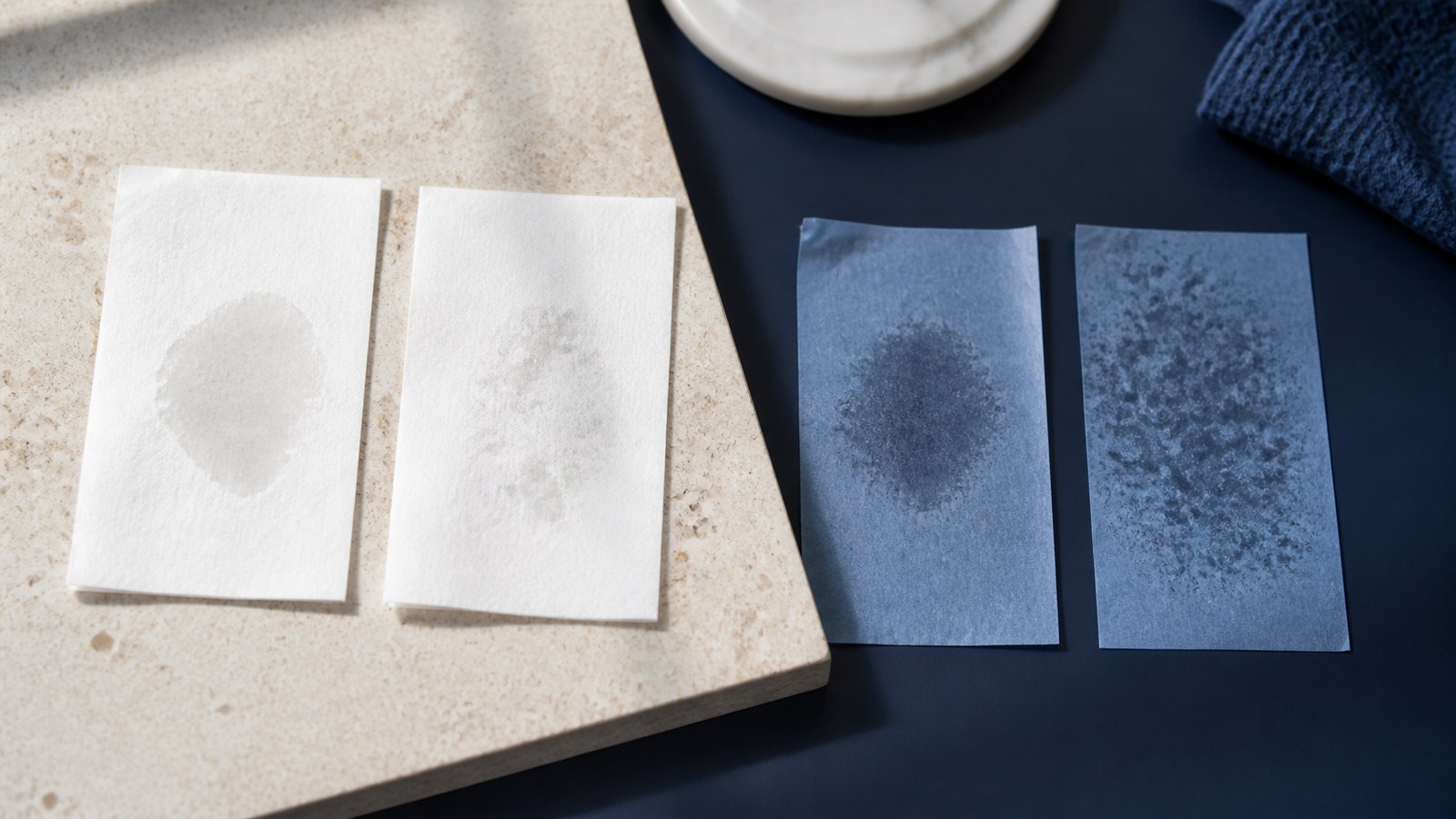
The Answer: Identify Your Skin Type
Your skin type is the baseline pattern of oiliness, dryness, and comfort your face shows when it is calm – not a temporary reaction caused by weather, washing, or product residue. If you are asking, "What is my skin type?" observe clean, settled skin across several ordinary days and compare your T-zone with your cheeks.
Consistently tight or flaky skin suggests dry skin, widespread shine suggests oily skin, and an oily center with drier outer areas suggests combination skin. Skin that stays generally comfortable and balanced is commonly called normal.
Do not force a label while your face is stinging, unusually hot, red, or suddenly flaky. Those signs can reflect a disrupted barrier or another current skin condition rather than your underlying type. Return to the last comfortable setup and pause any change that turns mild inconvenience into pain.
If you have burning, swelling, a rash, eye pain, vision changes, or symptoms that keep coming back, talk with a dermatologist, doctor, or qualified clinician.
The American Academy of Dermatology's skin-care guidance supports choosing care according to how the skin behaves while avoiding irritation. Home observation can help identify a baseline, but it cannot diagnose eczema, rosacea, allergies, or other medical conditions.
Skin Type Versus Skin Condition
Skin type describes a relatively persistent tendency. Skin condition describes what changed now. Your baseline may be oily, for example, while your current condition is dehydrated after frequent washing. Dry skin is a type associated with lower oil production; dehydrated skin is a condition involving insufficient water in the outer layer and can occur with any type.
That distinction explains why a shiny nose does not automatically mean your whole face is oily. A stripped face may feel tight immediately after cleansing yet look glossy later. Dry cheek patches can sit beside an oil-slick T-zone. Cold air, indoor heating, humidity, water temperature, menstrual-cycle changes, medications, and age can also alter what you see without permanently replacing your baseline.
Focus on repeated patterns rather than one bad morning. If the same areas become shiny, tight, or flaky under calm conditions, the skin-type label is more useful. If the behavior appeared abruptly after a change in weather or washing habits, read about dehydrated skin versus dry skin before relabeling yourself.
Sensitive skin is often discussed as a type, but sensitivity can overlap with dry, oily, combination, or normal skin. Frequent discomfort, flushing, itching, or reactions deserve separate attention. Persistent symptoms should not be dismissed as simply having sensitive skin.
Why Skin Type Changes Product Choices
A useful label helps you judge texture, coverage, and placement. Dry areas may feel uncomfortable under products that remove too much surface oil. Oily areas may feel coated under heavy layers. Combination skin often needs different amounts in different zones rather than one thick application everywhere. These are fit considerations, not rigid rules.
Misreading the baseline can start an unhelpful cycle. Someone who sees midday shine may wash more often or use hotter water. After several days, the cheeks can become tight and patchy while the nose remains shiny. That mixed picture may be mistaken for even oilier skin, leading to more cleansing and greater barrier discomfort.
The apparent rebound does not prove that the genetic skin type changed; it shows that surface condition is obscuring the baseline.
The opposite mistake also happens. A rich, occlusive layer may relieve dry cheeks but leave residue across an untested T-zone, where it can feel congesting or contribute to product pilling. Placement matters as much as the label.
You usually do not need specialized tools or new purchases to interpret these patterns. A mirror, clean hands, a familiar gentle cleanser, and notes about location and timing can reveal more than reviews written by people with different climates, tolerances, and skin conditions. The label should simplify decisions, not pressure you into replacing an otherwise comfortable setup.
Dry, Oily, Combination, and Normal Skin
Dry skin commonly feels tight and may look dull, rough, or flaky. Fine lines can appear more noticeable when the surface lacks oil or water. The pattern is usually broader than one isolated dry patch. Temporary winter tightness alone is not enough to confirm it.
Oily skin develops noticeable shine across much of the face, often including the forehead, nose, cheeks, and chin. Pores may look more visible where oil production is higher. A shiny T-zone by itself does not establish an oily type, especially when the outer face regularly feels dry.
Combination skin has a stable regional split. The forehead, nose, or chin may become oily while the cheeks remain comfortable, dry, or flaky. The dividing line is not always neat. If both behaviors repeatedly appear at the same time under settled conditions, combination is more descriptive than forcing the entire face into either dry or oily.
Normal skin generally feels comfortable and has neither persistent widespread shine nor recurring dryness. Normal does not mean flawless. Occasional blemishes, weather-related tightness, and visible pores can still occur.
Which skin type is best? None. Normal skin may sound ideal because the label implies balance, but every type can be healthy. Oil can support surface lubrication, while dry skin can remain comfortable when its barrier is respected. The useful label is the one that accurately describes your recurring pattern and prevents overcorrection.
Skin type also exists on a spectrum. A slightly oily combination pattern and a strongly oily pattern may need different amounts and textures even though both include shine. Compare your face with its own calm baseline, not with edited images or another person's description.
Test Your Skin Before Choosing Products
Pick an ordinary day when your skin is not sunburned, irritated, or reacting to a recent change. You do not need blotting gadgets, magnifying devices, or a paid analysis.
- Wash your face with lukewarm water and a familiar gentle cleanser, provided that cleanser has not been causing discomfort; avoid hot water and scrubbing because either can distort the outcome.
- Leave the skin free of additional facial products for about 30 to 60 minutes if doing so feels comfortable; end the observation immediately if significant tightness, itching, or burning develops.
- Examine the forehead, nose, chin, and both cheeks in normal light; record where shine, flaking, or tightness appears rather than assigning one label from the shiniest spot.
- Repeat the observation on several typical days when weather and washing habits are reasonably stable; do not treat a single humid afternoon or cold morning as your permanent baseline.
- Compare the notes with your usual midday pattern, but stop self-testing if redness, swelling, pain, or recurring rash makes the outcome unclear and seek qualified medical guidance.
This method has limits. Going bare-faced may be uncomfortable for distinctly dry skin, and recent over-cleansing can keep the baseline hidden. In that case, maintain a plain, comfortable setup until the skin settles rather than repeatedly washing to test it. A basic skin-barrier reading guide can help separate a stable type from temporary tightness, heat, or patchy flaking.
The questions I wish I had asked sooner
My nose turns oil-slick by lunch, but my cheeks flake after washing. Do I call that combination skin?
Possibly, but post-wash flaking can also mean the current washing method is too drying. Use lukewarm water, avoid extra washing to chase the shine, and watch whether the same regional split remains after the cheeks feel comfortable again. If flaking persists, spreads, itches, or becomes red, a clinician should assess it rather than relying on a skin-type label.
My moisturizer pills on my T-zone and feels heavy there. Does that prove I am oily?
No. Pilling can come from residue, application amount, rubbing, or incompatible textures and does not identify skin type by itself. Notice whether the bare T-zone becomes consistently shiny under settled conditions. Applying less to that area may improve fit, but continued bumps, itching, or discomfort are reasons to pause the product and seek appropriate advice.
My face gets shinier in summer and tight in winter. Does my label still fit?
It may. Heat and humidity can make oil more visible, while cold air and indoor heating can increase tightness. Record which zones change and which tendencies persist across seasons. Use a flexible description, such as combination skin that becomes oilier in summer, instead of repeatedly replacing the label. If the seasonal change includes cracking, painful redness, or recurring rash, consult a qualified clinician.
Back to top