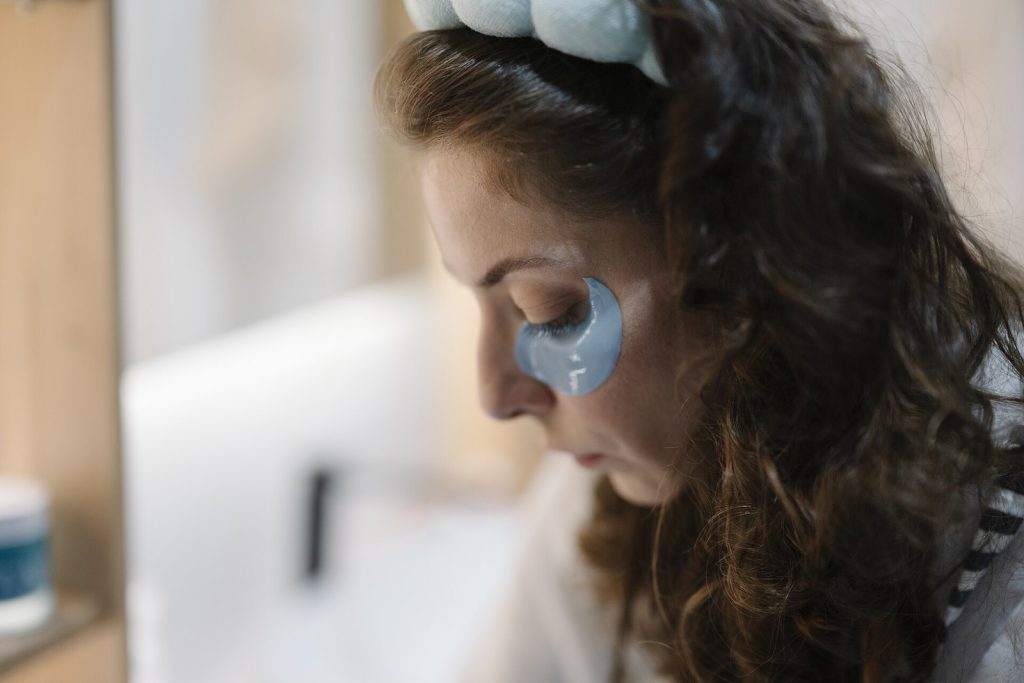
The most useful skincare headband and wristband set is not simply the softest or cutest one. It should hold hair away from your face, catch rinse water before it reaches your sleeves, and fit without pinching. Washability matters too: absorbent accessories need practical care instructions so they can be cleaned regularly and dried between uses.
Prioritize wristband fit first, followed by fabric absorbency, headband security, and easy care. Product photos and labels such as “plush,” “microfiber,” or “antibacterial” can help describe a set, but they do not establish how comfortably it will fit you.
- What the headband and wristbands do
- The purchase checks that matter most
- How to match a set to your routine
- How to use and care for the set
- When a dedicated set may not be worth buying
- Sources
What the headband and wristbands do
Although they are usually sold as a matching set, the pieces solve separate problems.
The headband holds loose hair and shorter strands away from your face while you cleanse, apply a mask, or complete another skincare step. Compared with a narrow hair tie, a wide fabric band can also cover hair around the forehead and temples.
The wristbands act as absorbent barriers. When rinse water travels from your hands toward your elbows, the cuffs catch some of it before it runs farther down your arms or into your sleeves. ESW Beauty describes its plush headband and wristbands as accessories intended to keep hair back and absorb water that would otherwise run down the arms.
This division of labor is important when deciding whether you need the entire set. A headband will not prevent wet forearms, and wrist cuffs will not secure your hair.
The purchase checks that matter most
Start with wristband tension
A cuff has to be secure enough to remain near the wrist but not so tight that it becomes uncomfortable. Stretchy fabric alone does not guarantee a good fit because the elastic length and recovery also affect tension.
Fit deserves particular attention when listings provide only one size. Reviews for the ESW set include favorable comments about stopping water, but one customer reported that the wristbands left marks on the arms. That individual report does not establish how the set fits everyone, but it shows why softness and comfort should not be treated as the same feature.
Look for:
- Wristband measurements or a clearly stated fit range
- Elastic that stretches without feeling rigid
- Cuffs wide enough to absorb water without creating a narrow pressure point
- A return policy if the product is sold in one size
Remove the cuffs if they pinch, hurt, or leave pronounced marks. A looser set is more useful than one you avoid wearing.
Check for absorbent fabric, not just a soft texture
Plushness can make a product feel comfortable, but the wristbands also need to absorb rinse water. Retail listings commonly describe these sets as water-absorbent or sweat-absorbing. For example, Target’s skincare headband and wristband results include microfiber and sweat-absorbing descriptions, while Amazon’s category results emphasize stretchy, water-absorbent sets.
These are listing claims rather than standardized comparisons. They do not show that microfiber, plush fabric, or another named material will absorb the most water. If two sets otherwise appear similar, favor the one that clearly describes both its fabric and its care requirements.
Make sure the headband covers the hair you need to control
A broad band is useful when short hairs around the hairline are the main problem. Check the band’s width and construction rather than judging coverage from a tightly cropped product image.
The right design also depends on how you prefer to put it on:
- Continuous elastic bands are simple but depend heavily on the manufacturer’s chosen circumference.
- Adjustable or fastening bands allow more control over tension but may have a bulkier closure.
- Decorative bow or knotted bands can provide broad coverage, although the decorative section does not necessarily improve function.
If you are deciding whether a standalone band offers enough value, compare its fit and care requirements using this breakdown of which skincare headband features can improve a routine.
Put washability ahead of color and decoration
A reusable set will repeatedly come into contact with water, cleanser residue, skincare products, and hair products. Before buying, confirm that the seller provides specific washing and drying instructions.
ESW instructs users to air-dry its set after each use, machine-wash it regularly, and tumble-dry it without heat. Instructions will vary by product, so follow the care label for the set you purchase rather than assuming every plush or microfiber accessory can be treated the same way.
Be cautious when a listing gives no information about cleaning. Decorative details, glued-on pieces, or hardware may also make routine washing less convenient.
Treat “antibacterial” as a claim that needs details
Some retailer results advertise antibacterial properties, but that word alone does not explain what was tested, how long the property lasts, or whether it changes the required cleaning routine. An antibacterial label is not a substitute for washing and drying the accessories as directed.
Unless a listing explains the treatment and its limitations, do not make that label the main reason to pay more.
| What to inspect | Why it matters | Practical buying check |
|---|---|---|
| Wrist cuff tension | Tight cuffs can pinch or leave marks | Look for measurements, fit ranges, or an acceptable return policy |
| Absorbent fabric | Wristbands need to intercept rinse water | Choose a listing that identifies the material and its intended absorbency |
| Headband width | Wider coverage can control hair around the forehead and temples | Check dimensions rather than relying only on photos |
| Stretch or closure | This determines how securely and comfortably the band fits | Choose adjustable construction if fixed elastic sizing is uncertain |
| Cleaning instructions | The set needs regular care | Confirm whether it is machine-washable and how it should be dried |
| Decorative features | Extra details can affect comfort and washing | Check whether bows, knots, or attachments interfere with use or care |
How to match a set to your routine
The right configuration depends on which part of your routine creates the mess.
For washing your face at a sink
Choose absorbent wristbands and a headband that remains secure when you lean forward. This is the situation in which both pieces provide distinct benefits: the headband controls hair while the cuffs address water running down your arms.
For sheet masks or non-rinse treatments
The headband may be more useful than the wristbands because there is less running water to catch. The cuffs can still help if you apply a runny product by hand, but they may not be necessary for every treatment.
For short hair or hair already secured away from the face
Wristbands may deliver most of the practical value. If a clip or hair tie already keeps every strand away from your skincare products, a matching headband could be primarily decorative.
For uncertain sizing
Favor an adjustable headband and listings with wrist measurements. A fabric headband and wristband tutorial demonstrates how elastic can be sized from wrist and head measurements, illustrating why circumference affects fit even when two sets use similarly soft fabric.
If a ready-made set gives no measurements, check whether it can be returned after a careful, clean fit test.
How to use and care for the set
Put the headband on before cleansing and position it behind the hairline without pulling it so far back that loose strands escape. Slide one wristband onto each arm and place them close enough to the wrists to intercept water flowing away from the hands.
After your routine:
- Remove the accessories with clean hands.
- Allow damp pieces to air-dry rather than leaving them in a closed bag or drawer.
- Wash them regularly according to the manufacturer’s directions.
- Avoid heat if the care label prohibits it or calls for no-heat tumble drying.
- Check the elastic periodically for excessive tightness, looseness, or loss of shape.
Do not share a damp set between users. If you use the accessories while traveling, let them dry before packing whenever possible and keep them separate from clean, dry skincare tools.
When a dedicated set may not be worth buying
Skip the full set if it does not solve a problem you actually have. A hair tie, washable cloth headband, or clip may be sufficient when hair control is your only concern. If water rarely runs down your arms, the matching cuffs may add more storage and laundry than convenience.
A set is more likely to earn its place when:
- You regularly wash your face at a sink
- Water reaches your elbows or sleeves
- Short hairs fall forward during cleansing
- Your existing hair accessory is uncomfortable or difficult to wash
- The set can be cleaned and dried without special effort
The final buying decision should come down to fit and upkeep. Choose cuffs that absorb water without squeezing your wrists, a headband that covers the relevant hairline, and care instructions that suit how often you plan to use the set. Color and style can break a tie, but they cannot compensate for uncomfortable elastic or impractical washing requirements.
Sources
- ESW Beauty: Skincare Headband & Wristbands
- Target: Skincare Headband & Wristband Set results
- Amazon: Cute Skincare Headbands and Wristbands results
- Fabricville: Headband and wristbands for your skincare routine