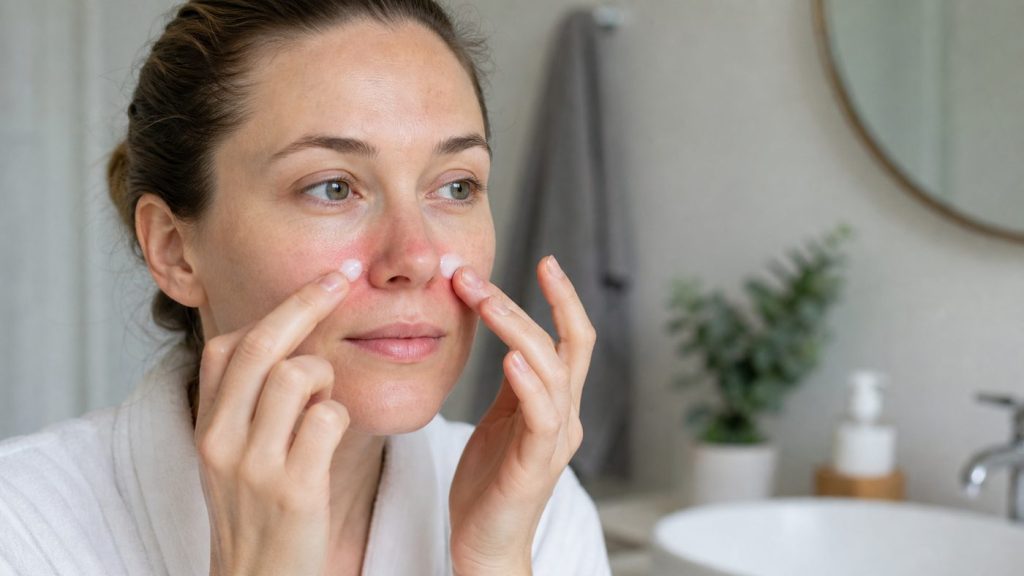
Disclaimer: This guide on moisturizer stings only around the nose after cleansing is for general education only and is not medical advice or a medical diagnosis. If you have burning, swelling, a rash, eye pain, vision changes, or symptoms that keep coming back, talk with a dermatologist, doctor, or qualified clinician.
Start With the Clearest Signal
Identify when moisturizer stings only around the nose after cleansing goes wrong, return to the last stable setup, and pause any change that turns inconvenience into damage or pain. Outside help is safer if burning, swelling, spreading redness, or unusual breakouts keep worsening after the newest change is removed.
Why the First Clue Matters
Location provides useful information. If the same moisturizer feels fine everywhere except the folds beside the nostrils, a whole-face intolerance becomes less likely. That does not completely clear the moisturizer, because a fragrance, preservative, exfoliating ingredient, or other component may bother only the most damaged skin. It does shift attention toward what happens to that area before moisturizer is applied.
Look at the timing and appearance of the reaction:
- Notice whether the sting begins immediately after cleansing. If it does, examine cleanser contact, water temperature, and rubbing before blaming the moisturizer; limit this observation to products already in your routine rather than introducing another formula.
- Check whether the skin feels tight before moisturizer goes on. Tightness after washing can accompany over-cleansing or barrier disruption; do not interpret a squeaky feeling as proof that the skin is thoroughly or safely clean.
- Look for scale inside the nasal creases. Fine dry flakes may follow irritation, while recurring greasy or yellowish scale can occur with conditions such as seborrheic dermatitis; appearance alone is not enough for a diagnosis.
- Note itching, bumps, or a delayed rash. Those signs can raise concern for contact dermatitis, especially if symptoms develop hours after application; home observation cannot reliably distinguish an irritant response from an allergy.
- Check both sides of the nose. A reaction concentrated on the side where tissues, a phone, glasses, or a sleep mask rub may have a mechanical component; unexplained one-sided symptoms that persist still deserve medical attention.
Cleanser residue is another plausible clue. The curves beside the nostrils are easy to miss during rinsing, particularly with creamy, foaming, or balm textures. Residue plus repeated rubbing can leave the area uncomfortable even when the rest of the face feels normal. Rinsing more aggressively is not the answer.
Why the Usual Fix Can Backfire
The natural response is often to wash the area again, apply more moisturizer, or replace several products at once. Each move can obscure the original cause.
Washing again removes more surface oil from skin that may already be depleted. Applying a thick coat of moisturizer may reduce water loss, but it does not erase ongoing irritation from an exfoliating toner, acne treatment, hot shower, or rough towel.
A rich ointment can also feel too occlusive on a congestion-prone nose, while a light lotion may contain alcohol, fragrance, urea, or exfoliating acids that sting compromised skin. Texture alone does not predict tolerance.
Changing the cleanser and moisturizer simultaneously creates another problem: if the skin improves or worsens, there is no clear way to know which change mattered. Spending more is unnecessary when the trigger may be technique, frequency, or a leave-on treatment already in the routine.
An existing fragrance-free moisturizer that feels comfortable elsewhere may remain usable once the irritating step is removed, although continued stinging is a reason to pause it on the affected patch.
A cautionary routine failure can develop over roughly 10 days. Someone begins using an exfoliating acid more frequently while continuing an acne gel and a strong cleanser. The sides of the nose become red and burn when moisturizer is applied, but the discomfort is mistaken for purging. The products continue, the redness spreads, and ordinary water begins to sting.
At that point, the pattern fits escalating irritation more than a normal adjustment.
Purging generally refers to a temporary increase in acne lesions associated with certain treatments that influence cell turnover. It should not be used as a blanket explanation for burning, rawness, swelling, or progressive redness. Pain is not evidence that a routine is becoming more effective.
The comparison that matters is not simply cleanser versus moisturizer. Consider their roles:
- A cleanser may start the problem by removing too much oil, remaining in a crease, or being used with hot water and friction.
- A leave-on treatment may keep the area inflamed because it remains on the skin for hours or migrates into the nasal folds.
- A moisturizer may reveal the damage when it reaches exposed, irritated skin, even if it was tolerated before.
- The moisturizer itself remains suspect if the reaction reliably returns with that formula after the skin has otherwise settled.
Fragrance-free and unscented also mean different things. An unscented product may contain ingredients that mask odor, while fragrance-free generally means no fragrance was intentionally added. Neither label guarantees that every person will tolerate the formula. The U.S. Food and Drug Administration explains that cosmetics can still cause adverse reactions and that consumers should stop using a product associated with a concerning response.
A Small Test Before Changing the Rest
Keep the process narrow. The aim is to remove avoidable stress from the nasal folds while leaving tolerated essentials alone. This is not a diagnostic test, and it should not delay care for a painful or spreading reaction.
- Cleanse briefly with lukewarm water and fingertips when sunscreen, makeup, or visible soil needs removal. Avoid washcloths, cleansing brushes, and repeated passes over the folds; if a morning cleanse is not needed, a gentle water rinse may reduce extra exposure.
Questions readers keep asking
I added a new serum three nights ago and the texture now pills under moisturizer. What should I test before blaming the whole routine?
I would remove only the newest layer first and keep the rest unchanged for a few nights. If the pilling stops, I re-test with less product or a longer wait time before deciding the ingredient itself is wrong for me.
My routine looks fine on paper but one layer feels tacky for hours, and I'm worried the formulas are clashing. Where do I start?
I start with texture and timing, not another active. I apply the watery step alone, then the cream alone, and watch whether the tackiness appears only when the two sit together.
The product color changed slightly after a few weeks, and I'm not sure if my skin is reacting or the formula changed. What would you do?
I would pause that product and compare the smell, color, and texture with how it looked when it was new. If oxidation or separation is obvious, I do not keep testing it on my face just to prove a point.
Back to top