Disclaimer: This guide on sensitive skin vs alternatives is for general education only and is not medical advice or a medical diagnosis. If you have burning, swelling, a rash, eye pain, vision changes, or symptoms that keep coming back, talk with a dermatologist, doctor, or qualified clinician.
If you are comparing sensitive skin vs alternatives, you are probably not just shopping for another moisturizer. You are trying to avoid the sting, redness, tightness, or mystery breakout that makes a "gentle" product feel like a gamble.
This guide compares dedicated sensitive-skin formulas against popular alternatives-barrier creams, acne products, "clean beauty," dermatologist brands, and budget drugstore picks-so you can buy with more confidence.
Quick medical note: skincare advice here is educational, not a diagnosis or treatment plan. See a board-certified dermatologist or qualified clinician if you have persistent burning, swelling, bleeding, hives, infection signs, scarring acne, severe eczema, rosacea flares, medication reactions, or if you are pregnant, nursing, or using prescription actives.
Product / Approach | Best fit | Key specs | Main drawback | Who should skip it — | — | — | — | — Vanicream Gentle Facial Cleanser | Easily irritated, fragrance-sensitive skin | Fragrance-free, dye-free, non-comedogenic, 8 fl oz pump | Not plush or spa-like | Very dry skin that hates foaming cleansers La Roche-Posay Toleriane Double Repair Face
Ceramide-3, niacinamide, glycerin, oil-free, 3.38 fl oz | Niacinamide can bother a small group | Anyone who reacts to niacinamide CeraVe Moisturizing Cream | Dry sensitive face/body | Ceramides 1, 3, 6-II, hyaluronic acid, 16 oz tub | Tub format is less hygienic | Acne-prone users who dislike heavier creams Aveeno Calm + Restore Oat Gel Moisturizer | Redness-prone light hydration |
| May be too light in winter | Very dry or compromised barriers EltaMD UV Clear SPF 46 | Sensitive skin needing sunscreen | Zinc oxide 9%, octinoxate 7.5%, niacinamide, 1.7 oz | Pricey; contains chemical filter | Those avoiding octinoxate or niacinamide Aquaphor Healing Ointment | Barrier rescue over moisturizer | 41% petrolatum, occlusive, 1.75-14 oz | Greasy, not breathable | Active acne flares or wool alcohol |
|---|
sensitivity
The Short Answer: Choose the gentlest option that solves your actual irritation trigger
Sensitive-skin products are worth choosing when your skin stings, flushes, flakes, or reacts unpredictably. The best alternative is not the strongest product; it is the simplest one that removes a trigger. Start with fragrance-free cleanser, moisturizer, and sunscreen, then compare barrier support, texture, and active ingredients before adding acne, anti-aging, or brightening products.
Why the Sensitive Skin vs Alternatives Decision Is So Confusing
Sensitive skin is not one single skin type. It can mean a damaged moisture barrier, rosacea-prone flushing, eczema-prone dryness, acne plus irritation, post-procedure tenderness, or a pattern of reacting to fragrance and strong actives. That is why two products labeled "gentle" can feel completely different on the face.
The confusing part is that many alternatives sound better on paper. A clinical acne wash promises clearer pores. A "clean" moisturizer promises fewer questionable ingredients. A retinol cream promises smoother skin. A rich balm promises instant relief. But sensitive skin usually punishes overcorrection.
Too much cleansing, too many actives, or too many botanical extracts can turn a minor irritation problem into a three-week reset.
Dermatology groups commonly emphasize gentle cleansing, moisturizing, and sun protection as the foundation of everyday skincare. The American Academy of Dermatology's basic skincare guidance is a useful baseline for understanding why simple routines often outperform complicated ones when skin is reactive dermatologist-reviewed skin care basics.
A practical way to compare products is to stop asking, "Is this for sensitive skin?" and ask: – What trigger is this product avoiding: fragrance, harsh surfactants, drying alcohol, exfoliating acids, retinoids, essential oils, or heavy occlusives? – What problem is it solving: cleansing, moisture loss, sun protection, redness appearance, barrier repair, acne, or anti-aging? – What is the compromise: less foam, slower results, a heavier finish, a higher price, or fewer cosmetic extras?
That mindset reduces purchase uncertainty. You do not need the most expensive routine. You need fewer avoidable mistakes.
How Does Sensitive Skin Work?
When people ask, "how does sensitive skin work," they usually mean, "Why does my skin react when other people can use anything?" The simple answer is that sensitive skin often has a lower tolerance threshold. The outermost layer of skin, the stratum corneum, works like a protective wall made of skin cells and lipids.
When that wall is disrupted, water escapes more easily and irritants can feel more intense.
That does not mean your skin is weak or doomed. It means your margin for error is smaller. A cleanser that is mildly stripping for someone else may leave your cheeks tight for hours. A vitamin C serum that gives another person a glow may sting you immediately. A fragranced moisturizer that feels luxurious on normal skin may trigger redness or itching.
Common sensitivity patterns include:
- Barrier-related sensitivity. Skin feels tight, rough, flaky, or shiny-dry. Products burn even when they are not "active." This often happens after over-exfoliation, weather changes, travel, or starting too many products. 2. Redness-prone sensitivity. Skin flushes easily from heat, spicy food, alcohol, sun, wind, or certain products. Gentle formulas help, but medical rosacea may need clinician guidance. 3. Acne plus sensitivity. The person needs breakout control but cannot tolerate aggressive benzoyl peroxide, salicylic acid, or retinoid routines. 4. Allergic or ingredient-specific reactions. Itching, swelling, rash, or hives can point to allergy rather than ordinary irritation. Patch testing by a clinician may be useful. 5. Post-procedure or medication-related sensitivity. Skin may be more reactive during prescription retinoid use, acne treatment, peels, laser procedures, or certain medical therapies.
The key lesson: sensitive-skin care is not about avoiding every ingredient. It is about reducing unnecessary exposures while keeping the skin barrier supported.
If you are rebuilding from a flare, our plain-language routine guide can help you sequence products without overloading your face: Gentle Skincare Routine for Redness-Prone Skin.
Sensitive Skin vs Alternatives: What You're Really Comparing
The phrase sensitive skin vs alternatives can mean several practical shopping decisions. Here is how I would break them down in a real bathroom cabinet.
Sensitive-skin cleanser vs acne cleanser: A dedicated gentle cleanser removes sunscreen and light makeup without leaving skin tight. An acne cleanser may include benzoyl peroxide, salicylic acid, sulfur, or stronger surfactants. The acne version can be useful for oily, resilient skin, but it is not automatically better if your face already burns.
For sensitive acne, a gentle cleanser plus a targeted leave-on acne treatment is often easier to control than an aggressive all-over wash.
Sensitive-skin moisturizer vs anti-aging cream: A barrier-support moisturizer usually leans on humectants, ceramides, petrolatum, dimethicone, or oat. Anti-aging creams may include retinol, exfoliating acids, peptides, vitamin C, or fragrance. Those ingredients are not bad, but they add variables. If your skin is flaring, a bland moisturizer is the safer anchor.
Sensitive-skin sunscreen vs high-glow sunscreen: A sensitive-skin sunscreen usually prioritizes broad-spectrum protection, lower sting potential, and a tolerable finish. Beauty-forward formulas may be elegant but can include fragrance, alcohol, shimmer, or filters that sting around the eyes. The FDA explains sunscreen labeling, broad-spectrum protection, SPF, and sun-safety basics for consumers FDA sunscreen consumer information.
Sensitive-skin products vs "clean beauty": "Clean" is a marketing category, not a medical standard. Some clean formulas are gentle; others contain essential oils and plant extracts that sensitive skin may dislike. Fragrance-free matters more than a clean label for many reactive users.
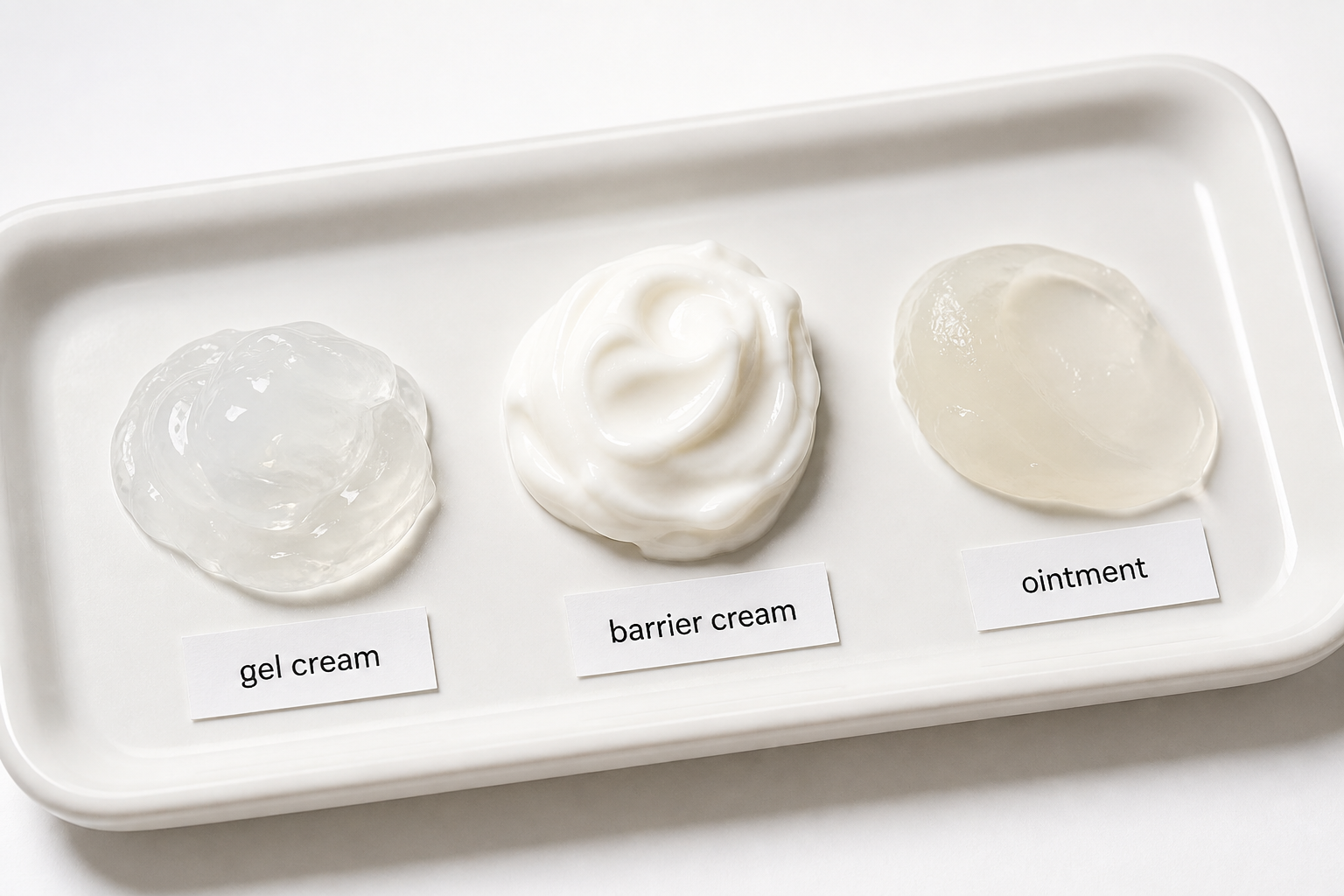
Sensitive-skin barrier cream vs slugging ointment: Barrier creams are more cosmetically wearable and may include ceramides, glycerin, or dimethicone. Ointments like petrolatum-based products reduce water loss very effectively but feel greasy and can be too occlusive for acne-prone users.
Product-by-Product Comparison: Gentle Picks With Real Tradeoffs
This is not a universal "best products" list. It is a comparison of common, easy-to-find options that solve different sensitive-skin problems. Prices shift, packaging changes, and formulas can be updated, so always check the current ingredient list before buying.
Vanicream Gentle Facial Cleanser is the most sensible cleanser choice for people who have reacted to fragrance, dyes, lanolin, or heavily botanical products. It comes in an 8 fl oz pump bottle and is positioned as fragrance-free, dye-free, lanolin-free, paraben-free, and non-comedogenic. The reason it earns a place here is not glamour; it is restraint.
Tests and reviews commonly focus on its low-drama ingredient profile and the way it cleans without the squeaky finish that sensitive skin often hates.
The tradeoff is texture. It does not feel like a luxury cream cleanser, and very dry skin may still prefer a non-foaming lotion cleanser. If your skin is actively cracked or eczema-prone, even gentle foaming can feel like too much. Skip it if you want a rich, balmy cleanse or if every water-rinse cleanser leaves you tight.
La Roche-Posay Toleriane Double Repair Face Moisturizer sits in the middle: more elegant than a thick tub cream, more supportive than a watery gel. It includes ceramide-3, niacinamide, glycerin, and the brand's prebiotic thermal water in a 3.38 fl oz tube. It is often a good fit for sensitive combination skin that needs moisture but hates a greasy film.
The important caveat is niacinamide. Many people tolerate it beautifully, and it can support barrier function and uneven tone appearance. A small but real group reports flushing or stinging from niacinamide products. If you already know niacinamide bothers you, do not talk yourself into this just because the brand is dermatologist-adjacent.
CeraVe Moisturizing Cream is a better value when dryness is the main problem. The 16 oz tub is widely available, often affordable per ounce, and built around ceramides 1, 3, and 6-II plus hyaluronic acid.
It works for face and body for many users, which makes it useful for families, winter dryness, and people who do not want separate creams for every zone.
The drawback is the finish. It is not the lightest face moisturizer, and the tub format can feel messy unless you use clean hands or a spatula. Acne-prone users who clog easily may prefer the CeraVe PM Facial Moisturizing Lotion or another lighter lotion.
Still, for an affordable sensitive skin review, CeraVe Cream remains one of the strongest value comparisons because you get a lot of barrier support for the price.
Aveeno Calm + Restore Oat Gel Moisturizer is for the person who says, "Creams feel suffocating, but gels disappear too fast." The 1.7 oz jar uses oat and feverfew-focused soothing positioning with a gel-cream texture. It layers nicely under sunscreen and makeup, and it can feel calming when skin is slightly warm or red-looking.
It is not enough for everyone. In dry climates, during winter, or after a retinoid mistake, it may feel pleasant for five minutes and then disappear. The jar format is also not everyone's favorite. Skip it if your face needs a true barrier coat, not just lightweight comfort.
EltaMD UV Clear Broad-Spectrum SPF 46 is one of the most compared sunscreens for sensitive, redness-prone, acne-prone skin. The formula uses zinc oxide 9% and octinoxate 7.5%, with niacinamide and a lightweight lotion feel. It is available in untinted and tinted versions, usually in a 1.7 oz pump.
The strengths are elegance and daily wearability. Sunscreen only works if you actually use enough of it, and many people find this easier to wear than chalky mineral formulas. The drawbacks are price, the inclusion of octinoxate for people who prefer mineral-only filters, and niacinamide for those who react to it.
If you want the lowest-sting sunscreen possible around the eyes, you may prefer a fragrance-free mineral-only option, even if it leaves more cast.
Aquaphor Healing Ointment is not a moisturizer in the same way a lotion is. It is an occlusive ointment with 41% petrolatum that helps reduce water loss when layered over damp skin or a bland moisturizer. It is excellent for lips, corners of the nose, windburned patches, and short-term barrier rescue.
The downside is obvious the second you apply it: it is greasy. It can transfer to pillowcases and may feel too heavy over acne-prone areas. It also contains lanolin alcohol, which some sensitive users cannot tolerate. If you have a known lanolin sensitivity, choose plain petrolatum instead.
Sensitive Skin Features to Look For Before You Buy
The best sensitive skin features to look for are less exciting than ad copy makes them sound. That is a good thing. Sensitive skin usually improves when the formula has fewer ways to annoy it.
Prioritize these features first: – Fragrance-free, not just unscented. Unscented products can still include masking fragrance. Fragrance-free is the safer filter. – A simple job description. One cleanser should cleanse. One moisturizer should moisturize. A sunscreen should protect against UV exposure. Multi-benefit products can be useful later, but not during a flare. – Barrier-support ingredients. Ceramides, glycerin, petrolatum, dimethicone, squalane, colloidal oatmeal, panthenol, and hyaluronic acid can be helpful depending on the formula. – Low-sting sunscreen positioning. Mineral filters such as zinc oxide and titanium dioxide may be better tolerated by some reactive users, although elegant hybrid formulas can work too. – Packaging you will use correctly. Pumps and tubes reduce contamination concerns and make dosing easier.
Jars can be fine, but they require cleaner habits. – Return policy or small size. Sensitive skin shopping involves trial and error. Travel sizes, drugstore returns, and sample-friendly retailers reduce risk.
Features to treat with caution:
- Essential oils. Lavender, citrus, peppermint, eucalyptus, and tea tree can be irritating for some sensitive users. 2. High-strength actives. Retinoids, exfoliating acids, benzoyl peroxide, and strong vitamin C can help specific concerns, but they need careful pacing. 3. Long botanical ingredient lists. Natural does not automatically mean gentler. 4. Alcohol-heavy textures. Some fast-drying formulas feel elegant but sting compromised skin. 5. Claims that sound medical without evidence. Skincare can support comfort and appearance, but it should not promise to cure inflammatory skin disease.
If you are unsure whether a reaction is irritation or allergy, our patch-testing explainer walks through a cautious at-home approach and when to stop: How to Patch Test Skincare Products Safely.
How to Choose: A Practical Checklist for Reducing Buyer's Remorse
A smart comparison starts before the cart. Use this checklist when choosing among sensitive-skin products and alternatives.
- Name your current problem in plain language. Is your skin burning, tight, itchy, flaky, oily-but-dehydrated, breakout-prone, red, or just bored with your routine? Buying for the wrong problem is the fastest way to waste money. 2. Remove one likely trigger before adding three solutions. If you use a fragranced cleanser, a vitamin C serum, an exfoliating toner, and a retinol, you cannot know which one is causing the issue. Pause the obvious irritants first. 3. Pick the least exciting product that solves the main job. This is where sensitive skin differs from alternatives. The better purchase may be the boring cleanser, not the viral acid toner. 4. Check the first five to ten ingredients. They make up much of the product's feel and function. A formula led by water, glycerin, dimethicone, petrolatum, or gentle emollients tells a different story than one led by drying alcohol and fragrance. 5. Match texture to climate. A gel moisturizer may be perfect in humid Florida and useless in a dry Colorado winter. A cream that saves your cheeks in January may feel heavy in August. 6. Introduce only one new product at a time. Give it several days if your skin is stable. Stop sooner if you get burning, swelling, hives, or a spreading rash. 7. Do not judge sunscreen by a pea-size test. Sunscreen must be wearable at a real amount. If it pills, stings, or leaves a cast at proper application, it is not your daily sunscreen.
One realistic scenario: a 34-year-old office worker with combination skin starts a retinol, switches to an exfoliating cleanser, and adds a brightening serum in the same month. Her cheeks burn when she applies moisturizer, so she assumes she is allergic to the moisturizer. More likely, the routine became too aggressive.
The fix is not a new serum; it is a short reset with gentle cleanser, bland moisturizer, and sunscreen.
Another scenario: a runner in a windy climate gets red, rough patches around the mouth every winter. A lightweight gel moisturizer may feel nice indoors but fail outdoors. In that case, a cream under sunscreen in the morning and a thin layer of petrolatum ointment on vulnerable spots at night may outperform more elegant alternatives.
How to Fix Sensitive Skin Without Making It Worse
The safest way to learn how to fix sensitive skin without making it worse is to simplify, then rebuild. "Fix" here means improving comfort and reducing avoidable irritation-not curing a medical condition.
Try a two-week calm-down plan if your skin is irritated but not showing urgent symptoms: – Morning: Rinse with lukewarm water or use a gentle cleanser only if needed. Apply a bland moisturizer. Finish with broad-spectrum sunscreen. – Evening: Cleanse gently. Apply moisturizer to slightly damp skin. Add a thin occlusive layer only on dry patches if needed. – Pause temporarily: Scrubs, exfoliating acids, retinoids, strong vitamin C, fragranced masks, peel pads, and new acne spot treatments. – Avoid heat stacking: Hot showers, steam rooms, spicy skincare sensations, and aggressive rubbing can all worsen a fragile barrier. – Use soft application habits: Pat dry, do not scrub with a towel, and avoid using cleansing brushes during a flare.
After your skin feels calm for several days, reintroduce one product at a time. If acne treatment is necessary, consider lower frequency before higher strength. If anti-aging is the goal, a slow retinoid schedule may be more realistic than daily use. If discoloration is the concern, sunscreen consistency will usually matter more than chasing the strongest brightening serum.
Mayo Clinic's general skin care basics also emphasize gentle cleansing, moisturizing, sun protection, and seeking medical care when symptoms are persistent or concerning. That conservative foundation is not trendy, but it is often exactly what reactive skin needs.
Pros of Choosing Dedicated Sensitive-Skin Products
The biggest pro is predictability. Dedicated sensitive-skin products are usually less fragranced, less sensorially dramatic, and less overloaded with trendy actives. That can make them easier to evaluate.
Other advantages include: – Lower chance of accidental over-treatment. A bland moisturizer is less likely to clash with prescriptions or actives than a multi-acid night cream. – Better foundation for acne or anti-aging add-ons. You can add one targeted treatment instead of relying on every product to do everything. – More useful during seasonal changes. Sensitive-skin staples are often adaptable when humidity drops, wind increases, or indoor heating dries skin. – Often better for families or shared bathrooms. Fragrance-free basics can work for more people than heavily scented products. – Easier troubleshooting. If your routine has three simple products, identifying the problem is much easier than with a ten-step shelf.
The emotional benefit matters too. When your skin has been reactive, a boring product that does not sting can feel like relief. You stop bracing yourself before applying moisturizer. That confidence is part of the value.
Cons and Tradeoffs Compared With Alternatives
Sensitive-skin formulas are not automatically superior. They have real disadvantages, and pretending otherwise leads to disappointment.
First, they can feel cosmetically plain. If you love a dewy glow, fragrance, a silky primer finish, or immediate resurfacing, many sensitive-skin products will feel underwhelming. The point is tolerance, not drama.
Second, they may not treat acne, melasma, deep wrinkles, or rosacea by themselves. They support the barrier and reduce irritant load, but they are not substitutes for prescription care when a skin condition needs it.
Third, some "sensitive" labels are marketing. A product can say gentle and still include fragrance, essential oils, or actives your skin dislikes. Always read the ingredient list.
Fourth, richer barrier products can clog or feel heavy for some people. CeraVe Cream may be a winter hero for dry cheeks and a pore-clogging disappointment for someone with oily, acne-prone skin. Aquaphor can rescue cracked corners but feel unbearable across the whole face.
Finally, sensitive-skin products can cost more when sold through prestige or derm-office channels. That is why comparing per ounce, packaging, and your actual use case matters. A $20 tub that works for face and body may be cheaper over time than a $48 "calming" cream you use up in a month.
Affordable Sensitive Skin Review: Where to Spend and Where to Save
An affordable sensitive skin review should not automatically crown the cheapest product. The better question is: where does price change performance?
Save on cleanser. A cleanser has brief skin contact. If Vanicream, CeraVe Hydrating Facial Cleanser, or Cetaphil Gentle Skin Cleanser works for you, there is little reason to overspend. The right cleanser leaves your skin comfortable after rinsing. It does not need rare botanicals or perfume.
Spend selectively on sunscreen. Sunscreen is where elegance can justify cost. If a pricier formula like EltaMD UV Clear is the only one you wear daily at an adequate amount, it may be worth it. But if it stings or stretches your budget, drugstore mineral options from Neutrogena, Blue Lizard, or La Roche-Posay may be more practical.
The best sunscreen is the one you can apply generously and reapply when needed.
Save or mid-spend on moisturizer depending on texture needs. CeraVe Moisturizing Cream, Vanicream Moisturizing Cream, and Aveeno Calm + Restore can all make sense at different budgets. If you need a lighter cosmetic finish under makeup, you may pay more per ounce for a gel-cream or lotion. If you need body and face dryness support, a tub is usually a better value.
Do not overspend during a flare. This is a common mistake. When skin is angry, people panic-buy expensive serums. A flare is the worst time to test a complex product. Buy fewer, blander basics first.
A budget routine for many sensitive users could look like this: Vanicream cleanser, CeraVe or Vanicream moisturizer, and a sunscreen your eyes tolerate. A more elegant routine might swap in La Roche-Posay moisturizer and EltaMD sunscreen. Neither is morally better. The better routine is the one your skin and budget can sustain.
For more budget-first comparisons, see our practical guide to fragrance-free drugstore skincare: Best Fragrance-Free Drugstore Skincare.
Is Sensitive Skin Worth It as a Product Category?
People often ask, "is sensitive skin worth it," meaning: should I pay attention to this label or ignore it as marketing? The answer is yes, it is worth considering-but only as a starting filter.
The label can help you find products that are fragrance-free, dermatologist-tested, hypoallergenic-positioned, or barrier-supportive. Those signals are useful when your skin reacts easily. But the label does not guarantee compatibility. "Hypoallergenic" does not mean allergy-proof. "Dermatologist-tested" does not tell you whether your face will like niacinamide, oat, petrolatum, or a specific preservative system.
Use the category to narrow choices, then evaluate the formula like an editor: – Does the ingredient list match my known triggers? – Does the texture fit my skin type and climate? – Does the product solve one clear problem? – Can I return it or buy a smaller size? – Does it create a new issue, such as eye sting, pilling, greasiness, or clogged pores?
Dedicated sensitive-skin products are most worth it if you have a history of stinging, redness, eczema-prone dryness, rosacea-prone flushing, or post-treatment irritation. They are less necessary if your skin tolerates fragrance and actives well and you simply prefer gentle textures.
Who Should Buy This / Who Should Skip It
Buy sensitive-skin-focused products if your current routine makes your face burn, tightens after cleansing, turns red easily, flakes around the nose or mouth, or becomes reactive when the weather changes. Also consider them if you use prescription acne or anti-aging treatments and need a supportive base routine.
You should especially lean gentle if:
- You cannot tell which product is causing irritation. 2. You recently overused exfoliants or retinoids. 3. Your sunscreen stings your eyes or cheeks. 4. Your skin feels dry but also breaks out from heavy creams. 5. You want to restart skincare without making another expensive mistake.
Skip the sensitive-skin aisle as your only solution if you have severe acne, suspected rosacea, eczema that cracks or bleeds, allergic swelling, painful rashes, or symptoms that keep returning despite a simple routine. In those cases, gentle products may support comfort, but you need a clinician's evaluation.
Also skip rich barrier products if your main complaint is clogged pores and you already know petrolatum-heavy or waxy creams trigger bumps. Choose a lighter lotion, use ointment only on specific dry patches, and keep acne treatment targeted.
My 2026 Recommendation
If you want the lowest-regret starting point, choose a three-product routine before buying treatments: a gentle fragrance-free cleanser, a barrier-support moisturizer, and a sunscreen you can wear every day. For most shoppers comparing sensitive skin vs alternatives, that foundation beats a cart full of actives.
My practical recommendation is this: – Start with Vanicream Gentle Facial Cleanser if you want the safest cleanser bet, or CeraVe Hydrating Facial Cleanser if foaming formulas leave you tight. – Choose La Roche-Posay Toleriane Double Repair if you want a lighter everyday face lotion and tolerate niacinamide; choose CeraVe Moisturizing Cream or Vanicream Moisturizing Cream if dryness is the bigger problem. – Pick EltaMD UV Clear SPF 46 if wearability is worth the price and you tolerate niacinamide/octinoxate; choose a fragrance-free mineral sunscreen if eye sting or chemical filters are deal-breakers. – Keep Aquaphor or plain petrolatum as a spot treatment for chapped areas, not necessarily an all-over nightly face mask.
The biggest mistake is trying to solve redness, acne, texture, wrinkles, and dryness in the same week. Sensitive skin rewards boring consistency first. Once the barrier feels calm, you can make smarter decisions about alternatives like retinoids, acne treatments, exfoliants, or brightening serums.
Frequently Asked Questions
What is the difference between sensitive skin products and regular products?
Sensitive-skin products usually avoid common irritants such as fragrance, harsh surfactants, and aggressive active blends. Regular products may focus more on scent, texture, acne treatment, exfoliation, glow, or anti-aging claims. The difference is not always official or regulated, so the ingredient list matters more than the front label.
Are sensitive-skin products better than natural skincare?
Not automatically, but they are often safer for reactive users. Natural skincare can include essential oils, citrus extracts, fragrance compounds, and long botanical lists that bother some people. A fragrance-free synthetic formula may be gentler than a natural cream with lavender, peppermint, or eucalyptus oil.
Can I use retinol if I have sensitive skin?
Some people with sensitive skin can use retinol, but pacing matters. Start only when your skin is calm, use a low-strength product, apply it infrequently, and moisturize well. Stop if you get persistent burning, swelling, severe peeling, or rash. Prescription retinoids should be discussed with your clinician if you are highly reactive.
What ingredients should sensitive skin avoid first?
Start by avoiding fragrance, essential oils, scrubs, strong exfoliating acids, harsh acne washes, and alcohol-heavy formulas if your barrier is compromised. You do not need to avoid every active forever. The goal is to identify your personal triggers and reintroduce useful ingredients slowly.
Is mineral sunscreen always better for sensitive skin?
Mineral sunscreen is often a good option because zinc oxide and titanium dioxide may sting less for some users, especially around the eyes. But mineral formulas can leave a white cast, feel heavy, or pill. Some hybrid or chemical sunscreens are more wearable. The best choice is the one you tolerate and use generously.
How long does it take to calm sensitive skin?
Mild irritation may improve within days of simplifying your routine, while a damaged barrier can take several weeks to feel stable. If symptoms are painful, spreading, swollen, infected-looking, or persistent despite gentle care, do not keep experimenting with products. Get medical guidance.
Final Takeaway
Choosing between sensitive skin vs alternatives is less about finding the one perfect product and more about lowering the number of things that can go wrong. Start with fragrance-free basics, match texture to your skin and climate, and add actives only when your barrier is calm. The right routine should make your skin feel boring-in the best possible way.