*Health and skincare disclaimer: This article is for general education only and is not a diagnosis or personal medical advice. If sunscreen causes swelling, hives, severe burning, open-skin irritation, eye swelling, or a rash that does not improve, stop using it and contact a board-certified dermatologist, allergist, or other qualified clinician.*
If you have sensitive skin, sunscreen can feel like a daily gamble. One formula protects well but makes your cheeks sting. Another feels gentle at first, then leaves bumps along your jaw. A third seems fine on your arms but burns around your eyes. That frustration is real, and it is one reason many people with reactive skin either skip sunscreen or use too little of it.
The problem is not that your skin "hates" sun protection. More often, sensitive skin reacts to specific ingredients, a damaged skin barrier, fragrance, alcohol-heavy formulas, or layering too many active products at once. The goal is to find a sensitive skin sunscreen that protects against UV damage while minimizing the triggers most likely to cause burning, flushing, dryness, or breakouts.
If your whole routine feels irritating, it may also help to simplify related basics like your sensitive skin moisturizer before judging any sunscreen on its own.
The Short Answer: Sensitive Skin Usually Does Best With Simple, Fragrance-Free Mineral Sunscreen
For many people, the best sensitive skin sunscreen is broad-spectrum, SPF 30 or higher, fragrance-free, and mineral-based with zinc oxide and/or titanium dioxide. Apply it generously as the final morning skincare step, patch test first, and avoid formulas that sting, contain heavy fragrance, or worsen a rash. Persistent reactions deserve clinician evaluation.
Sensitive skin is not one single skin type. It can mean eczema-prone skin, rosacea-prone skin, acne-prone skin, allergy-prone skin, or simply a barrier that gets dry and irritated easily. That matters because the "best" sunscreen depends on the cause of your sensitivity. A person with rosacea may react strongly to heat and fragrance. Someone with acne may tolerate mineral filters but break out from rich oils or occlusive textures.
Someone with eczema may need a very bland cream formula and may flare if the skin barrier is already cracked.
A helpful first step is to understand cause and effect. Sunscreen filters protect the skin by either absorbing, reflecting, or scattering ultraviolet radiation, depending on the filter. Chemical UV filters can be elegant and invisible, but some people feel stinging, especially around the eyes or on compromised skin. Mineral filters, especially zinc oxide, tend to be better tolerated because they sit more on the surface and are often used in formulas made for reactive skin.
That does not mean every mineral sunscreen is perfect; texture, preservatives, tint, botanical extracts, and added fragrance can still cause trouble.
When shopping, look for "broad-spectrum" on the label, which means protection against both UVA and UVB rays. UVB is more associated with sunburn, while UVA contributes to pigmentation, premature skin aging, and long-term skin damage. SPF 30 is a practical minimum for daily use, and higher SPF can be useful if you apply too little, spend time outdoors, or have photosensitive conditions. The safest sunscreen is the one your skin tolerates well enough that you will apply the right amount consistently.
Patch testing is one of the most useful habits for reactive skin. Apply a small amount of the sunscreen to a discreet area, such as the side of the neck or behind the ear, once daily for a few days. If you develop itching, swelling, a rash, or persistent burning, do not push through it. Mild tingling on freshly exfoliated skin can be a warning sign that your barrier needs a break, not proof that the product is "working."
Common mistakes often make sunscreen irritation worse. Applying sunscreen over strong acids, retinoids, benzoyl peroxide, or vitamin C can increase stinging for some people. Using a harsh sensitive skin face wash that strips the skin can also make sunscreen feel fiery, even if the sunscreen itself is fairly gentle. The same pattern can happen on the body if you use a drying sensitive skin body wash, then apply sunscreen to already-tight skin.
Even products that seem unrelated, such as sensitive skin deodorant, can irritate nearby underarm skin and make sunscreen or sweat feel more uncomfortable in that area.
If you are wondering how to use sensitive skin products together, keep the routine boring on purpose: gentle cleanse, moisturize, sunscreen in the morning. Give each new product at least several days before adding another, unless irritation appears. This makes it easier to identify the real trigger. A sensitive skin moisturizer under sunscreen can reduce dryness and friction, but too many layers may pill or trap heat, so adjust based on comfort.
Safety limits matter. Sunscreen is essential, but it is not armor. Reapply every two hours outdoors and after swimming or sweating. If a reaction is sudden, severe, blistering, or spreading, treat it as a medical issue rather than a product preference.
Why Sensitive Skin Reacts to Sunscreen
Sensitive skin is often not "weak" skin; it is reactive skin. The outer barrier may be dry, inflamed, recently exfoliated, or affected by conditions like eczema, rosacea, acne treatment irritation, or allergic contact dermatitis. When that barrier is disrupted, normal ingredients can feel hot, prickly, or painful.
Sunscreens can bother sensitive skin for a few common reasons. Chemical UV filters may sting some people, especially around the eyes or on skin already irritated by retinoids, exfoliating acids, benzoyl peroxide, or shaving. Fragrance, essential oils, alcohol-heavy formulas, and some preservatives can also trigger redness or itching. Even "clean" or "natural" labels do not guarantee comfort; plant extracts are frequent irritants for reactive skin.
Texture matters, too. A heavy water-resistant sunscreen may trap heat and sweat, leading to bumps or folliculitis. A very matte formula may feel drying and tight. A sunscreen that pills can tempt you to rub harder, which increases irritation and leaves uneven protection.
The practical fix is to look for fewer variables. Mineral sunscreens with zinc oxide or titanium dioxide are often better tolerated because they sit on the skin and scatter or reflect UV rays. The American Academy of Dermatology recommends broad-spectrum sunscreen with SPF 30 or higher as part of sun protection; their guidance is a useful baseline: [AAD sunscreen guidance](https://www.aad.org/public/everyday-care/sun-protection/sunscreen/how-to-select-sunscreen).
How to Use Sensitive Skin Sunscreen Without Triggering a Flare
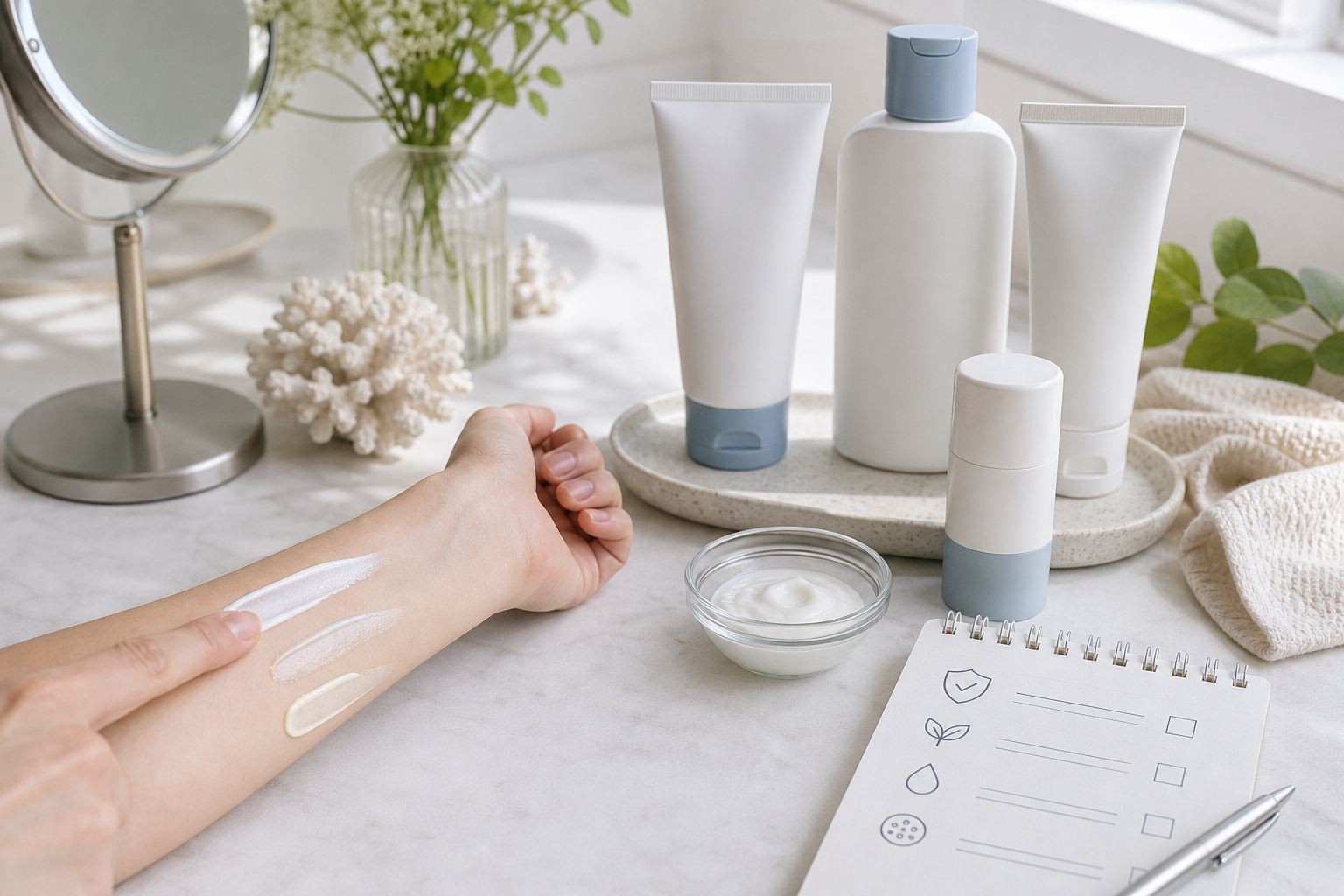
Start with a patch test. Apply a small amount to the side of the neck or jawline once daily for three days. If you develop burning, swelling, persistent itching, or a spreading rash, stop. If the area stays calm, try it on the full face.
Use supportive basics before sunscreen. A gentle sensitive skin face wash can reduce residue without stripping the barrier. Avoid scrubs, hot water, and strong actives on days your skin is reactive. After cleansing, apply a simple sensitive skin moisturizer and let it settle for a few minutes. Sunscreen often feels less stingy when the skin is hydrated and the barrier is buffered.
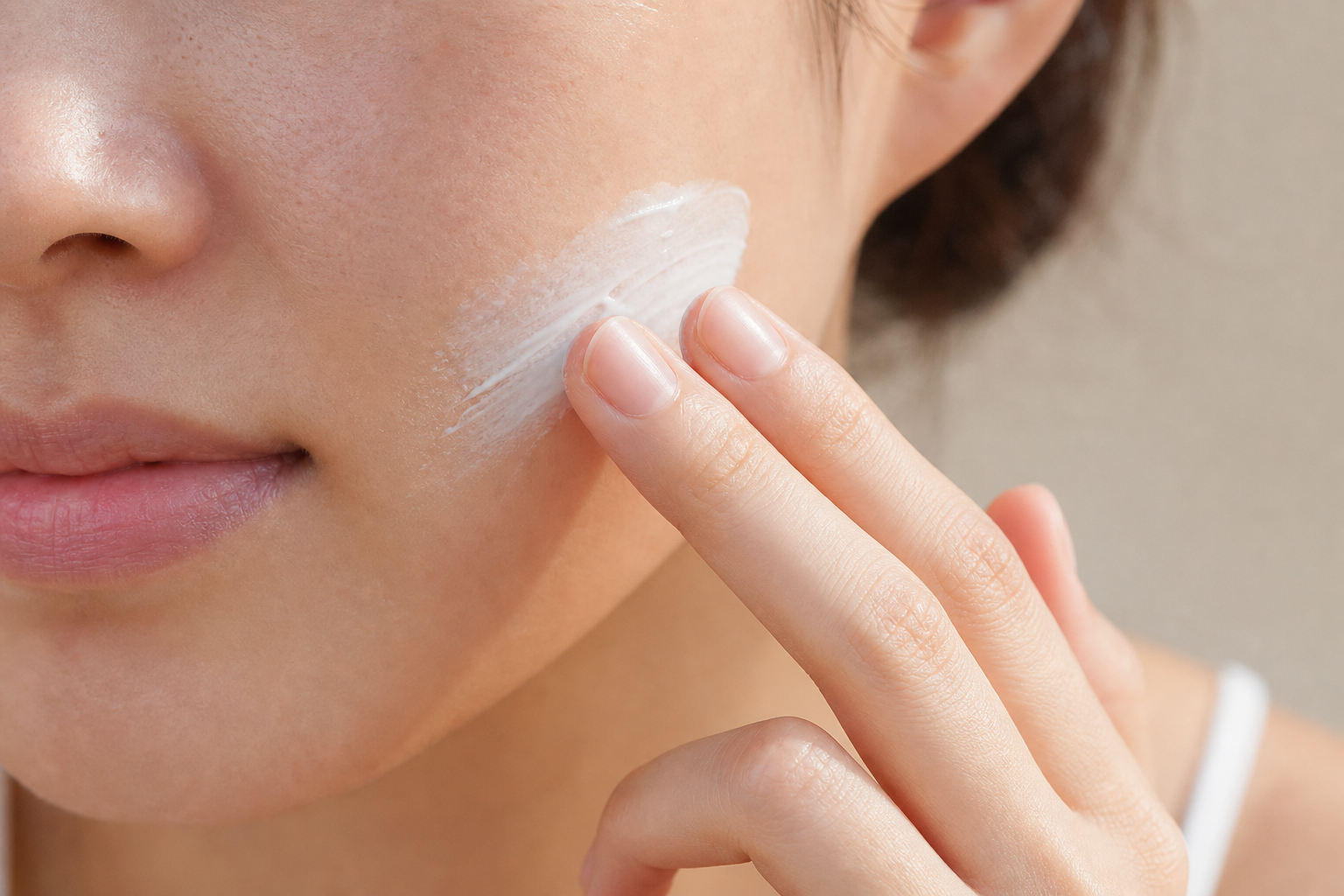
Apply enough product. For the face and neck, many adults need about two finger-lengths of sunscreen, though exact amounts vary by face size and formula. Dot it across the forehead, cheeks, nose, chin, ears, and neck, then spread gently instead of rubbing aggressively. Reapply every two hours outdoors, and sooner after sweating, swimming, or towel drying.
If sunscreen stings your eyes, do not assume you must tolerate it. Try a mineral stick around the eye area, wear UV-blocking sunglasses, and avoid applying too close to the lash line.
| Skin concern | Likely cause | Practical fix |
|---|---|---|
| Burning on application | Damaged barrier, chemical filters, alcohol, fragrance | Switch to fragrance-free mineral SPF; moisturize first |
| Bumps after use | Heavy occlusive formula, sweat, clogged follicles | Try lighter lotion or gel-cream mineral SPF; cleanse after sweating |
| Eye stinging | Migration from sweat or emollients | Use mineral stick near eyes; add sunglasses or hat |
| Dry, tight feeling | Matte formula, over-cleansing, low humidity | Use sensitive skin moisturizer before SPF |
| Rash after repeated use | Possible allergic contact dermatitis | Stop product and see a clinician for evaluation |
Common Mistakes and Safety Limits
The biggest mistake is skipping sunscreen because your skin is sensitive. UV exposure can worsen redness, post-inflammatory marks, melasma, premature aging, and skin cancer risk.
Another mistake is changing everything at once. If you start a new sunscreen, sensitive skin deodorant, sensitive skin body wash, retinoid, exfoliant, and moisturizer in the same week, you will not know what caused the reaction. Introduce one product at a time and give your skin several days to respond.
Do not rely on SPF in makeup as your only protection unless you apply the full labeled amount, which most people do not. Do not mix sunscreen into moisturizer or foundation; dilution can reduce the even film needed for reliable protection. Layer instead: moisturizer first, sunscreen last in the morning skincare routine, then makeup if desired.
Be cautious with "how to use sensitive skin" advice that recommends lemon juice, baking soda, essential oils, or daily exfoliation to "toughen" the skin. These can worsen barrier damage and make sunscreen feel more irritating. Also avoid using expired sunscreen, storing it in a hot car, or applying too little because the formula is expensive.
Safety limits matter. Stop using a sunscreen immediately if you develop facial swelling, wheezing, blistering, severe burning, or hives. Seek urgent care for breathing symptoms or swelling of the lips, tongue, or throat. For recurring reactions, bring product ingredient lists to a dermatologist; patch testing can identify specific allergens and help you choose safer sensitive skin sunscreen options going forward.
If sunscreen often makes your face sting, flush, itch, or break out, the problem may be the filter, fragrance, texture, or the way it interacts with the rest of your routine. This guidance is educational and not a diagnosis. If you have persistent burning, swelling, hives, eczema flares, rosacea, or a rash around the eyes, pause the product and ask a board-certified dermatologist or other licensed clinician for individualized care.
Sensitive skin sunscreen should protect against UVA and UVB rays while minimizing common irritants. Choose fragrance-free, broad-spectrum SPF 30 or higher, patch test first, and apply it over a bland moisturizer. Mineral formulas with zinc oxide or titanium dioxide are often better tolerated, but the best option is the one your skin can wear consistently.
Build a low-irritation sunscreen routine step by step
A sensitive-skin routine works best when each layer has a job. Too many active ingredients under sunscreen can weaken your barrier, and a weakened barrier makes UV filters, preservatives, and even sweat feel more irritating.
- Cleanse gently in the morning. Use lukewarm water and a mild sensitive skin face wash if you wake up oily or sweaty. If your skin is dry or reactive, rinsing with water may be enough. Avoid scrubs, exfoliating brushes, and strong acids before sunscreen because they can increase stinging. 2. Apply a barrier-supporting moisturizer. A sensitive skin moisturizer with glycerin, ceramides, squalane, or colloidal oatmeal can reduce friction and help sunscreen sit more comfortably. Let it settle for a few minutes so the sunscreen does not pill. 3. Use the right amount of sunscreen. For the face and neck, most adults need about two finger lengths, or roughly a nickel-sized amount for the face plus extra for the neck and ears. Underapplying is a common mistake; it lowers real-world protection. 4. Press, don't rub aggressively. Dot sunscreen across the forehead, cheeks, nose, chin, neck, and ears, then spread with light pressure. Rubbing hard can trigger redness and make mineral formulas look patchy. 5. Reapply with your skin in mind. Reapply every two hours outdoors, and after sweating or swimming. If your skin gets irritated from repeated rubbing, use a clean sponge, cushion puff, or a gentle lotion texture rather than dragging your fingers over the same areas.
For a broader routine framework, see sensitive skin routine. If you also react to sensitive skin deodorant, sensitive skin body wash, or makeup, treat that as a clue: your skin may be reacting to fragrance, essential oils, alcohol, or preservatives across categories, not just sunscreen.
Choose a sensitive skin sunscreen by filter, finish, and formula
The label matters, but so does how the product behaves on your skin after three or four hours. A sunscreen that looks elegant but burns your eyelids is not the right sunscreen for daily use. – Start with broad-spectrum SPF 30 or higher. Broad spectrum means UVA and UVB coverage. UVB is linked with sunburn; UVA contributes to premature aging and can worsen pigment concerns. – Consider mineral filters first. Zinc oxide and titanium dioxide sit on top of the skin and are commonly recommended for reactive complexions. Zinc oxide offers especially strong UVA coverage. Some people still dislike the white cast or heaviness, so tinted mineral formulas can help. – Look for fragrance-free, not just "unscented." Unscented products may contain masking fragrance. Fragrance-free is usually a safer starting point for sensitive skin. – Avoid common sting triggers near the eyes. Denatured alcohol, strong fragrance, menthol, citrus oils, and some chemical filters can cause watering or burning in people who are prone to irritation. – Match texture to your skin type. Creams often suit dry, eczema-prone skin. Lightweight lotions may work better for combination skin. Gel textures can feel good but may contain more alcohol, so check the ingredient list. – Patch test before full use. Apply a small amount along the jaw or behind the ear once daily for three days. If you develop itching, swelling, bumps, or persistent burning, stop and try a simpler formula.
If you are comparing guidance from dermatology groups, the American Academy of Dermatology's sunscreen recommendations are a helpful reference: {{external_link:aad-sunscreen-faq}}.
Know when to skip, pause, or change your approach
Not every "sensitive skin" method is safe for every person. If you have an active eczema flare, open cracks, a sunburn, or a recent procedure such as a peel, laser treatment, or microneedling, skip fragranced products and exfoliating actives until your clinician says your barrier has recovered.
People with rosacea should be cautious with heat-trapping heavy balms, spicy-feeling botanicals, and alcohol-heavy formulas because flushing can amplify burning. Acne-prone sensitive skin should avoid assuming "mineral" automatically means non-comedogenic; thick waxy bases can clog pores for some users. If you are allergic to specific ingredients, a dermatologist can discuss patch testing rather than trial-and-error shopping.
Also skip DIY sunscreen. Oils, zinc powder mixtures, and makeup with SPF used alone cannot reliably provide even coverage. The cause-and-effect is straightforward: uneven film equals uneven protection, which raises the chance of sunburn and irritation.
If you are wondering how to use sensitive skin products together, introduce only one new product at a time. For example, do not start a new sunscreen, retinoid, sensitive skin body wash, and exfoliating toner in the same week. When irritation happens, you will not know which product caused it. Keep the routine boring, consistent, and protective; sensitive skin usually rewards restraint.
Frequently Asked Questions
What makes a sunscreen better for sensitive skin?
A good sensitive skin sunscreen is less about fancy extras and more about reducing the chance of irritation. As a quick health note, sunscreen advice is general; if you have eczema, rosacea, a history of allergic reactions, or a rash that burns, cracks, oozes, or does not improve, check with a board-certified dermatologist or qualified clinician.
For sensitive skin, mineral filters such as zinc oxide and titanium dioxide are often easier to tolerate because they sit on the skin's surface and reflect or scatter UV light. Fragrance, drying alcohols, essential oils, and strong botanical extracts can trigger stinging or redness, especially when the skin barrier is already stressed. Look for broad-spectrum SPF 30 or higher, a simple ingredient list, and labels such as fragrance-free and non-comedogenic if you are acne-prone.
Why does sunscreen sting my face or make me red?
Stinging usually happens when sunscreen ingredients reach vulnerable nerve endings in a weakened skin barrier. That barrier can be disrupted by over-exfoliating, retinoids, windburn, acne treatments, hot water, or using a harsh sensitive skin face wash that leaves your skin tight. Chemical UV filters may also sting some people around the eyes or on inflamed skin.
The fix is not always to stop sunscreen. Instead, simplify your routine for a week: use a gentle cleanser, apply a bland sensitive skin moisturizer, then choose a mineral sunscreen. Avoid layering acids, scrubs, vitamin C, or retinoids right before applying SPF if your skin is reacting. If redness is intense, swollen, itchy, or rash-like, stop the product and seek clinical guidance.
How should I apply sensitive skin sunscreen without causing irritation?
Start with calm, dry skin. After cleansing, apply moisturizer first if your skin feels tight or flaky, then wait a few minutes before sunscreen. This reduces friction and helps prevent sunscreen from clinging to dry patches. Use about two finger lengths for the face and neck, then press and smooth rather than rubbing aggressively.
Reapply every two hours when outdoors, and sooner after sweating, swimming, or towel drying. A common mistake is applying too little because mineral formulas can feel thicker. Too little SPF creates uneven protection, which can lead to sunburn, more inflammation, and dark spots. If daily reapplication irritates your skin, try a lightweight mineral lotion for the first layer and a gentle mineral powder only for touch-ups, not as your main protection.
Can I use the same sunscreen on my face and body?
You can, as long as your face tolerates it, but face and body skin do not always respond the same way. Body sunscreens may be heavier, more water-resistant, or more likely to contain fragrance. That can be fine on arms and legs but uncomfortable on cheeks, eyelids, or around the mouth.
If your skin is reactive everywhere, build a consistent low-irritation routine: a mild sensitive skin body wash, a fragrance-free moisturizer, and a broad-spectrum mineral sunscreen. If your face breaks out easily, reserve a facial formula for the face and use a larger, economical mineral sunscreen on the body. Patch testing on the jawline or inner arm for two to three days can help you catch irritation before applying it widely.
What ingredients should I avoid if I have sensitive skin?
There is no universal "bad" ingredient list, but sensitive skin often reacts to fragrance, essential oils, menthol, eucalyptus, citrus extracts, denatured alcohol, and some preservatives or chemical filters. The cause-and-effect pattern matters: if your skin burns within minutes, the product may be irritating; if itching or a rash appears later, it could be an allergic reaction.
Avoid changing too many products at once. If you switch sunscreen, cleanser, moisturizer, and deodorant in the same week, you will not know what caused the problem. This applies beyond SPF, too. A sensitive skin deodorant may still irritate if it contains fragrance or baking soda, just as a "gentle" cleanser can bother you if it strips the barrier. Add one new product at a time.
Is mineral sunscreen always the safest choice for sensitive skin?
Mineral sunscreen is often the best starting point, but "mineral" does not automatically mean irritation-free. A mineral formula can still contain fragrance, plant oils, shimmer, tint ingredients, or heavy waxes that bother certain skin types. On the other hand, some people tolerate modern chemical sunscreens very well, especially in elegant formulas designed for the face.
The practical approach is to judge the full formula, not one label claim. Choose broad-spectrum SPF 30 or higher, apply enough, and watch how your skin behaves over several days. If every sunscreen burns, your barrier may need repair before you can tolerate daily SPF comfortably. For a step-by-step routine, see our guide to sensitive skin routine.
When should I see a dermatologist about sunscreen reactions?
Make an appointment if sunscreen causes swelling, hives, blistering, severe burning, eye swelling, or a rash that lasts more than a few days. You should also seek help if you have recurring reactions to multiple products, because patch testing may identify a specific allergy.
A clinician can help separate irritation, allergic contact dermatitis, rosacea flares, acne, and eczema. That matters because the solution may be different: barrier repair, prescription anti-inflammatory treatment, allergy avoidance, or a different SPF format. Sunscreen is important, but safety comes first; painful or worsening reactions deserve medical evaluation.
Related Routine Guides
For a related next step, read sensitive skin sunscreen routine before changing your whole routine.
Source Notes
I would treat this as a comfort and safety question, not just a product question. For safety context, check American Academy of Dermatology sunscreen selection guidance and FDA sunscreen safety guidance.
Practical Checks Before You Change the Routine – Check whether the reaction happens with the product alone or only after layering. – Change one step at a time so the result is not a guessing game. – Keep a short note on timing, amount, weather, and visible irritation.
- Remove the newest step for two or three mornings. 2. Reintroduce it in a smaller amount. 3. Stop if burning, swelling, or rawness keeps returning.