
Disclaimer: This guide on how to use sensitive skin is for general education only and is not medical advice or a medical diagnosis. If you have burning, swelling, a rash, eye pain, vision changes, or symptoms that keep coming back, talk with a dermatologist, doctor, or qualified clinician.
If you have ever searched how to use sensitive skin products without triggering redness, stinging, bumps, or dryness, you are not being dramatic. Sensitive skin often reacts when the skin barrier is stressed, when a formula is too strong, or when too many new products arrive at once.
This guide is educational and not a diagnosis or treatment plan. If your reaction is painful, spreading, blistering, scarring, infected-looking, linked to medication, or persistent despite stopping suspected triggers, see a board-certified dermatologist or another qualified clinician. Pregnant or nursing readers should also ask a clinician before using active ingredients.
The Short Answer: Choose and Use Sensitive Skin Products Safely

Use sensitive skin products by simplifying your routine, patch testing one item at a time, choosing fragrance-free barrier-supporting formulas, and avoiding harsh exfoliants during flares. Start with a gentle cleanser, moisturizer, and mineral sunscreen. If burning, swelling, oozing, or persistent redness occurs, stop the product and contact a qualified clinician.
Why Sensitive Skin Reacts: The Cause-and-Effect Basics
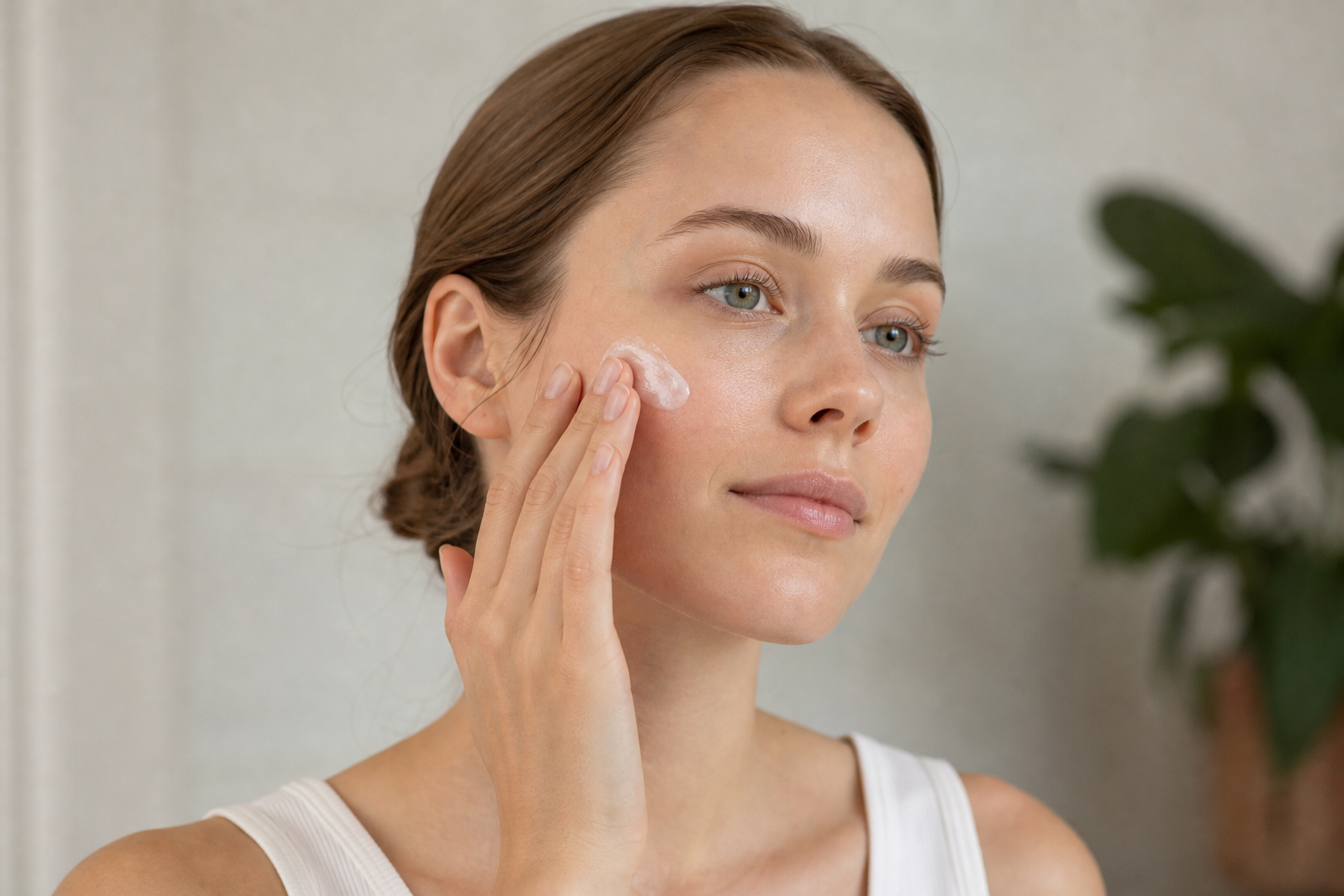
Sensitive skin is not one single skin type. It is a pattern of reactivity. Cleveland Clinic describes sensitive skin as skin that reacts to something that typically would not irritate most people, such as weather, soaps, cosmetics, or environmental triggers Cleveland Clinic overview of sensitive skin.
That reaction may show up as stinging, itching, dryness, tightness, flushing, rough patches, or discoloration.
The simplest way to understand it is this: your outer skin barrier works like a protective wall. When that wall is intact, it helps keep water in and irritants out. When it is disrupted by over-cleansing, fragrance, strong acids, retinoids, cold weather, sweat, shaving, or allergies, more substances can pass through and nerve endings may become more reactive.
That is why a product that seemed fine in July may sting in January.
There are also look-alike conditions. Rosacea, eczema, allergic contact dermatitis, seborrheic dermatitis, acne treatments, and over-exfoliation can all make skin feel "sensitive." The practical routine advice overlaps, but the medical approach may differ. That is one reason persistent facial burning or recurring rashes deserve clinician guidance rather than endless product swapping.
A common reader scenario: someone buys a foaming cleanser, a vitamin C serum, a retinol, a scented cream, and a peel because their skin looks dull. By week two, the skin is red and tight. The mistake was not caring about skin. The mistake was adding too many variables and too much irritation at once.
If you want a deeper routine foundation after this article, build outward from a basic cleanser-and-moisturizer framework like Gentle Skincare Routine for Reactive Skin.
How to Choose Sensitive Skin Products Without Overbuying

The goal is not to find the fanciest shelf. It is to reduce uncertainty. Sensitive skin usually does better when each product has a clear job and a short list of potential irritants.
Start with these comparison criteria:
- Fragrance status: Choose fragrance-free, not merely "unscented." Unscented products may still contain masking fragrance. 2. Texture: Creams and lotions often cushion dry, reactive skin better than gels, though oily sensitive skin may prefer lightweight lotions. 3. Active ingredient load: One active at a time is safer than a formula combining acids, retinoids, vitamin C, and botanical extracts. 4. Barrier support: Look for glycerin, ceramides, petrolatum, dimethicone, colloidal oatmeal, panthenol, squalane, or hyaluronic acid. 5. Use location: The face, underarms, eyelids, and neck are more reactive than many body areas. 6. Rinse-off versus leave-on: Leave-on products carry more irritation risk because they stay in contact longer. 7. Your recent skin history: Skin that is already burning needs repair, not experimentation.
Tests and reviews commonly focus on how a product feels immediately. Sensitive skin needs a longer lens. A cleanser that leaves you squeaky clean may feel satisfying for five minutes and then create tightness for five hours. A moisturizer that looks shiny at first may be exactly what an impaired barrier needs overnight.
Here is the tradeoff: gentle formulas may be less dramatic. They rarely give that instant "tingle" people associate with results. For reactive skin, no drama is usually a good sign.
The Core Routine: Cleanse, Moisturize, Protect
Before comparing deodorants, sunscreens, or body washes, get the core routine right. Most sensitive skin routines should begin with three steps.
Morning
- Rinse with lukewarm water or use a mild sensitive skin face wash if you wake up oily, sweaty, or with residue. 2. Apply a sensitive skin moisturizer while the skin is still slightly damp. 3. Finish with sensitive skin sunscreen every morning, especially if you use any active ingredients or have redness-prone skin.
Evening
- Remove sunscreen and makeup with a gentle cleanser. Avoid scrubbing brushes and rough washcloths. 2. Moisturize generously. 3. Use treatment products only when your skin is calm and only one at a time.
This is intentionally simple. A basic routine gives you a baseline. If redness improves, you know barrier stress was part of the problem. If symptoms continue, you have clearer information to bring to a clinician.
One practical note: do not judge a routine only by the first application. Sensitive skin often needs a few calm weeks to feel less reactive. But burning, swelling, hives, or worsening rash are stop signs, not "purging."
Feature Checklist: What Gentle Formulas Usually Have in Common
Sensitive skin shopping gets easier when you stop reading the front label first. Marketing words are not regulated in the way many shoppers assume. "Clean," "natural," and "dermatologist inspired" do not automatically mean low-irritation.
Look for features that match how sensitive skin behaves: – Low-fragrance or fragrance-free positioning: Fragrance is a frequent irritation and allergy concern. – Mild surfactants in cleansers: Creamy, non-stripping cleansers are usually safer than high-foam formulas. – Occlusive or semi-occlusive support: Petrolatum, dimethicone, and richer creams help slow water loss. – Minimal exfoliation: Daily acids, scrubs, and cleansing pads can overwhelm a fragile barrier. – Clear use instructions: Products that tell you to start slowly are often more realistic for reactive skin. – Packaging that protects the formula: Pumps and tubes may reduce contamination compared with repeatedly dipping fingers into jars.
The American Academy of Dermatology regularly emphasizes gentle cleansing, moisturizing, sun protection, and professional evaluation for persistent or severe skin symptoms American Academy of Dermatology skin care basics. That advice may sound basic, but it is exactly where many sensitive skin routines go wrong.
If you are comparing ingredient lists, keep a personal "no thanks" log. Write down products that stung and the first five to ten ingredients. Patterns are often easier to see on paper than in memory.
Sensitive Skin Face Wash: How to Use It Without Stripping
A sensitive skin face wash should clean without leaving your skin tight, shiny, or squeaky. That stripped feeling means too much oil and moisture may have been removed from the surface.
Use it this way:
- Wet your face with lukewarm water, not hot water. 2. Use a small amount, usually less than you think. 3. Massage lightly with fingertips for 20 to 30 seconds. 4. Rinse thoroughly. 5. Pat dry, leaving a little dampness. 6. Apply moisturizer within a minute.
The biggest mistake is washing more because the skin feels irritated. If your skin is burning, twice-daily cleansing may be too much. Try water-only in the morning and cleanser at night, especially in dry climates or winter.
Foaming cleansers are not always bad, but they are easier to overdo. Cream, milk, gel-cream, or lotion cleansers are often better starting points. Micellar water can be useful, but many sensitive skin users do better rinsing it off instead of leaving surfactants behind.
Skip facial cleansing tools during flares. The friction can be enough to keep redness going even when the formula is gentle.
Sensitive Skin Moisturizer: The Product That Does the Most Work
A sensitive skin moisturizer is not just a comfort product. It helps reduce water loss, cushions the skin barrier, and can make other products more tolerable. For many people, moisturizer is the routine step that determines whether sunscreen stings or makeup flakes.
Choose based on your skin's current condition: – Tight, flaky, or winter-dry skin: Use a cream with ceramides, glycerin, petrolatum, dimethicone, or colloidal oatmeal. – Oily but reactive skin: Try a fragrance-free gel-cream or lightweight lotion with glycerin or squalane. – Stinging after everything: Use the blandest moisturizer possible and pause actives. – Eyelid or neck sensitivity: Be extra cautious; these areas react quickly.
Apply moisturizer on damp skin. This small timing change can make a basic formula feel more effective because humectants such as glycerin and hyaluronic acid work best when there is water to hold.
Pros of a richer moisturizer: better barrier support, less tightness, and improved tolerance of weather changes.
Cons: possible shine, heaviness under makeup, or clogged-feeling skin if the texture is too occlusive for you.
If you are acne-prone and sensitive, do not assume you must avoid all richness. Sometimes irritated acne-prone skin is dehydrated from harsh treatments. The better comparison is not "light versus heavy." It is "barrier support without ingredients that personally clog or sting."
For ingredient-level help, you may find Ceramides vs Hyaluronic Acid for Sensitive Skin useful when deciding whether your skin needs more water-binding support, more barrier lipids, or both.
Sensitive Skin Sunscreen: Mineral, Chemical, or Hybrid?
Sensitive skin sunscreen is where comparison matters because filters, texture, and finish can change tolerance. Sunscreen is non-negotiable for most routines, but the wrong one can sting, pill, or make redness look worse.
Mineral sunscreens use zinc oxide, titanium dioxide, or both. They sit on the skin surface and are often recommended for people with stinging-prone or redness-prone skin. Their downside is cosmetic: white cast, thicker texture, and possible dryness.
Chemical sunscreens absorb UV radiation through organic filters. Many are elegant, sheer, and easy to wear daily. Some sensitive skin users tolerate them beautifully. Others notice stinging, especially around the eyes or on a compromised barrier.
Hybrid sunscreens combine both approaches. They can balance wearability and tolerance but still need patch testing.
Plain text comparison table:
Sunscreen type | Best fit | Main advantage | Main drawback | Sensitive-skin note Mineral | Redness-prone, eye-stinging, post-procedure guidance when clinician-approved | Often lower sting potential | Can leave cast or feel thick | Start with zinc oxide if you react often Chemical | Deeper skin tones wanting minimal cast, normal-to-oily sensitive skin | Lightweight, sheer finish | May sting eyes
or damaged barrier | Patch test
near jaw, not eyelids first Hybrid | People who want a middle ground | Better texture than many mineral-only formulas | Still may irritate some users | Check fragrance and alcohol content Tinted mineral | Redness or visible discoloration | Tint can offset cast and visible redness | Shade range may be limited | Iron oxides may help with visible light concerns
How to use sunscreen with sensitive skin:
- Moisturize first and let it settle. 2. Apply sunscreen in sections rather than rubbing aggressively. 3. Keep it away from the lash line if eye stinging is a problem. 4. Reapply with gentle patting, not scrubbing. 5. Remove it fully at night with a mild cleanser.
Who should skip a specific sunscreen? Anyone who gets burning that lasts, hives, swelling, or a rash after use. Do not keep wearing it because the label says sensitive.
Sensitive Skin Body Wash and Deodorant: The Forgotten Irritation Triggers
Facial products get the attention, but the body has its own sensitive zones: underarms, groin folds, chest, back, hands, and lower legs after shaving. A sensitive skin body wash should be mild enough that your skin does not feel tight after the shower.
Hot showers are a hidden trigger. The formula may be fine, but heat plus long water exposure strips lipids and worsens dryness. Keep showers warm, short, and boring. Boring is good here.
Body wash selection tips: – Choose fragrance-free when itching or dryness is a pattern. – Avoid strong deodorizing washes if you flare easily. – Use less product on dry areas such as shins and arms. – Moisturize immediately after showering. – Be careful with exfoliating gloves; friction can mimic product irritation.
Sensitive skin deodorant is trickier because underarms deal with sweat, friction, shaving, and occlusion. Deodorants reduce odor; antiperspirants reduce sweat using aluminum salts. Either can irritate some people, and "natural" deodorants are not automatically gentler. Baking soda, essential oils, and strong fragrance are common underarm troublemakers.
If your underarms burn, try this reset:
- Stop scented deodorant for several days if possible. 2. Avoid shaving until the skin calms. 3. Wash with a mild cleanser and pat dry. 4. Reintroduce a fragrance-free deodorant or antiperspirant on a small area. 5. Apply at night if using antiperspirant, unless your clinician says otherwise.
If you develop darkening, peeling, cracking, or a persistent rash, consider medical evaluation. Underarm rashes can be irritation, allergy, yeast, eczema, or another condition.
Pros, Cons, and Tradeoffs of a Sensitive Skin Routine
A gentle routine has real advantages, but it also asks for patience. That is where many people lose confidence and start buying again.
Pros: – Fewer variables make triggers easier to identify. – Barrier repair can reduce stinging over time. – Fragrance-free basics are often easier to compare across brands. – A simple routine is more sustainable during travel, stress, and seasonal changes. – It lowers the chance of over-exfoliation.
Cons: – Results may feel slow compared with aggressive actives. – Rich textures may not be cosmetically elegant. – Mineral sunscreen can leave cast or feel heavy. – You may need separate face and body solutions. – Some medical conditions will not improve with routine changes alone.
The most important tradeoff is speed versus stability. If your goal is to fade marks, smooth texture, and brighten tone, you may eventually use actives. But if your barrier is angry, pushing actives first usually backfires. Calm skin responds better to targeted treatment later.
A useful rule: if three or more products sting, do not shop for a fourth active. Step back to cleanser, moisturizer, sunscreen, and clinician advice if needed.
How to Patch Test and Introduce New Products
Patch testing is not perfect, but it is one of the best at-home ways to reduce purchase uncertainty. It helps you avoid putting a bad match all over your face or under both arms.
Try this cautious approach:
- Apply a small amount behind the ear, along the jaw, or on the inner forearm. 2. Leave it on as directed. Rinse-off products should be rinsed; leave-on products can stay. 3. Watch for burning, itching, bumps, swelling, or rash over 24 to 48 hours. 4. If calm, use it on a small facial area or one underarm for a few days. 5. Introduce only one new product at a time.
For products used near the eyes, test on the jaw first. Eyelid skin is thin and reactive, and an eyelid reaction can be miserable.
Do not patch test on broken, freshly shaved, sunburned, or actively inflamed skin. That gives you noisy information because almost anything can sting compromised skin.
If you have a history of allergic contact dermatitis, at-home patch testing is not a substitute for formal patch testing with a dermatologist or allergy specialist.
Common Mistakes That Keep Sensitive Skin Reactive
Most sensitive skin mistakes come from trying too hard. The intention is good; the timing is bad.
Mistake one: using a scrub to remove flakes. Flakes often mean the barrier needs moisture and protection, not abrasion. Scrubbing can create more flakes.
Mistake two: rotating products every few days. This makes it nearly impossible to know what helped or hurt.
Mistake three: assuming burning means effectiveness. Some prescription treatments can tingle under clinician guidance, but random burning from cosmetic products is not a badge of progress.
Mistake four: buying only "natural" products. Essential oils, citrus extracts, menthol, peppermint, and fragrant botanicals can be irritating.
Mistake five: skipping sunscreen because sunscreen stings. The better answer is to compare formulas, use moisturizer underneath, and consider mineral or tinted mineral options.
Mistake six: treating body skin as tougher than it is.
Mistake seven: ignoring lifestyle triggers. Cold wind, indoor heating, chlorinated pools, sweat, stress, and sleep loss can all change tolerance.
Who Should Buy This Type of Routine-and Who Should Skip It
A gentle sensitive-skin routine is a smart fit if you feel overwhelmed by product choices, react to fragrance, get tight after cleansing, or cannot tell which step is causing redness. It is also a good reset after overusing acids, retinoids, scrubs, or acne products.
You should be more cautious and seek professional help if you have: – Painful burning that does not improve after stopping products – Oozing, crusting, blistering, or signs of infection – A rash around the eyes, mouth, or genitals – Sudden sensitivity after starting a medication – Reactions to many unrelated products – Scarring, severe acne, or persistent flushing – Symptoms during
pregnancy or nursing that require treatment
choices
Who should skip the minimalist approach? Not many people, but there is one group: readers who need prescription-level care for a diagnosed condition. A gentle routine can support treatment, yet it should not replace medical care for eczema, rosacea, psoriasis, severe acne, or allergic contact dermatitis.
For help deciding when a reaction is more than routine irritation, bookmark When to See a Dermatologist for Skin Irritation.
Practical Recommendation: A Calm, Confident 14-Day Reset
If your skin is irritated right now, do not try to solve everything tonight. Use a two-week reset to separate barrier repair from product curiosity.
- Days 1 to 3: Stop nonessential actives, scrubs, peels, fragranced products, and new experiments. Use only a gentle cleanser, bland moisturizer, and sunscreen you already tolerate. 2. Days 4 to 7: Adjust technique. Use lukewarm water, shorter cleansing time, moisturizer on damp skin, and gentle sunscreen application. 3. Days 8 to 10: If your skin is calmer, patch test one product you actually need, such as a better moisturizer or sunscreen. Do not add a serum yet. 4. Days 11 to 14: Use the new product on a limited area before full-face use. If redness returns, stop and return to the baseline. 5. After day 14: Add treatments only for a clear goal: acne, discoloration, texture, or aging support. Start once or twice weekly, not nightly.
This recommendation is intentionally conservative. Sensitive skin confidence comes from knowing what your skin tolerates, not owning a cabinet full of "maybe."
How to Use Sensitive Skin Practical Comparison
| Situation | Better first move | Why it helps |
|---|---|---|
| Skin feels tight or hot | Simplify the routine | It reduces variables before you blame one product |
| Results are inconsistent | Change one step at a time | It makes the cause easier to spot |
| A product stings | Use less or pause it | Sensitive skin often needs a slower test window |
| The problem keeps returning | Ask a qualified clinician | Persistent irritation may need personal medical guidance |
Frequently Asked Questions
What is the safest way to learn how to use sensitive skin products?
Start with the fewest possible steps: gentle cleanser, moisturizer, and sunscreen. Patch test new products, introduce only one at a time, and wait several days before deciding. If your skin is already burning or peeling, pause active ingredients first. The safest routine is the one that makes reactions easier to trace.
Is sensitive skin the same as an allergy?
No. Sensitive skin can involve irritation, barrier weakness, weather reactions, overuse of strong products, or an underlying condition. Allergy is an immune reaction to a specific substance. The symptoms can overlap, which is why repeated rashes from multiple products should be evaluated by a clinician, especially if swelling, hives, or eyelid reactions occur.
Should I use mineral sunscreen if every sunscreen stings?
Mineral sunscreen is often a good next comparison point because zinc oxide and titanium dioxide tend to sting less for many reactive users. Still, formula matters. Fragrance, alcohol, preservatives, or texture can cause problems. Apply moisturizer first, avoid the lash line, and patch test before using it over your whole face.
Can I use retinol or exfoliating acids with sensitive skin?
Sometimes, but timing matters. Do not start retinol or acids when your skin is actively irritated. Once calm, choose one active, use it once weekly at first, and moisturize well. Avoid combining retinoids, acids, benzoyl peroxide, and strong vitamin C without professional guidance. More actives rarely mean better results for reactive skin.
Why does my moisturizer burn even when it says gentle?
A gentle label cannot guarantee tolerance. Moisturizer may burn if your barrier is damaged, if the formula contains an ingredient you personally react to, or if you applied it after exfoliation, shaving, wind exposure, or hot water. If bland moisturizers sting repeatedly, stop experimenting and consider a dermatologist visit.
Is sensitive skin body wash different from regular body wash?
Often, yes. A sensitive skin body wash usually avoids fragrance, harsh cleansing agents, strong deodorizing claims, and exfoliating particles. The difference matters most if you itch after showering, have dry shins, shave often, or get chest and back irritation. Technique matters too: shorter warm showers and immediate moisturizer can help a lot.
Final Takeaway
Sensitive skin care is less about finding a miracle product and more about controlling variables. Choose fragrance-free basics, compare sunscreen types honestly, treat deodorant and body wash as potential triggers, and give your barrier time to settle. If symptoms are severe, persistent, painful, or confusing, get clinician help instead of continuing the product guessing game.