Disclaimer: This guide on what to avoid when dealing with skincare ingredients is for general education only and is not medical advice or a medical diagnosis. If you have burning, swelling, a rash, eye pain, vision changes, or symptoms that keep coming back, talk with a dermatologist, doctor, or qualified clinician.
The Short Answer
The short answer: I look at the exact moment the problem goes wrong, return to the last setup that felt safer, and pause anything that turns annoyance into damage, pain, or a bigger mess. I keep one detail honest: the exact moment it failed, what I had changed, and the limit that made me pause before I turned one problem into three.
The reason that mistake cost me more than it should have
The most expensive mistake I made was treating skincare ingredients like separate promises instead of one chemical pileup on my face. I had a vitamin C serum, a leave-on acid, a retinoid, a niacinamide product, and a cleanser that felt a little too squeaky, and I convinced myself that each one had a job.
By day 10, the whole routine had turned into burning redness.
I called it purging because I wanted the money I spent to mean progress. It was not progress. My cheeks felt hot after washing, my skin looked shiny-tight around my mouth, and moisturizer stung in a way that made me stand still at the sink and wait for it to pass.
That is the part of the problem that cost me more than the products. The real cost was losing the ability to read my skin. Once everything burned, I could not tell whether the acid was the issue, the retinoid was too much, the vitamin C had oxidized, or the cleanser had stripped too much oil.
I had a small basket of half-used bottles and no useful answer.
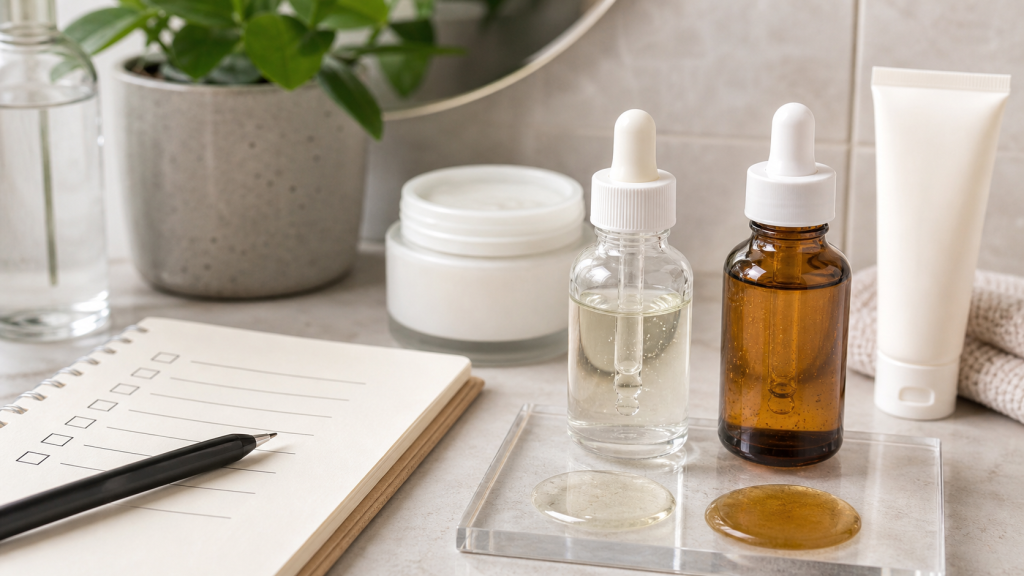
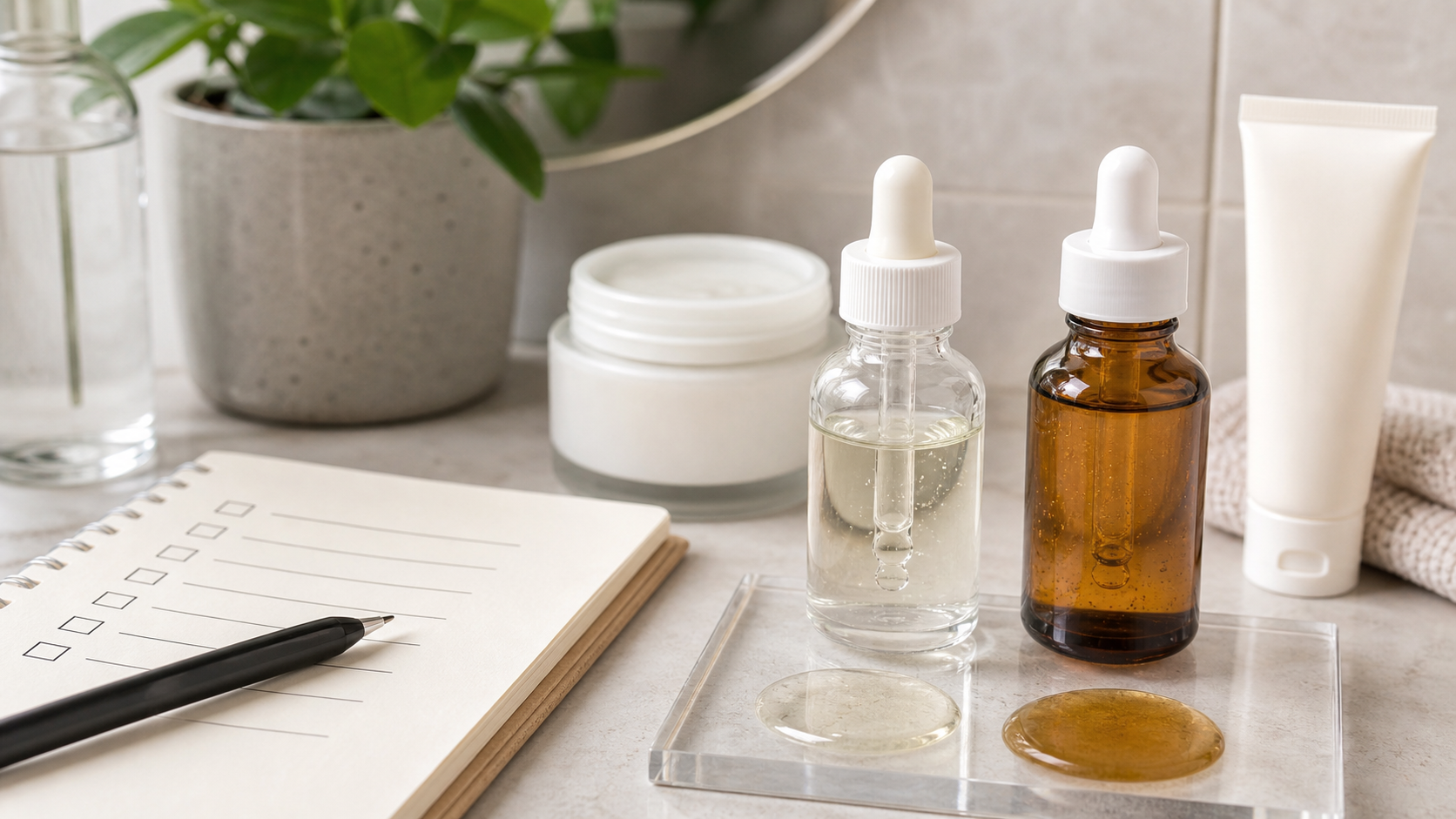
The ingredient details mattered. My L-ascorbic acid serum had shifted from pale yellow to deeper amber, and I ignored it because the bottle was not empty. The texture also felt tackier than it had at first.
I layered it in the morning, then added niacinamide because I had read that the pairing was not automatically forbidden, then used an acid at night because I wanted smoother texture fast.
The issue was not one dramatic incompatibility. It was my skin being asked to tolerate low pH vitamin C, exfoliation, retinoid pressure, and frequent cleansing without enough recovery time.
Day 1 of fixing it was not glamorous. I stripped the routine back to cleanser, moisturizer, and sunscreen in the morning. At night, I used cleanser only if I had sunscreen on, then moisturizer. I put the actives in a drawer because leaving them on the sink made me bargain with myself.
I was annoyed, especially because I had paid for small bottles that felt too precious to waste. But trying to rescue the purchase had already made the irritation worse.
The clue I wish I had trusted sooner
The small early sign was not a breakout. It was the sting from plain moisturizer. I had been watching for pimples and flakes while missing the simpler warning: skin that reacts to bland steps is not asking for another active.
On Day 3 after stripping back, I noticed my face still felt tight ten minutes after washing, but the heat did not last as long.
That mattered more than whether one clogged pore was smaller.
I wish I had also trusted the texture clues in the products themselves. A water-light serum that suddenly feels syrupy, a vitamin C serum that darkens sharply, a product that smells metallic or sour compared with when it was opened, or a formula that balls up every time it meets another layer can change the plan.
Pilling is not always danger, but it can show that the routine is overloaded or that oil-based and water-based layers are being rushed together. I used to rub harder when products pilled. That made my already-hot cheeks angrier and left little rolled-up bits along my jaw.
Day 7 was when the repeat I finally trusted became clearer. My skin no longer burned immediately when I rinsed it, but the sides of my nose still flaked. That told me I was not ready to return to acids just because the panic had eased. I also realized that my timing had been messy.
I had applied vitamin C to damp skin some mornings, waited less than a minute, then put a thicker moisturizer over it, then sunscreen. At night I sometimes used an acid after a shower when my face was warm. Those details made strong ingredients feel stronger.
The clue I now take seriously is a mismatch between the product's promise and my skin's response. A brightening serum that creates heat, a smoothing acid that causes shiny tightness, a retinoid night followed by raw-feeling cleanser pain, or a calming product that stings across both cheeks is not something I try to outlast.
I do not need a perfect label for it on the same day.
I need to reduce the number of variables before the irritation becomes harder to unwind.
The safer test I would make now
Now I test ingredients with boring limits, not enthusiasm. If my skin is already irritated, I do not patch-test a new active on top of that irritation and pretend the outcome is meaningful. I wait until washing and moisturizing feel normal again.
Then I choose one product to test, use a small amount on a small area near the jaw or behind the ear, and watch for burning, swelling, intense itching, or delayed redness. If it reacts there, I do not give it a full-face audition.
When I reintroduce after a barrier setback, I start with the least aggressive useful step. For me, that usually means keeping cleanser, moisturizer, and sunscreen steady, then adding one active on one night or one morning, not both. I do not bring back vitamin C, an acid, and a retinoid in the same week.
I also avoid pairing exfoliating acids with retinoids on the same night because my face has already shown me how quickly that can go sideways.
The awkward part is that slow testing feels wasteful. I have stood in a bathroom with low energy at the end of the day, wanting to use the nice serum because it was open and expensive. I have also rushed layers because I was late, then watched sunscreen pill under makeup and blamed the sunscreen instead of my stacking.
For unstable ingredients, I pay attention to storage and age. L-ascorbic acid is more demanding than many soothing or moisturizing ingredients. If it darkens, changes smell, or starts feeling different, I treat that as a reason to pause and reassess. I do not try to make an oxidized serum behave like a fresh one.
With niacinamide, I do not assume it is automatically gentle at every percentage or in every formula. A product can contain a familiar ingredient and still be too much for my skin when combined with other actives.
My current limit is simple: one meaningful change, then enough time to observe whether heat, tightness, flaking, or bumps increase. I write the change down because memory gets slippery when my face is irritated. I note the product, time of day, whether my skin was damp, what went on before and after, and what happened the next morning.
That small record has saved me from blaming the wrong bottle.
The line where I get help outside my own guesswork
I stop treating it as a home routine puzzle when pain, swelling, spreading redness, crusting, oozing, eye-area irritation, or sleep-disrupting itch enters the picture. I also get help if plain moisturizer burns for more than a few days after removing actives, or if a reaction returns every time I reintroduce a category such as acids, retinoids, vitamin C, or fragrance.
At that point, my notes are useful, but my guesses are not enough.
I am careful with the word purge now. A purge is easy to misuse when I want to believe a product is working. Burning heat, broad redness, raw tightness, and stinging from basic products do not become safer because I call them purging.
If a retinoid or exfoliant brings clogged areas to the surface, that is different from my whole face feeling injured.
When I cannot tell the difference, I do not keep escalating.
The same boundary applies to ingredient stacking. If I have already stripped back, waited, and reintroduced slowly, but the same reaction keeps showing up, I do not try to solve it by adding another corrective active. I do not add more exfoliation for flakes that are really irritation flakes.
I do not add a stronger brightener to redness caused by a damaged barrier.
I take the product list, timing, symptoms, and photos if I have them, and ask a qualified clinician for direction.
That outside help is not a failure of skincare discipline. It is the point where the risk of guessing becomes larger than the inconvenience of asking. My routine gets safer when I respect that line, especially with ingredients that depend on concentration, pH, formula stability, and timing. The goal is not to fear every active.
It is to stop turning a small warning into a full barrier collapse just because a label sounded promising.
The questions I wish I had asked sooner
I added a new serum three nights ago and the texture now pills under moisturizer. What should I test before blaming the whole routine?
I would remove only the newest layer first and keep the rest unchanged for a few nights. If the pilling stops, I re-test with less product or a longer wait time before deciding the ingredient itself is wrong for me.
My routine looks fine on paper but one layer feels tacky for hours, and I'm worried the formulas are clashing. Where do I start?
I start with texture and timing, not another active. I apply the watery step alone, then the cream alone, and watch whether the tackiness appears only when the two sit together.
The product color changed slightly after a few weeks, and I'm not sure if my skin is reacting or the formula changed. What would you do?
I would pause that product and compare the smell, color, and texture with how it looked when it was new. If oxidation or separation is obvious, I do not keep testing it on my face just to prove a point.
Quick Summary
- First clear warning sign: I pause the newest change when the label, routine, or product layer makes the repeat I finally trusted harder to read.
- Reset move: I go back to the last boring setup that stayed calm before testing one suspected trigger.
- Stop line: I stop guessing at home if discomfort spreads, daily use gets harder, or a qualified clinician is the safer next step.