Disclaimer: This guide on is sensitive skin worth it is for general education only and is not medical advice or a medical diagnosis. If you have burning, swelling, a rash, eye pain, vision changes, or symptoms that keep coming back, talk with a dermatologist, doctor, or qualified clinician.
If you have ever bought a "gentle" cleanser that still made your face sting, the question is sensitive skin worth it probably means something practical: is it worth paying more, changing your routine, and giving up trendy actives just to keep your skin quiet? Usually, yes-but only when you buy for barrier support, not marketing comfort words.
Medical note: sensitive, burning, peeling, painful, scarring, or suddenly worsening skin should be discussed with a board-certified dermatologist or qualified clinician, especially if you are pregnant, nursing, using prescription acne or rosacea medication, or reacting around the eyes. This guide is educational, not a diagnosis or treatment plan.
| Product | Best fit | Key specs | Main tradeoff | Skip if |
|---|---|---|---|---|
| Vanicream Gentle Facial Cleanser | Reactive, fragrance-averse skin | 8 oz pump, fragrance-free, dye-free, non-comedogenic | Not a makeup remover powerhouse | You want a rich balm texture |
| La Roche-Posay Toleriane Hydrating Gentle Cleanser | Dry sensitive skin | 13.52 fl oz, ceramide-3, niacinamide, glycerin | Can feel too creamy for oily skin | You dislike lotion cleansers |
| CeraVe Moisturizing Cream | Dry barrier repair on face/body | 19 oz tub, ceramides, hyaluronic acid, petrolatum-free | Tub format is less elegant | You break out from heavier creams |
| Avène Cicalfate+ Restorative Protective Cream | Short-term irritated patches | 1.3 or 3.3 oz, postbiotic ingredient, mineral complex | Thick, visible finish | You need a lightweight daytime layer |
| EltaMD UV Clear SPF 46 | Sensitive skin needing daily SPF | Zinc oxide, octinoxate, niacinamide, transparent finish | Pricey; not all-mineral | You avoid chemical filters entirely |
The Short Answer: Is a Sensitive-Skin Routine Worth It?
A sensitive-skin routine is worth it if your current products cause stinging, redness, tightness, or repeat breakouts. The best value comes from fewer steps, fragrance-free formulas, barrier-supporting moisturizers, and daily sunscreen-not from buying every "clean" or luxury product labeled gentle. Start simple, patch test, and change one product at a time.
Why Sensitive Skin Keeps Happening and What to Change
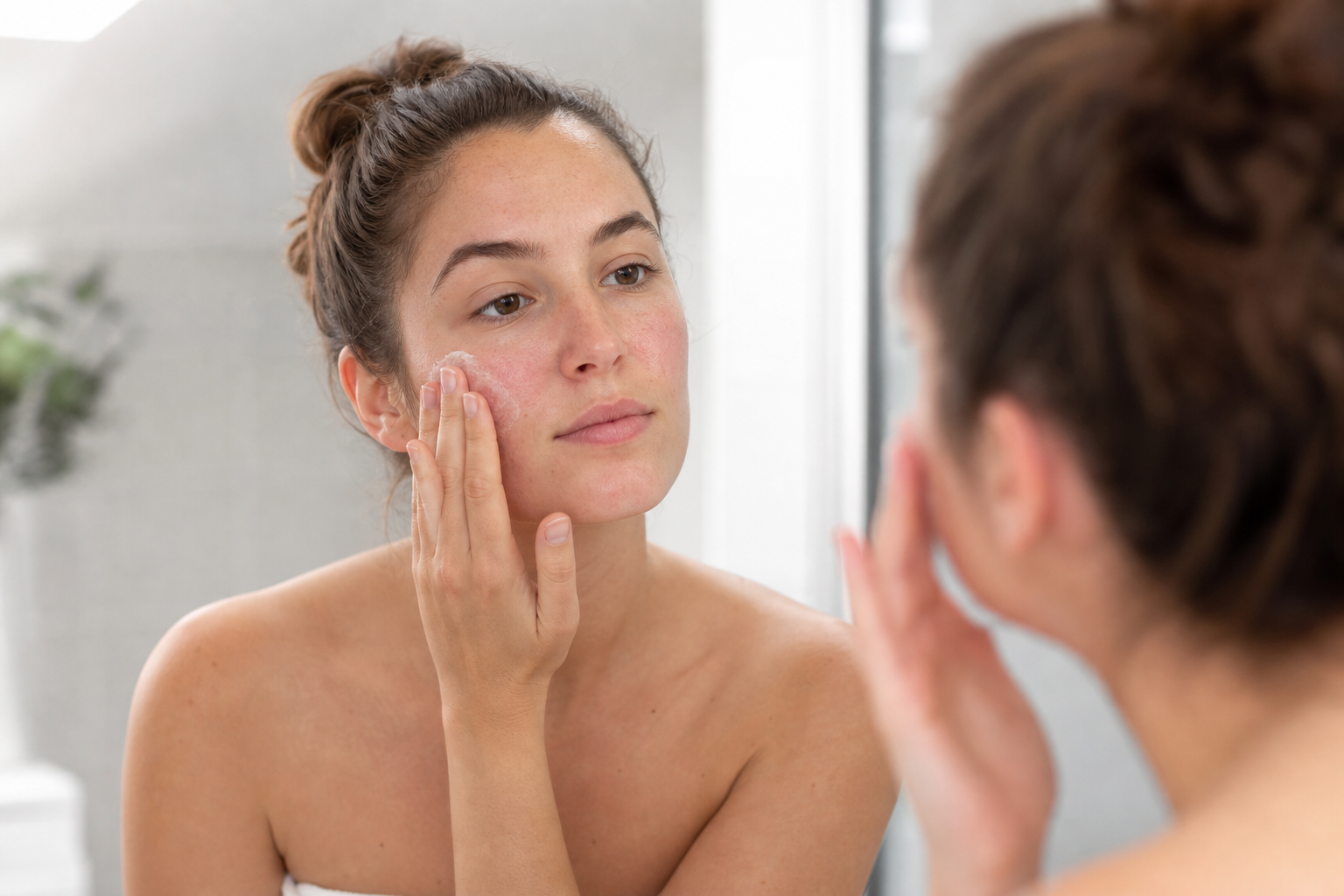
Sensitive skin is not one single skin type. It can show up as stinging after cleansing, flushing after sunscreen, burning from exfoliants, itching under makeup, or a tight "shrink-wrap" feeling after a shower. That is why the better question is not whether sensitive skin is real.
It is why sensitive skin keeps happening and what to change before you spend another $60 on a calming serum.
In everyday skin care, irritation often comes from a mismatch between your barrier and your routine. The American Academy of Dermatology's general skin care guidance emphasizes gentle cleansing, moisturizing, and sun protection as basic habits, because those basics reduce avoidable irritation for many people dermatologist-reviewed skin care basics.
That does not mean every red face is just "dry." Rosacea, eczema, allergic contact dermatitis, acne medication irritation, perioral dermatitis, and other conditions can overlap with sensitive-skin complaints. Persistent symptoms deserve medical guidance.
Still, many purchase mistakes are fixable. The routine is too crowded. The cleanser is stripping. The moisturizer is too light for winter or an air-conditioned office. The sunscreen is elegant but fragranced. A retinoid, acid toner, vitamin C, benzoyl peroxide wash, and exfoliating mask are all being used in the same week, then the skin is blamed for being dramatic.
Here is the practical reset I would use before replacing everything:
- Stop exfoliating acids, scrubs, retinoids, and strong vitamin C for 10 to 14 days if your skin is burning or peeling. 2. Use one gentle cleanser only at night; rinse with lukewarm water in the morning if you are dry. 3. Apply a moisturizer while skin is slightly damp. 4. Use sunscreen every morning, but choose the least irritating formula you can tolerate. 5. Reintroduce one active at a time, no more than twice weekly at first.
This is not glamorous advice. It is also where most savings happen. When people ask whether the sensitive-skin category is "worth it," they often imagine a full shelf of specialist products. In reality, sensitive skin is usually more affordable when you stop buying products that create the next problem.
For a deeper routine reset, pair this article with Gentle Skincare Routine for Damaged Barrier so you can build the steps in the right order instead of guessing.
How Does Sensitive Skin Work? Mistakes to Avoid Before You Shop
The phrase "how does sensitive skin work mistakes to avoid" sounds clunky, but the idea is important: you need to understand the mechanism enough to stop repeating the same irritation cycle.
Your outer skin barrier helps hold water in and keeps irritants out. When that barrier is disrupted, products that once felt fine can suddenly sting. This can happen after over-exfoliation, harsh cleansing, cold wind, low humidity, prescription treatments, fragrance exposure, or simply using too many formulas with overlapping active ingredients.
Mayo Clinic's skin care basics similarly point to gentle cleansing, moisturizing, and sun protection as core ways to care for skin and reduce unnecessary irritation practical skin care basics from Mayo Clinic.
Common mistakes that make sensitive skin feel endless: – Using "tingling" as proof a product works. Tingling can be irritation, especially if it lasts. – Buying natural fragrance because synthetic fragrance bothers you. Essential oils can irritate too. – Switching five products after one bad reaction. Then you cannot identify the trigger. – Assuming expensive means safer.
Many luxury creams are heavily perfumed. – Treating redness, acne, dryness, and texture with separate actives at the same time. – Skipping sunscreen because sunscreen stings, then letting UV exposure worsen inflammation.
There is also a comparison problem. Sensitive-skin products are often judged against "normal skin" products that foam more, smell nicer, absorb faster, or make faster texture claims. That is not a fair contest. A cleanser that does not leave your cheeks tight is doing its job, even if it feels boring.
A plain moisturizer that lets you use prescription tretinoin twice a week without flaking may be more valuable than a trendy serum with instant glow.
The best sensitive-skin decision is usually conservative: remove the likely irritant, support the barrier, and only then decide whether you need a product upgrade.
Sensitive Skin Features to Look For and Mistakes to Avoid
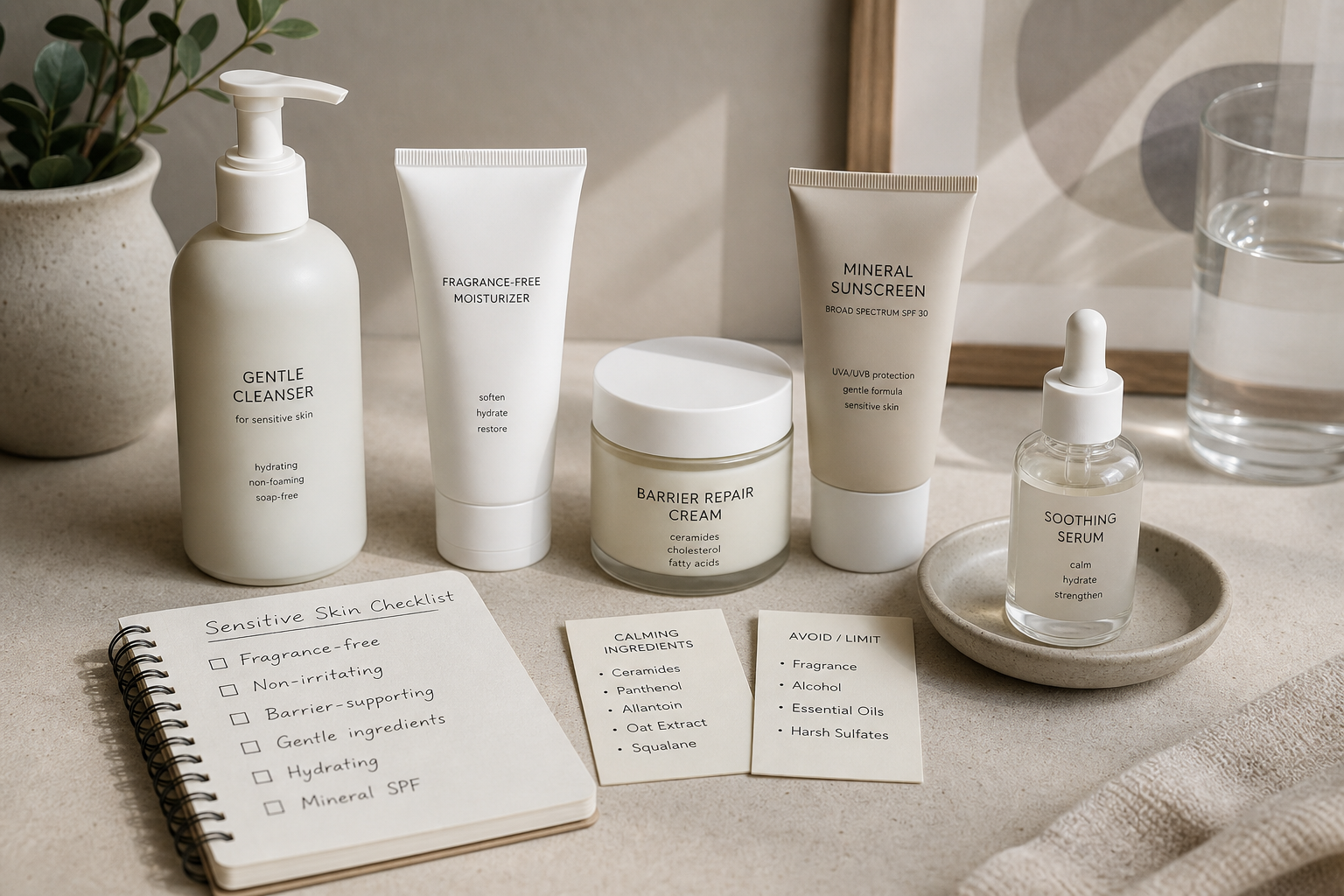
When evaluating a sensitive-skin product, ignore the front label first. "Dermatologist tested," "clean," "hypoallergenic," and "for sensitive skin" can be useful clues, but they are not guarantees. Tests and reviews commonly focus on ingredient exclusions, fragrance status, texture, sunscreen filters, and whether the formula contains barrier-supporting ingredients like glycerin, ceramides, petrolatum, dimethicone, colloidal oatmeal, panthenol, or niacinamide.
The best sensitive skin features to look for mistakes to avoid are surprisingly specific: – Fragrance-free, not merely unscented. Unscented products can still contain masking fragrance. – Shorter ingredient lists when you are actively reactive. – Humectants such as glycerin or hyaluronic acid, paired with emollients or occlusives. – Barrier lipids such as ceramides, especially in moisturizers. – A sunscreen texture you will actually wear every day. – Packaging that protects the formula and fits your routine. Pumps are cleaner; tubs are often cheaper per ounce. – Clear instructions for use, especially with actives.
What should raise your suspicion?
A calming product with lavender oil, citrus peel oil, menthol, peppermint, eucalyptus, or a long perfume-style ingredient list may not be the safest first choice. A serum marketed for redness that also includes strong exfoliating acids may be too ambitious for skin that currently burns.
A moisturizer with dozens of botanical extracts is not automatically bad, but each extra plant extract is one more variable when you are trying to identify a trigger.
The most underrated feature is repeatability. Can you use it morning and night without thinking? Can you buy it again easily? Does it work under sunscreen or makeup? A sensitive-skin product that is technically beautiful but pills under SPF may sit unused, which makes it a poor value.
Product Comparison: What Is Actually Worth Buying?
This is not a giant product roundup because sensitive skin does not need twenty new things. It needs fewer, better-matched basics. The products below are widely available in the U.S. market and make sense because their specs match common sensitive-skin problems. None is perfect for everyone.
Vanicream Gentle Facial Cleanser
Vanicream Gentle Facial Cleanser is the classic "stop making it worse" cleanser. It comes in an 8-ounce pump bottle and is marketed as free of fragrance, dyes, lanolin, parabens, and formaldehyde releasers. The texture is a low-drama gel-lotion foam hybrid: not luxurious, not spa-like, not especially fun. That is the point.
Why it earns a place: reactive skin often needs a cleanser that removes ordinary sunscreen and oil without leaving the face squeaky. Vanicream is commonly recommended in sensitive-skin conversations because it avoids many common irritants. It is also usually affordable enough that you can use the proper amount instead of rationing it.
Tradeoffs: it is not the strongest option for heavy water-resistant sunscreen, long-wear foundation, or stage makeup. You may need a separate fragrance-free cleansing balm or micellar water, which adds another product and another risk of irritation. It can also feel too plain if you enjoy cushiony textures.
Who should buy it: anyone whose skin stings after cleansing, people trying to simplify a routine, and shoppers who want a low-cost baseline product.
Who should skip it: people who want one-step removal of heavy makeup, or those who know gel cleansers leave them tight even when labeled gentle.
La Roche-Posay Toleriane Hydrating Gentle Cleanser
La Roche-Posay Toleriane Hydrating Gentle Cleanser is better for dry, sensitive skin that dislikes foaming cleansers. The 13.52-fluid-ounce pump bottle usually makes it a reasonable value for a pharmacy brand. The formula includes glycerin, ceramide-3, niacinamide, and the brand's thermal water.
Its strength is comfort. It feels more like a cleansing lotion than a classic face wash, which helps if your skin gets tight around the mouth, cheeks, or nose after washing. For someone using a retinoid, acne prescription, or winter barrier-repair routine, this type of cleanser often makes more sense than a foaming wash.
The drawback is residue perception. Oily or very acne-prone users may feel it does not rinse cleanly enough, even if the skin is technically clean. Some people also react to niacinamide, though many tolerate it well. If you have a history of niacinamide flushing or stinging, patch test before committing.
Compared with Vanicream, this feels more moisturizing but less "blank slate." Choose Vanicream if your top priority is minimalism. Choose La Roche-Posay if cleansing itself is the step that makes your skin feel stripped.
CeraVe Moisturizing Cream
CeraVe Moisturizing Cream is a value pick because the 19-ounce tub can be used on face and body. The formula includes ceramides and hyaluronic acid, and it is fragrance-free. It is not the chicest product on a vanity, but for dry sensitive skin, eczema-prone body areas, or winter face tightness, the cost per ounce is hard to ignore.
The reason it works for many people is basic barrier logic: humectants pull water, emollients smooth, and a richer cream reduces water loss better than a light lotion. If your face feels tight 20 minutes after moisturizing, a gel cream is probably not enough.
Tradeoffs are real. The tub is not everyone's favorite from a hygiene standpoint, although clean hands or a spatula help. On acne-prone faces, it can feel heavy. Under makeup, it may be too rich unless you use a thin layer. If you get closed comedones from heavier creams, consider using it on the body and choosing a lighter face moisturizer.
This is where affordable sensitive skin review mistakes to avoid matter: do not judge value only by price. A huge tub is a bargain only if the texture works for the area where you plan to use it.
Avène Cicalfate+ Restorative Protective Cream
Avène Cicalfate+ is not the moisturizer I would tell everyone to use twice daily forever. It is more of a targeted "my barrier is angry" cream. It comes in smaller tubes, commonly 1.3 or 3.3 ounces, and has a thick, protective finish. The formula includes the brand's postbiotic restorative ingredient and a copper-zinc mineral complex.
Where it helps: irritated patches around the nose, dry spots after overdoing actives, wind-chapped cheeks, or areas that need a protective layer. It is especially useful when a normal moisturizer disappears too quickly.
The downside is cosmetic elegance. It can look a little visible or pasty, especially on deeper skin tones if applied heavily. It may feel too occlusive for oily or breakout-prone areas. It is also pricier per ounce than a basic moisturizer.
Think of it as a short-term rescue layer, not a full routine replacement. If your entire face is inflamed, painful, weeping, crusting, or getting worse, do not keep layering products and hoping. See a clinician.
EltaMD UV Clear Broad-Spectrum SPF 46
EltaMD UV Clear SPF 46 is popular because it solves a very specific sensitive-skin problem: many sunscreens sting, pill, leave a cast, or trigger breakouts. UV Clear uses zinc oxide plus octinoxate, includes niacinamide, and has a lightweight finish that works under many routines.
For sensitive skin, the best sunscreen is not the one with the prettiest ingredient philosophy. It is the one you can wear consistently without burning or avoiding it.
Why it is worth considering: it is cosmetically elegant compared with many mineral-heavy formulas, and it is often recommended for sensitive or redness-prone skin. The pump bottle is convenient and travel-friendly.
Why it may not be worth it: it is expensive, and it is not all-mineral because it includes octinoxate. Some people dislike niacinamide. Others need a richer sunscreen because this one can feel a bit light on dry skin. If you are strict about mineral-only filters, look elsewhere.
For more sunscreen-specific help, see Best Sunscreens for Sensitive Skin Without Fragrance.
Sensitive Skin vs Alternatives: Mistakes to Avoid When Comparing Products
The phrase sensitive skin vs alternatives mistakes to avoid is really about comparison shopping. You are not just choosing between two moisturizers. You are choosing between different philosophies: sensitive-skin minimalism, acne-focused treatment, anti-aging actives, "clean beauty," dermocosmetic pharmacy brands, and luxury skin care.
Here is the plain truth: sensitive skin usually loses when you compare immediate excitement. A rich fragranced cream may feel more indulgent. An acid toner may make skin smoother in three days. A vitamin C serum may brighten faster. A retinoid can improve texture and fine lines over time. None of that means those options are wrong. It means timing matters.
If your skin is currently irritated, the alternative to a sensitive-skin routine is often not better skin. It is a repeating loop: use active, get inflamed, stop everything, recover halfway, restart too soon, react again.
Use this comparison framework:
| Routine type | Best for | What it does well | Main sensitive-skin risk | Better choice when |
|---|---|---|---|---|
| Sensitive-skin basic routine | Stinging, redness, tightness | Reduces variables and supports barrier | May feel slow or boring | Skin reacts to multiple products |
| Acne-focused routine | Comedones, inflamed pimples | Targets oil, bacteria, clogged pores | Benzoyl peroxide/acids can dry skin | Acne is the main issue and barrier is stable |
| Anti-aging active routine | Texture, fine lines, uneven tone | Uses retinoids, acids, antioxidants | Higher irritation potential | Skin tolerates basics consistently |
| Clean beauty routine | Ingredient preference shoppers | May avoid some disliked ingredients | Essential oils and extracts can irritate | Formula is truly fragrance-free and simple |
| Luxury routine | Sensorial experience | Elegant textures and packaging | Fragrance and complex formulas | You tolerate fragrance and want experience |
A sensitive-skin routine is not anti-active forever. It is a staging area. Once your skin is calm for several weeks, you can test one active. For example, a low-strength retinoid one night a week over moisturizer may be realistic. A daily acid toner probably is not the first move.
The hidden emotional part of this decision is confidence. Nobody wants to spend money and feel foolish when the product burns. Comparison shopping works best when you stop asking, "Which product is objectively best?" and ask, "Which product fits the state my skin is in this month?"
How to Choose Without Overbuying
A smart sensitive-skin purchase is less about finding the perfect brand and more about controlling variables. If you buy a new cleanser, moisturizer, sunscreen, serum, and mask in the same week, you have no idea what helped or hurt.
Use this practical evaluation checklist before you add anything to cart:
- What problem am I solving: stinging, dryness, redness, breakouts, sunscreen intolerance, or makeup pilling? 2. Is my current cleanser leaving my face tight or shiny-clean? 3. Does the new product contain fragrance, essential oils, menthol, or strong exfoliating acids? 4. Does it replace a step or add another step? 5. Can I patch test it for several days before using it on my full face? 6. Is the cost per ounce reasonable for daily use? 7. Does the texture fit my climate, season, and skin type? 8. If it fails, can I use it elsewhere, such as neck, hands, or body?
Patch testing is not exciting, but it is one of the cheapest forms of insurance. Try the product on a small area near the jaw, behind the ear, or another discreet area for a few days. This does not catch every reaction, but it can prevent the worst "full-face regret."
Also consider the season. In May 2026, many U.S. shoppers are moving from indoor heating into sunscreen, sweat, pollen, and air-conditioning season. A cream that saved your cheeks in January may be too heavy under summer SPF. Conversely, a gel moisturizer that feels wonderful in humid weather may fail in a dry office.
Do not let affiliate lists convince you every step needs a premium product. Spend where failure is costly. For many sensitive-skin routines, that means sunscreen first, then moisturizer, then cleanser. Toners, essences, masks, and treatment serums are optional.
Pros of a Sensitive-Skin Routine
The biggest benefit is predictability. When your cleanser, moisturizer, and sunscreen do not fight your face, you can tell whether a new treatment is actually causing trouble. That alone makes the routine worth it for many people.
Other advantages: – Less burning and tightness after washing. – Fewer impulse purchases based on trendy actives. – Better tolerance for medically recommended treatments when a clinician prescribes them. – Easier sunscreen consistency. – More realistic budgeting because basics get used up instead of abandoned. – Better makeup application when flakes and irritation are under control.
A sensitive-skin routine can also improve decision fatigue. Instead of scanning every launch, you learn your personal no-go list. For one person, that might be fragrance and foaming cleansers. For another, it might be niacinamide and chemical sunscreens. That knowledge is worth more than a drawer full of half-used products.
There is a mental relief too. Red, reactive skin can make people feel like they are doing something wrong. A calmer routine gives you a repeatable baseline. It does not guarantee perfect skin, but it makes your next decision less random.
Cons and Tradeoffs Nobody Mentions
Sensitive-skin products can disappoint if you expect them to perform like aggressive treatments. They usually do not resurface texture overnight. They do not erase pigmentation quickly. They do not replace prescription care for rosacea, eczema, acne, or dermatitis.
The category also has marketing problems. "Sensitive" can be slapped on products that still contain fragrance or multiple botanicals. Some clean-beauty formulas imply that synthetic ingredients are the problem, even though many sensitive-skin users tolerate well-formulated synthetic ingredients better than fragrant plant oils.
Cost can be sneaky. A $14 cleanser that works is a bargain. A $48 redness serum that stings is not. But the reverse can also be true: if a $43 sunscreen is the only one you will wear every day, it may be more worthwhile than four cheaper bottles you avoid.
The other tradeoff is patience. Barrier repair is not a one-night project. If your skin has been irritated for months, a simple routine may feel underwhelming for the first week. That is normal. What you are looking for is a decrease in stinging, tightness, and reactivity, not a dramatic "after" photo by Friday.
Finally, there is the risk of under-treating a real condition. If your "sensitive skin" includes persistent flushing, thick scale, swelling, pus, intense itch, eye irritation, or painful cracking, do not keep shopping. Get medical advice. Products can support skin, but they should not delay care.
Who Should Buy This / Who Should Skip It
A sensitive-skin-focused routine is a strong buy if your skin often reacts before you can judge whether a product works. It is also a good choice if you are restarting skin care after over-exfoliation, beginning an acne or retinoid treatment under professional guidance, or trying to build a basic routine after years of random purchases.
You should especially consider it if: – Your face stings with many cleansers or sunscreens. – You get tight, shiny, uncomfortable skin after washing. – You have a history of reacting to fragrance or essential oils. – You want fewer products, not a more complicated shelf. – You need a dependable base routine before adding actives.
Skip a full sensitive-skin shopping overhaul if your current routine is comfortable and your main goal is a specific treatment result, such as acne control, melasma management, or prescription retinoid optimization. In that case, keep your gentle basics and talk with a dermatologist about targeted options.
Also skip the category if you are using it as a way to avoid sunscreen altogether. Sensitive skin still needs UV protection. The format may need to change-mineral, hybrid, tinted, fragrance-free, moisturizing, or lighter gel-but the habit matters.
For ingredient-by-ingredient troubleshooting, Skincare Ingredients That Commonly Irritate Sensitive Skin can help you spot patterns before you repurchase.
Real-World Examples: Better Decisions by Skin Situation
Consider a 34-year-old office worker with dry cheeks, oily nose, and stinging after a foaming cleanser. The best purchase is probably not a redness serum. It is a gentler cleanser, such as Vanicream or La Roche-Posay Toleriane, plus a moisturizer that actually lasts through air-conditioning. If sunscreen stings, solve that next.
Now picture someone with acne-prone skin using salicylic acid cleanser, benzoyl peroxide gel, retinol, and a clay mask. Their skin is flaky and every moisturizer burns. The mistake is not failing to find the perfect calming cream. The mistake is stacking too many drying actives. They need a pause, a bland moisturizer, and perhaps clinician guidance if acne is persistent or scarring.
Another shopper has redness and wants "natural" skin care. They buy a botanical cream with lavender, citrus oil, and twenty plant extracts. It smells beautiful and burns within minutes. The better decision is not necessarily synthetic versus natural. It is fragrance-free, fewer variables, and patch testing.
A fourth person has mature, sensitive skin and wants anti-aging results. They do not need to abandon retinoids forever. They may need to use a lower-strength retinoid less often, apply moisturizer first, and avoid exfoliating acids on the same nights. Sensitive skin can still use active ingredients, but the schedule has to respect the barrier.
These examples matter because they reduce purchase uncertainty. You are not trying to become a cosmetic chemist overnight. You are trying to make the next product less likely to create the next emergency.
Recommendation: The Best Value Path for 2026
If you are starting from irritation, the best 2026 sensitive-skin routine is a three-product baseline: a gentle cleanser, a barrier-supporting moisturizer, and a sunscreen you can tolerate. Add treatments only after your skin is calm enough to give useful feedback.
My practical recommendation is to build in this order: choose Vanicream Gentle Facial Cleanser if you want the most stripped-down affordable cleanser, or La Roche-Posay Toleriane Hydrating Gentle Cleanser if dry skin needs more comfort.
Use CeraVe Moisturizing Cream when dryness is the main problem and you want strong cost-per-ounce value; keep Avène Cicalfate+ for short-term irritated patches rather than all-over daily use.
For sunscreen, EltaMD UV Clear SPF 46 is worth considering if you want a polished daily finish and can accept the price and hybrid filter system.
Do not buy all five automatically. Buy the product that solves your biggest failure point first. If cleansing causes tightness, start there. If every sunscreen burns, prioritize SPF. If your moisturizer disappears in an hour, fix that before adding a serum.
Frequently Asked Questions
Is sensitive skin worth it if the products cost more?
Yes, a sensitive-skin routine is worth paying for when it prevents repeat irritation and wasted products. But "worth it" does not mean expensive. A basic fragrance-free cleanser and moisturizer can outperform a luxury calming cream if the luxury formula contains fragrance or too many active ingredients. Spend more only where comfort and consistency improve.
Why does my skin suddenly react to products I used before?
Skin can become more reactive after barrier disruption, seasonal dryness, over-exfoliation, medication changes, sun exposure, illness, or repeated use of irritating ingredients. A product you tolerated before may sting when your barrier is compromised. If reactions are sudden, severe, widespread, or persistent, check with a qualified clinician to rule out allergy or skin disease.
What ingredients should sensitive skin avoid first?
Start by avoiding fragrance, essential oils, menthol, strong exfoliating acids, harsh scrubs, and high-strength actives used too often. You do not need to fear every long ingredient name. Many sensitive-skin-friendly formulas use well-studied synthetic ingredients. The bigger mistake is assuming "natural," "clean," or "tingling" automatically means gentle.
Are drugstore sensitive-skin products as good as premium brands?
Often, yes. Drugstore brands such as Vanicream, CeraVe, and La Roche-Posay can be excellent because they focus on fragrance-free basics, barrier ingredients, and accessible formats. Premium products may offer better texture or packaging, but they are not automatically safer. Judge by ingredients, tolerance, and how consistently you will use the product.
How long does it take for a gentle routine to help?
Some people notice less stinging within a few days, but a stressed barrier may take several weeks to feel stable. The key is not changing products every two days. Give a simple routine time unless symptoms worsen. Pain, swelling, oozing, crusting, intense itch, or eye-area reactions deserve medical advice sooner.
Can sensitive skin use retinol, vitamin C, or exfoliating acids?
Sometimes, but not all at once and not during an active irritation flare. Wait until your basic routine feels comfortable. Then introduce one active at low frequency, such as once weekly, and monitor your skin. Many sensitive-skin mistakes come from using good ingredients on the wrong schedule.
Final Takeaway
Sensitive skin is worth taking seriously because the right routine can save money, reduce frustration, and make future product choices more confident. The winning move is not buying every calming product. It is choosing fewer products with better odds: fragrance-free cleanser, barrier-supporting moisturizer, tolerable sunscreen, slow testing, and clinician help when symptoms move beyond normal irritation.