
*Health disclaimer: This article is for general skincare education, not a diagnosis or personalized medical advice. If shaving causes severe burning, swelling, hives, open sores, infection signs, or redness that does not settle, stop using the product and talk with a board-certified dermatologist or qualified clinician.*
If your skin gets angry after shaving, you are not being dramatic. Sensitive skin often reacts fast because the skin barrier is easier to disrupt, and shaving adds friction, water, pressure, and a sharp blade to the mix. Learning how to use Edge Sensitive Skin shave gel correctly can reduce tugging, razor burn, and post-shave redness-but technique matters as much as the product.
Use Edge Sensitive Skin shave gel on clean, damp skin, apply a thin even layer, shave with light pressure in the direction of hair growth, rinse the blade often, and moisturize afterward. Avoid dry shaving, repeated passes, harsh aftershaves, or using it on irritated, broken, or actively inflamed skin.
The Short Answer: How to Use Edge Sensitive Skin Shave Gel Without Irritating Your Skin

Start by washing the area with lukewarm water and a gentle cleanser. Warm water softens hair and helps the shave gel spread, but hot water can strip oils and make sensitive skin more reactive. If you have time, shave near the end of a shower or after holding a warm, damp washcloth on the area for a minute or two.
Shake the can, dispense a small amount into your hand, and smooth it over the area you plan to shave. You do not need a huge mound of foam. A consistent cushion is the goal. Too much product can make it harder to see where you have shaved, which may lead to extra passes and more friction.
Use a clean, sharp razor. Dull blades pull at hair instead of cutting it cleanly, which can trigger razor bumps, stinging, and redness. Shave in short strokes with the grain of hair growth first. For many people, especially on the face, neck, bikini line, or underarms, shaving against the grain is the step that turns a calm shave into a red, bumpy one.
Rinse the blade after every few strokes so gel, hair, and skin debris do not clog the razor. Clogging increases drag, and drag is one of the main reasons sensitive skin feels scraped after shaving. Let the razor do the work. Pressing harder does not make the shave better; it removes more surface skin and increases irritation.
When you are done, rinse with cool or lukewarm water and gently pat dry. Do not rub the towel over freshly shaved skin. Follow with a bland, fragrance-free moisturizer or sensitive skin lotion to help restore the barrier. If you need help choosing a post-shave moisturizer, see our sensitive skin lotion guide for barrier-friendly basics.
A useful way to understand why does sensitive skin turn red easily is to think of the skin barrier as a protective wall. When that wall is thin, dry, inflamed, or already stressed, shaving can trigger blood flow, nerve sensitivity, and visible flushing. The cause is not always an allergy. Often, it is a combination of friction, barrier damage, fragrance, heat, and too many passes with the razor.
Common mistakes include shaving over the same spot repeatedly, using an old blade, shaving immediately after applying strong exfoliating acids or retinoids, and skipping moisturizer. Another mistake is treating all hair-removal products the same. For example, how to use Veet Sensitive Skin cream is different because depilatory creams dissolve hair chemically and must be timed and patch-tested according to their own label. Shave gel is a lubricant for a razor; depilatory cream is not.
If you are wondering how to fix sensitive skin without making it worse, simplify before you intensify. Use fewer products, avoid fragrance when possible, moisturize consistently, and give your skin breaks between shaves. Do not try to "toughen up" sensitive skin with scrubs, alcohol-based aftershave, or daily close shaving if your skin is already burning. That usually creates a cycle: irritation weakens the barrier, a weaker barrier reacts faster, and the next shave feels worse.
There are also safety limits. Do not use shave gel over cuts, rashes, sunburn, active eczema flares, infected follicles, or unexplained lesions. If you get repeated painful bumps, pus, dark marks, or swelling after shaving, a clinician can check for folliculitis, ingrown hairs, contact dermatitis, or another condition that needs different care.
And if you have ever jokingly asked, "is sensitive skin worth it?" the honest answer is that sensitive skin is manageable, but it asks for consistency. A comfortable shave usually comes from stacking small decisions: warm water instead of hot, enough gel instead of dry shaving, light pressure instead of scraping, and moisturizer instead of hoping the redness will fade on its own.
Shaving sensitive skin is mostly about lowering friction, shortening contact time with irritants, and protecting the skin barrier afterward. This guide explains how to use Edge Sensitive Skin Shave Gel in a practical, skin-first way.
Medical note: This is general skincare education, not a diagnosis. If shaving causes persistent burning, swelling, pus, open sores, or rashes that do not improve, see a board-certified dermatologist or qualified clinician.
Why Sensitive Skin Gets Irritated When You Shave
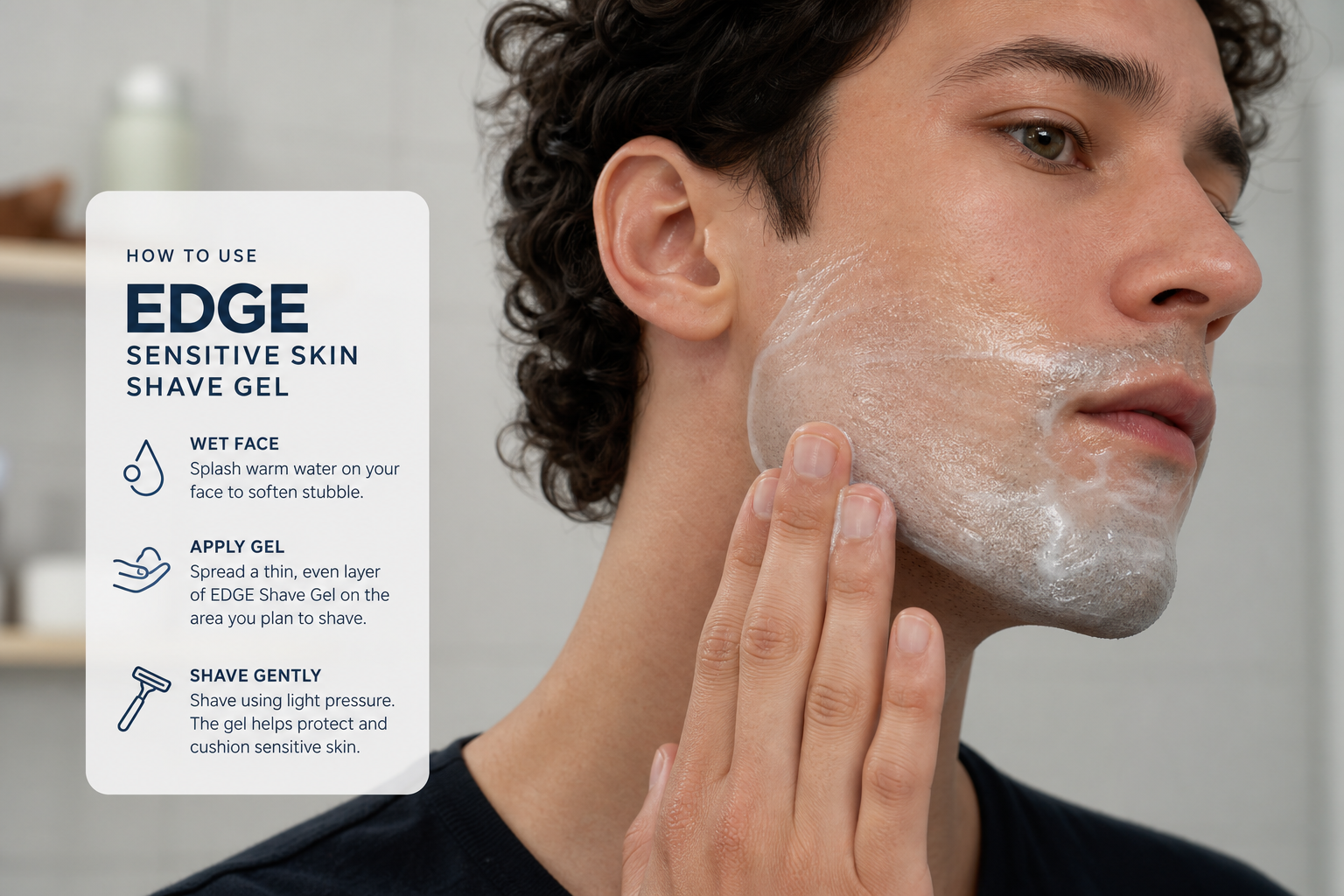
Sensitive skin is not "weak" skin. It is skin that reacts faster to triggers like friction, heat, fragrance, dryness, or repeated scraping. If you have ever wondered why does sensitive skin turn red easily, the answer usually comes down to inflammation plus a stressed skin barrier. When the outer layer loses moisture or gets micro-abrasions, nerve endings and blood vessels respond quickly, causing redness, stinging, bumps, or tightness.
Shaving adds several triggers at once. The razor blade cuts hair, but it can also remove tiny amounts of surface skin. If the shave gel is too thin, if the blade is dull, or if you shave against the grain too early, the razor drags instead of gliding. That drag is a major cause of razor burn.
Edge Sensitive Skin Shave Gel can help because a gel creates slip between the razor and skin. But even a good gel cannot fix poor technique. The cause-and-effect chain is simple: dry skin plus pressure equals friction; friction plus repeated passes equals redness; redness plus fragranced aftercare can become burning.
Common irritation triggers include: – Shaving before the hair is softened – Using water that is too hot – Pressing the razor into the skin – Going over the same area repeatedly – Using a dull or dirty blade – Applying alcohol-heavy aftershave afterward – Shaving over active rash, sunburn, acne, or cuts
For basic shaving irritation guidance, the American Academy of Dermatology is a useful reference: [AAD shaving tips](https://www.aad.org/public/everyday-care/skin-care-basics/hair/shaving).
Step-by-Step: How to Use Edge Sensitive Skin Shave Gel Correctly
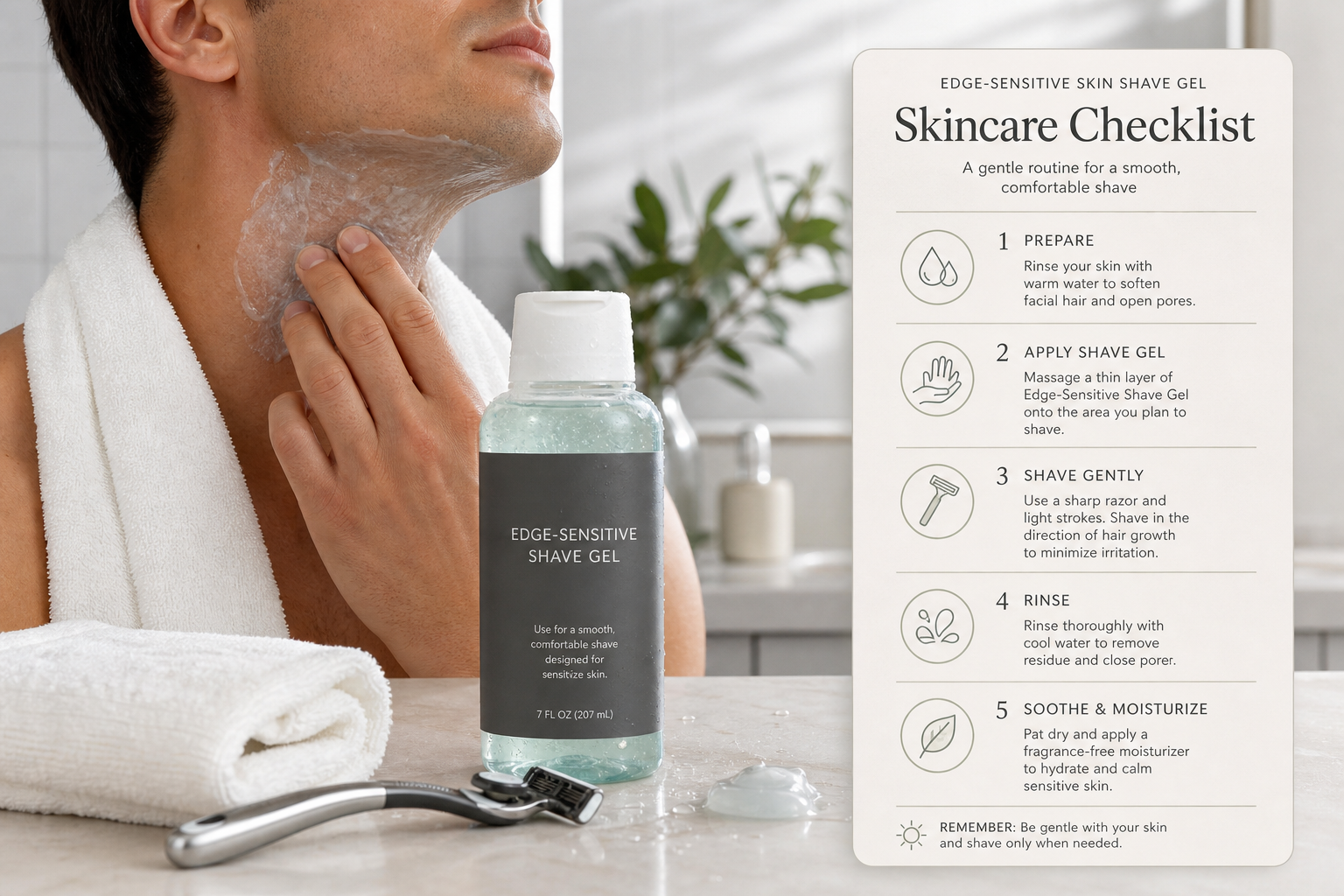
The best method is simple, but the order matters. If you are searching how to use edge sensitive skin shave gel because shaving keeps leaving you red or bumpy, start by changing the prep and pressure before adding more products.
| Step | What to do | Why it helps |
|---|---|---|
| 1 | Wash the area gently with lukewarm water | Removes sweat and oil without stripping skin |
| 2 | Hydrate hair for 2-3 minutes | Softer hair cuts with less tugging |
| 3 | Apply a thin, even layer of shave gel | Creates glide and reduces blade friction |
| 4 | Shave with the grain first | Lowers risk of razor burn and ingrown hairs |
| 5 | Use short, light strokes | Prevents pressure damage |
| 6 | Rinse the blade often | Clears hair and gel so the razor cuts cleanly |
| 7 | Rinse skin with cool water | Calms heat and removes residue |
| 8 | Pat dry and apply sensitive skin lotion | Helps restore the moisture barrier |
Use less force than you think you need. The razor should do the cutting; your hand should only guide it. If you need to press hard, the blade is probably dull or the hair was not softened enough.
After shaving, choose a bland, fragrance-free sensitive skin lotion. Look for ingredients such as glycerin, petrolatum, dimethicone, ceramides, or colloidal oatmeal. Skip acids, retinoids, scrubs, and strong exfoliants right after shaving. If you use acne treatments, retinol, or prescription topicals, ask your clinician how to time them around shaving.
Do not use depilatory instructions interchangeably with shaving gel instructions. For example, how to use Veet sensitive skin cream is a different process because depilatory creams chemically dissolve hair and have strict timing limits. Shave gel is meant to be rinsed while shaving; hair-removal cream is meant to sit on the skin for a labeled amount of time. Mixing those routines can cause irritation.
Fixes, Mistakes, and Safety Limits for Sensitive Skin
If your skin burns after shaving, pause and simplify. Rinse with cool water, pat dry, and apply a plain moisturizer. Do not scrub the area to "clean it better." Scrubbing removes more barrier lipids and can make redness last longer. This is the core of how to fix sensitive skin without making it worse: reduce triggers, moisturize consistently, and reintroduce products slowly.
Mistake one is shaving too often. If your skin is inflamed, give it a break for a day or two when possible. Shaving over irritation keeps restarting the inflammatory cycle.
Mistake two is chasing an ultra-close shave every time. Against-the-grain shaving may feel smoother, but it increases the chance of razor burn and ingrown hairs, especially on the neck, bikini line, underarms, or anywhere hair curls. If you must shave closer, do one pass with the grain first, reapply gel, then shave lightly across the grain-not directly against it.
Mistake three is ignoring the razor. Replace blades regularly, store them dry, and do not share razors. A clogged or rusty blade raises the risk of nicks and follicle irritation.
Mistake four is using too many "sensitive" products at once. Is sensitive skin worth it as a label? Sometimes, but the label alone is not enough. Read the ingredient list. Fragrance-free is usually safer than simply "unscented," because unscented products may still contain masking fragrance.
Safety limits matter. Stop shaving and seek clinician advice if you notice spreading redness, warmth, severe pain, pus, fever, hives, swelling of the lips or face, or a rash that keeps returning. Also get checked if bumps look like acne but worsen after every shave; you may be dealing with folliculitis, contact dermatitis, or pseudofolliculitis barbae.
Used correctly, Edge Sensitive Skin Shave Gel is one part of a calmer shave routine. The bigger win is pairing it with warm water, light pressure, a sharp razor, and barrier-supporting moisturizer afterward.
Mastering the art of a clean shave when your skin is easily irritated requires more than just a sharp blade. It is a systematic process of moisture management and barrier protection.
*Disclaimer: This information is for educational purposes and is not medical advice. If you experience chronic inflammation, weeping sores, or severe hives, consult a board-certified dermatologist for a clinical evaluation.*
To effectively use Edge sensitive skin shave gel, start by washing your face with warm water for three minutes to soften hair. Apply a thin, even layer of the gel using circular motions to lift the follicles. Shave with the grain using light pressure, rinsing the blade after every stroke, and finish with a cool water rinse and an alcohol-free sensitive skin lotion.
The Pre-Shave Protocol and Application Technique
Preparation is the most critical phase for those who wonder why does sensitive skin turn red easily. When dry hair is cut, the blade tugs at the follicle, causing micro-tears in the stratum corneum. To prevent this, you must hydrate the keratin. Spend at least two to three minutes in a warm shower or apply a damp towel to the area. This heat relaxes the pores and makes the hair significantly easier to sever.
Once the skin is prepped, dispense a small amount of the gel. The cause-and-effect here is simple: too much product creates a barrier so thick the blade can't reach the hair, while too little leads to friction. Massage the gel in a clockwise motion; this action helps the formula coat every side of the hair shaft. Unlike knowing [how to use veet sensitive skin cream](https://www.example.com/depilatory-guide), which relies on chemical dissolution, shave gel relies on mechanical glide.
Common Preparation Mistakes:
- Shaving immediately after waking up when skin is naturally puffy. * Using freezing cold water, which tightens the skin and traps hair follicles. * Using soap bars that strip natural oils instead of a dedicated gel.
Maximizing Blade Glide and Post-Shave Recovery
When you begin the actual pass, the goal is to minimize the number of times the steel touches your face. Every extra stroke increases the likelihood of razor burn. Many people ask [how to fix sensitive skin without making it worse](internal://skincare-recovery-tips) during this stage. The answer lies in the "with the grain" technique. Shaving against the growth provides a closer feel but pulls the skin into the path of the blade, leading to ingrown hairs.
After the final pass, rinsing is not just about removing leftover foam. You must transition from warm water to cool water. This temperature shift helps constrict blood vessels and reduces the immediate inflammatory response. Pat the skin dry with a clean microfiber towel; never rub, as the friction can re-irritate the freshly exfoliated surface. Finally, apply a soothing sensitive skin lotion. This replaces the moisture lost during the process and seals the skin barrier against environmental pollutants.
Essential Product Selection Criteria:
- Fragrance-Free: Synthetic scents are the primary trigger for contact dermatitis. * Lubricants: Look for aloe, vitamin E, or glycerin-based formulas. * Alcohol-Free: Avoid denatured alcohol which causes immediate stinging and dehydration. * Non-Comedogenic: Ensure the gel won't clog pores, leading to post-shave breakouts.
Who Should Skip This Approach and Safety Limits
While learning how to use Edge sensitive skin shave gel is beneficial for the average user, certain skin conditions require a different strategy. If you are currently experiencing an active flare-up of cystic acne, eczema, or psoriasis in the shaving area, mechanical exfoliation (shaving) will likely exacerbate the condition. In these instances, the physical trauma of the blade can spread bacteria or further compromise an already broken skin barrier.
if you find that even with perfect technique your skin remains chronically inflamed, it is worth asking: is sensitive skin worth it to keep shaving every day? Sometimes, the best way to fix the issue is to reduce shaving frequency to every three days, allowing the moisture barrier to fully regenerate.
If you notice persistent bumps that do not clear within a week, or if you see signs of a staph infection like yellow crusting, skip the home remedies and seek a clinician referral immediately. Safety should always take precedence over aesthetic smoothness.
Frequently Asked Questions
What is the right way to use Edge Sensitive Skin Shave Gel?
If you're learning how to use Edge Sensitive Skin Shave Gel, start with warm water, not hot. Warm water softens hair and helps the gel spread evenly, while hot water can strip the skin barrier and make redness worse. As a health note, shaving irritation can overlap with eczema, folliculitis, allergic reactions, or infection; if you have swelling, pus, severe burning, spreading rash, or symptoms that keep returning, check with a dermatologist or qualified clinician.
Apply a thin, even layer over damp skin and let it sit for about 30 to 60 seconds before shaving. That short pause matters because it gives the formula time to cushion the hair and reduce friction. Shave with light pressure, rinse the blade often, and avoid going over the same spot repeatedly. Afterward, rinse with cool water and apply a fragrance-free sensitive skin lotion to help replace moisture.
Why does sensitive skin turn red easily after shaving?
Sensitive skin turns red easily because its barrier is often more reactive to friction, heat, fragrance, alcohol-based products, and repeated blade passes. Shaving removes hair, but it also lightly disrupts the outer skin layer. When that barrier is already vulnerable, blood vessels near the surface can dilate quickly, creating redness, warmth, or stinging.
A dull razor makes this worse because it tugs instead of cutting cleanly. Pressing harder can also create tiny abrasions, which triggers inflammation. To reduce redness, prep with warm water, use enough shave gel to maintain slip, shave in the direction of hair growth first, and save against-the-grain passes for areas that tolerate them well. If redness is immediate and intense every time, consider patch testing your shave gel and aftercare products.
Can I use Edge Sensitive Skin Shave Gel every day?
Many people can use it daily, but your skin's response should set the schedule. If shaving every day leaves your face, legs, underarms, or bikini area tight, itchy, bumpy, or raw, the issue may be too much cumulative friction rather than the gel itself. Sensitive skin usually does better with consistency and restraint.
Use a clean, sharp razor, avoid dry shaving, and keep your routine simple afterward. A gentle cleanser and a sensitive skin lotion are often enough. Skip strong exfoliating acids, retinoids, or heavily fragranced products right after shaving unless your clinician has told you they're appropriate. If daily shaving is necessary for work or personal comfort, try shaving after a shower and replacing blades more often.
What common mistakes make shave gel less effective on sensitive skin?
The biggest mistake is applying shave gel to skin that is barely damp. Gel needs water to spread and cushion properly. Another common issue is using too little product, which causes the razor to drag. That drag can lead to razor burn, red patches, and a rough feel afterward.
Other mistakes include shaving too fast, using a clogged blade, rinsing with very hot water, and following with alcohol-heavy aftershave. Some people also over-exfoliate because they think smoother skin will prevent bumps. In reality, too much scrubbing can weaken the barrier and increase irritation. If you're trying to figure out how to fix sensitive skin without making it worse, reduce variables: gentle prep, light strokes, cool rinse, plain moisturizer, and a break from harsh actives.
Is shave gel the same as hair removal cream for sensitive skin?
No. Shave gel and depilatory cream work differently. Shave gel helps a razor glide over the skin so hair can be cut at the surface. Hair removal creams dissolve hair chemically, which can be more irritating for some sensitive skin types.
People often search how to use Veet sensitive skin cream when they want a no-razor option, but the safety rules are different. Depilatory creams require strict timing, patch testing, and avoiding broken or irritated skin. Shave gel, by contrast, is used during mechanical hair removal with a razor. Do not layer the two methods in the same session unless the product directions specifically allow it. Combining friction and chemicals can increase burning, redness, and barrier damage.
What should I apply after shaving with sensitive skin?
After shaving, rinse away leftover gel with cool water and gently pat dry. Don't rub with a towel, because freshly shaved skin is more vulnerable to friction. Apply a fragrance-free, non-stinging moisturizer while the skin is still slightly damp. A sensitive skin lotion with ingredients like glycerin, ceramides, colloidal oatmeal, or petrolatum can help reduce water loss and calm tightness.
If you get bumps, avoid picking them. Picking can turn simple irritation into scabs, dark marks, or infection. For recurring ingrown hairs, consider shaving with the grain, using fewer passes, or talking with a clinician about options such as mild chemical exfoliation on non-shaving days. See {{internal_link}} for more sensitive-skin routine guidance.
Is sensitive skin worth treating carefully if shaving still irritates it?
Yes. The question "is sensitive skin worth it" usually comes from frustration, but careful treatment can make a real difference. Sensitive skin is not a flaw; it is skin that reacts more quickly when its barrier, nerves, or immune response are triggered. The goal is not to make skin tolerate everything. The goal is to reduce unnecessary triggers while still getting a comfortable shave.
If irritation continues despite good technique, change one factor at a time: blade age, shaving direction, water temperature, gel amount, or aftercare. If pain, rash, bleeding, or bumps persist, a dermatologist can check for conditions that need targeted treatment.
Related Routine Guides
For a related next step, read sensitive skin sunscreen routine before changing your whole routine. For a related next step, read morning skincare order before changing your whole routine.
Source Notes
I would treat this as a comfort and safety question, not just a product question. For safety context, check American Academy of Dermatology sunscreen selection guidance and FDA sunscreen safety guidance.