*Health disclaimer: This article is for general skincare education, not a medical diagnosis or treatment plan. If you have persistent itching, burning, cracked skin, rash, eczema flares, hives, infection, or a reaction that worsens after washing, stop using the product and speak with a dermatologist, primary care clinician, or other qualified healthcare professional.*
If your skin gets tight, itchy, red, or uncomfortable after a shower, you are not being "too sensitive." Cleansing can genuinely disrupt the skin barrier when the water is too hot, the wash is too harsh, or the skin is already dry or inflamed. A sensitive skin body wash can help, but how you use it matters just as much as the formula.
Dove Sensitive Skin Body Wash is often chosen by people who want a gentler cleanse without a strong fragrance. Still, even a mild cleanser can cause problems if you scrub aggressively, over-wash, skip moisturizer, or use it on skin that needs medical care. The goal is simple: clean your skin while leaving as much of your natural barrier intact as possible.
> To use Dove Sensitive Skin Body Wash, wet your skin with lukewarm water, apply a small amount with your hands or a soft washcloth, cleanse gently, rinse well, and moisturize while skin is still slightly damp. Avoid hot water, rough scrubbing, and using it on open, infected, or actively irritated skin without clinician guidance.
The Short Answer: Use Less Product, Less Heat, and More Moisturizer
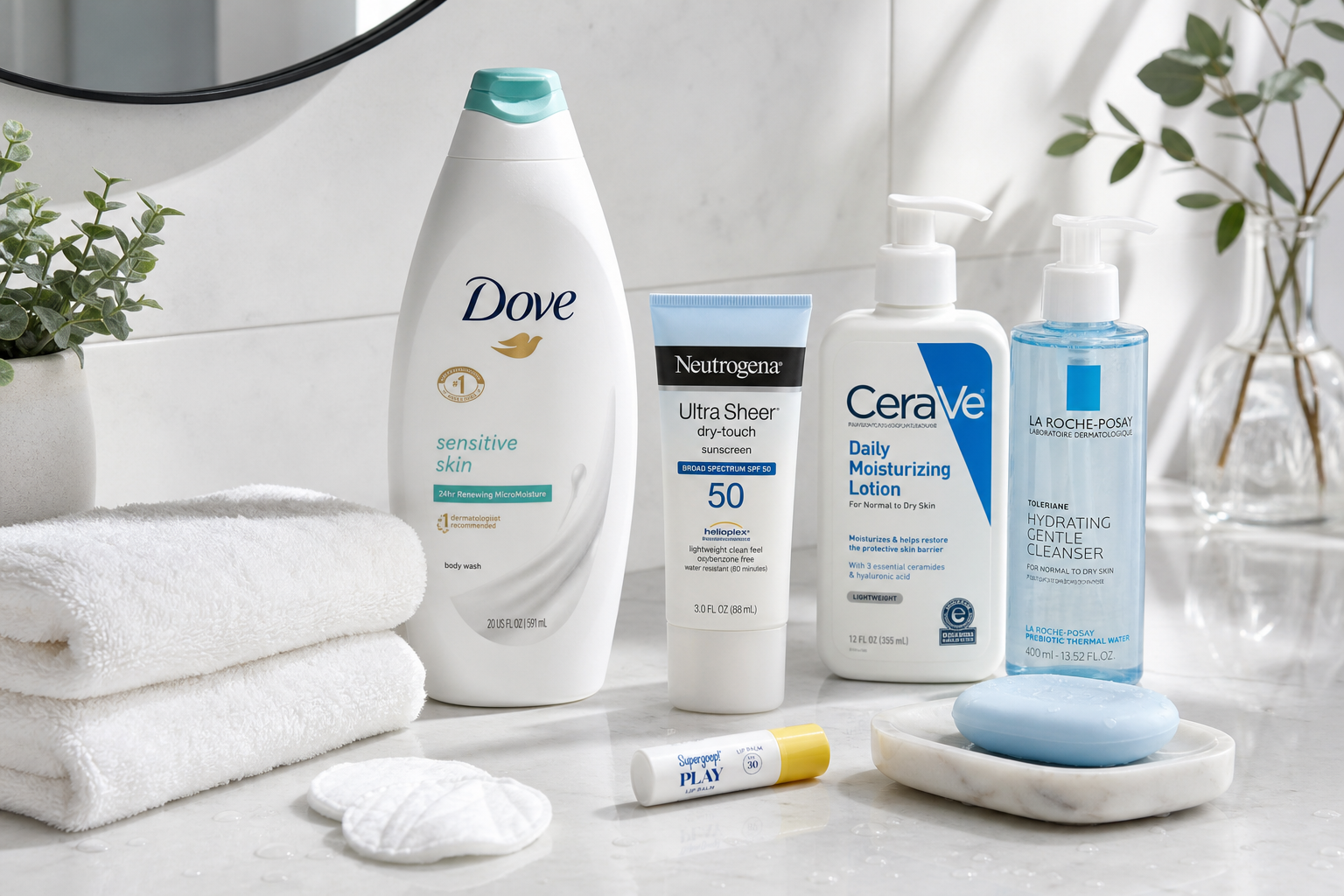
The best way to use Dove Sensitive Skin Body Wash is to treat cleansing as a barrier-support step, not a deep-cleaning project. Sensitive skin usually reacts when its outer layer loses too much water or lipid protection. Hot water, fragrance, friction, and frequent washing can increase that loss. A mild wash helps reduce the risk, but technique is what keeps the routine skin-friendly.
Start with lukewarm water. If the shower feels steamy or your skin looks flushed afterward, the water is probably too hot. Heat can strip oils from the skin surface, which may lead to tightness, itching, or that "squeaky clean" feeling that actually signals over-cleansing. Keep showers short when your skin is dry or reactive-often five to ten minutes is enough.
Apply a small amount of body wash to your hands first. For many people, hands are gentler than a loofah, exfoliating glove, or textured sponge. Work the cleanser over areas that need it most: underarms, feet, groin area externally, and places that sweat. Your arms, legs, and torso may not need the same amount of product every time unless you are sweaty, visibly dirty, or wearing sunscreen or body products.
Rinse thoroughly. Residue left behind can contribute to itching or irritation, especially in skin folds or areas where clothing rubs. After rinsing, pat-do not rub-your skin with a towel. Then apply a sensitive skin moisturizer, sensitive skin lotion, or fragrance-free cream while your skin is still a little damp. This timing matters because moisturizer helps trap water in the outer skin layers before it evaporates.
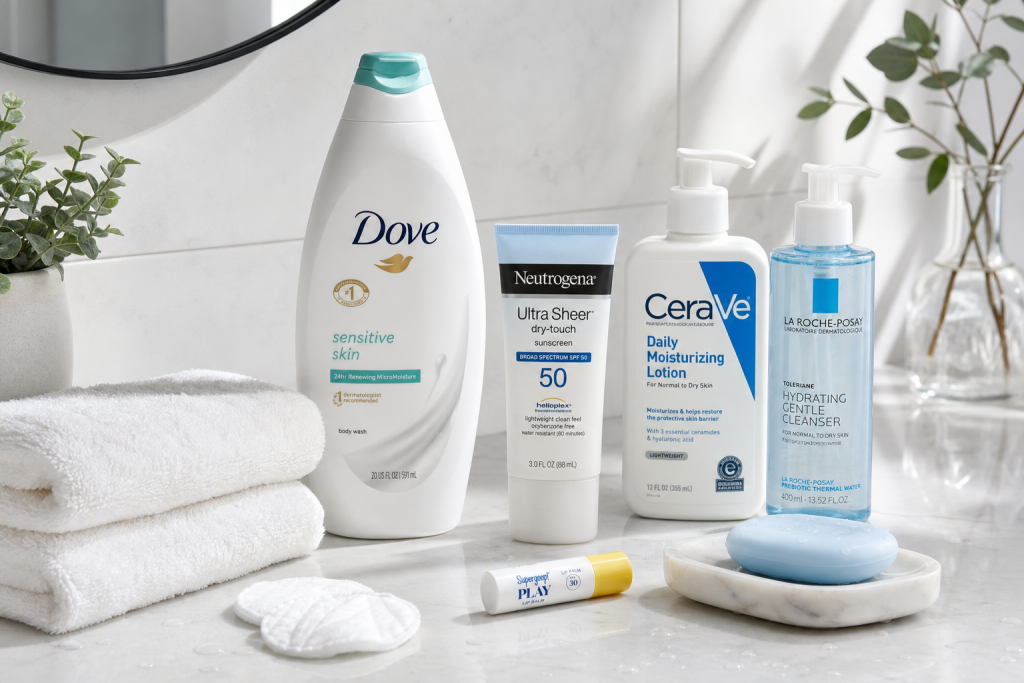
A common mistake is pairing a gentle cleanser with irritating products afterward. For example, if you use a sensitive skin body wash but then apply a heavily fragranced lotion, strong exfoliating acid, or drying deodorant, your skin may still react. If your underarms are easily irritated, consider a sensitive skin deodorant and avoid applying it immediately after shaving if that tends to sting. During the day, a sensitive skin sunscreen is also important for exposed areas, because sun exposure can worsen dryness, redness, and sensitivity.
Another mistake is using body wash as a treatment for a rash. Dove Sensitive Skin Body Wash can cleanse gently, but it is not a medication for eczema, fungal infections, allergic reactions, psoriasis, or bacterial skin problems. If you notice spreading redness, pain, swelling, pus, fever, severe burning, or a rash that keeps returning, get medical advice. Cleansing less aggressively may help comfort, but it cannot replace diagnosis when the cause is medical.
If you are trying to figure out how to use dove sensitive skin body wash as part of a simple routine, think in three steps: cleanse gently, rinse completely, and seal with moisture. You can also keep the rest of your routine minimal for a week or two if your skin is reactive. That makes it easier to tell whether the body wash, shaving products, detergent, deodorant, or lotion is the real trigger. For more routine-building help, see [[sensitive skin care routine]].
Safety limits are straightforward: do not use body wash inside the vagina, on deep cuts, on infected skin, or as a substitute for prescribed cleansers or medications. If a product burns, causes hives, or makes itching worse each time you use it, stop and consult a clinician. Gentle skincare should make your skin feel calmer after showering-not tighter, hotter, or more inflamed.
Using a sensitive skin body wash is less about lathering more and more about reducing friction, fragrance exposure, and moisture loss. If you're learning how to use Dove Sensitive Skin Body Wash, the goal is a simple routine that cleans without pushing already reactive skin into stinging, tightness, or itch.
Medical note: This guide is educational and not a diagnosis. If you have persistent rash, burning, cracking, bleeding, oozing, hives, or symptoms that worsen despite gentle care, see a dermatologist or qualified clinician. People with eczema, psoriasis, allergies, or recurrent infections should get personalized medical guidance.
Featured snippet answer: To use Dove Sensitive Skin Body Wash, wet skin with lukewarm water, apply a small amount by hand or with a soft washcloth, cleanse gently for 30-60 seconds, rinse fully, and pat dry. Follow within a few minutes with a sensitive skin moisturizer or sensitive skin lotion to help reduce dryness and irritation.
Why sensitive skin reacts in the shower

Sensitive skin often reacts because the skin barrier is already under stress. Hot water, scrubbing tools, long showers, fragranced products, and skipping moisturizer can strip natural lipids from the outer layer of skin. Once that barrier is weakened, ordinary cleansing can feel like burning, itching, or tightness.
A gentle wash helps, but technique matters. Even a mild sensitive skin body wash can irritate if you use too much, scrub aggressively, or rinse poorly. Residue left in skin folds, underarms, or behind knees can cause discomfort later, especially when sweat and clothing add friction.
Common causes of post-shower irritation include: – Water that is too hot, which increases dryness and redness – Rough loofahs, exfoliating gloves, or stiff brushes – Washing the same area repeatedly "just to feel clean" – Layering multiple fragranced products after bathing – Using body wash on broken, infected, or severely inflamed skin without medical advice
The practical fix is to treat the shower as a barrier-protection step, not a deep-cleaning session. Keep water lukewarm, use your hands when possible, and focus cleanser on areas that need it most: underarms, groin, feet, and areas with sweat or sunscreen buildup. For arms, legs, and torso, a light pass is usually enough unless you are visibly dirty or sweaty.
For general skin-barrier advice, the American Academy of Dermatology is a useful reference: [AAD](https://www.aad.org/public/everyday-care/skin-care-basics/dry/relieve-dry-skin).
Step-by-step: how to use Dove Sensitive Skin Body Wash
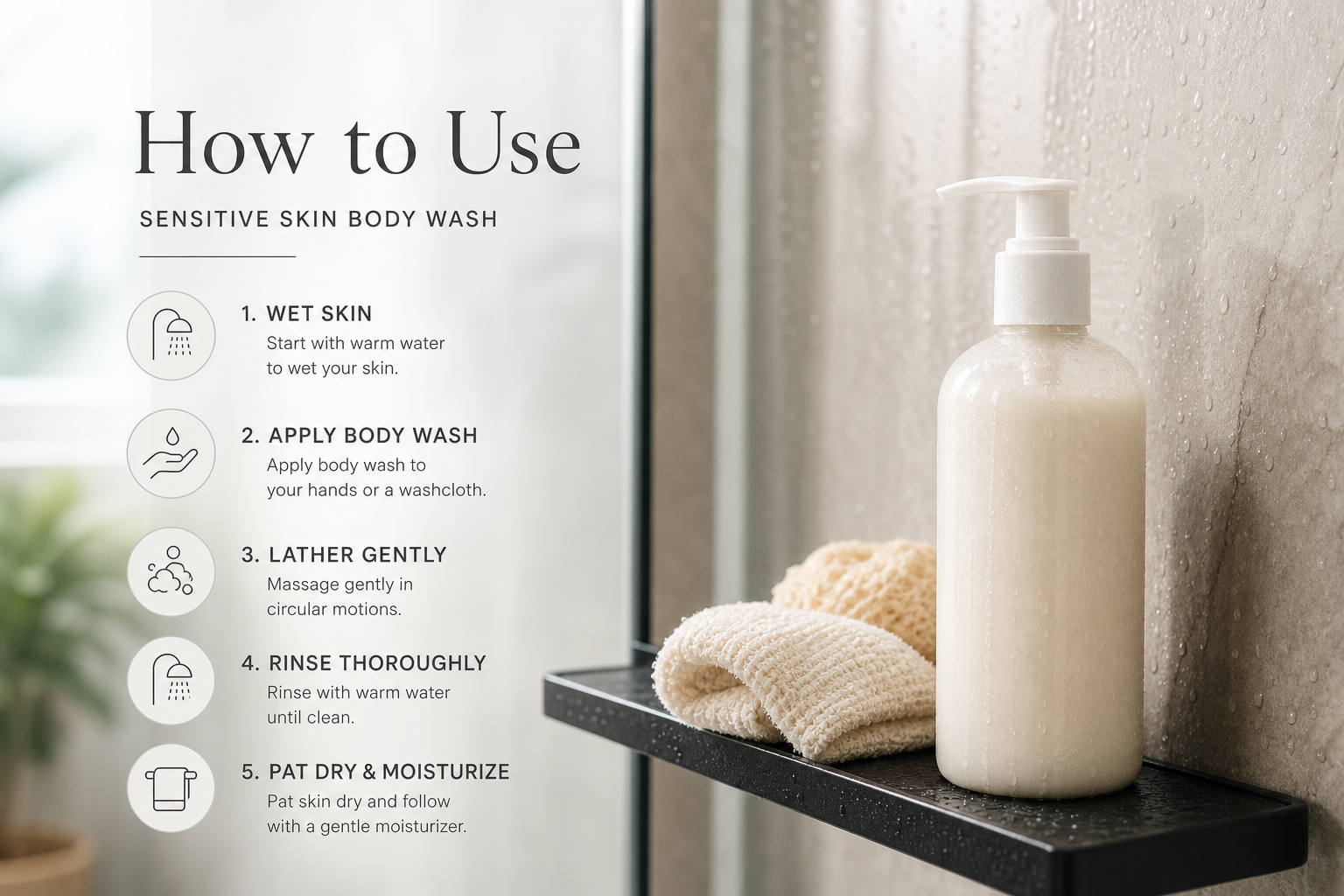
Start with lukewarm water. Very hot water may feel soothing for a moment, but it can worsen dryness after you towel off. Let your skin get fully wet, then dispense a small amount of body wash into your palm. You do not need a large amount or thick foam for effective cleansing.
Gently spread the wash over the skin using your hands or a soft, clean washcloth. If you use a washcloth, avoid dragging or sawing motions. Cleanse for about 30-60 seconds, spending more attention on sweat-prone areas. Rinse until the skin no longer feels slippery.
Pat dry with a towel instead of rubbing. While the skin is still slightly damp, apply a sensitive skin moisturizer or sensitive skin lotion. This timing matters because moisturizers help trap water in the skin before it evaporates. If you use a sensitive skin deodorant, apply it only after the underarm area is fully dry to reduce stinging. If you use sensitive skin sunscreen in the morning, apply it after moisturizer and before sun exposure.
| Step | What to do | Why it helps |
|---|---|---|
| Water | Use lukewarm, not hot, water | Reduces barrier stripping and dryness |
| Amount | Use a small palm-sized amount or less | Limits unnecessary residue and over-cleansing |
| Tool | Use hands or a soft washcloth | Reduces friction-related irritation |
| Rinse | Rinse thoroughly, especially folds | Helps prevent leftover cleanser discomfort |
| Dry | Pat, don't rub | Avoids mechanical irritation |
| Moisturize | Apply within a few minutes | Helps seal in hydration |
If you shave, cleanse first, then shave with a gentle shaving product if needed. Do not use body wash as a shaving gel if your skin tends to burn afterward; shaving creates micro-irritation, and some people need a more cushioning formula.
Fixes, mistakes, and safety limits
If your skin feels tight after showering, the likely cause is water loss. Shorten showers to about 5-10 minutes, lower the temperature, and moisturize immediately. If your skin stings only in certain areas, check for shaving irritation, chafing, or small cracks. Avoid applying body wash directly to open cuts or raw patches unless your clinician says it is appropriate.
If breakouts appear on the chest, back, or shoulders, the cause may not be the wash itself. Sweat, hair conditioner residue, tight clothing, and heavy lotions can all contribute. Rinse conditioner away from your back, change out of sweaty clothes quickly, and choose non-comedogenic moisturizers if you are acne-prone.
Avoid these common mistakes: – Using more product because "sensitive" sounds weaker – Pairing a gentle body wash with a heavily fragranced lotion – Exfoliating daily to remove flakes caused by dryness – Taking long, hot showers during winter or after workouts – Ignoring symptoms that keep returning in the same spot
Safety limits matter. Stop using any product that causes hives, swelling, severe burning, or a spreading rash, and seek medical care promptly. If you have a known allergy to an ingredient, do not use the product even if it is labeled for sensitive skin. For ongoing eczema-like symptoms, recurrent underarm irritation, or painful dryness, a clinician can help identify triggers and recommend treatment beyond routine cleansing.
Using a sensitive skin body wash well is less about scrubbing harder and more about lowering irritation at every step. If your skin stings, itches, flakes, or feels tight after bathing, the issue may be water temperature, friction, fragrance, or a weak skin barrier-not simply "dry skin." Medical note: this is general skincare education, not a diagnosis. See a board-certified dermatologist or clinician if you have bleeding cracks, spreading rash, infection signs, severe itching, or symptoms that do not improve.
Featured snippet answer: To use Dove Sensitive Skin Body Wash, wet skin with lukewarm water, apply a small amount with your hands or a soft cloth, cleanse gently without scrubbing, rinse fully, then pat dry and apply a sensitive skin moisturizer within a few minutes. Avoid hot water, harsh exfoliation, and fragranced layering if your skin reacts easily.
Step-by-step shower routine for sensitive skin
The best answer to how to use Dove Sensitive Skin Body Wash is to treat it as part of a low-friction, barrier-supporting routine. Sensitive skin often reacts when the outer barrier loses moisture or is exposed to repeated triggers. Hot water strips lipids; scrubbing creates micro-irritation; leaving cleanser residue behind can cause itching. A calmer routine reduces those effects.
- Start with lukewarm water. Keep the shower comfortably warm, not steamy. Heat can increase dryness and redness, especially on the arms, legs, chest, and folds. 2. Use a modest amount. A quarter-size amount is often enough for one section of the body. Add more only as needed. More cleanser does not mean cleaner skin; it can mean more residue and dryness. 3. Apply with your hands first. Hands create less friction than rough loofahs or exfoliating gloves. If you prefer a cloth, choose a soft, clean washcloth and use light pressure. 4. Cleanse sweat-prone areas carefully. Focus on underarms, groin folds, feet, and areas where sunscreen or deodorant builds up. Let water and gentle massage do most of the work. 5. Avoid daily full-body scrubbing. If your legs or arms are dry, you may not need to lather them aggressively every shower. Over-cleansing can worsen tightness. 6. Rinse completely. Pay attention to neck folds, underarms, and behind knees. Residue can be a hidden cause of itch. 7. Pat dry, then moisturize. Within three minutes, apply a sensitive skin moisturizer, sensitive skin lotion, or cream while skin is slightly damp. This helps trap water before it evaporates.
A common mistake is using a gentle body wash and then undoing the benefit with a rough towel, hot shower, or heavily fragranced lotion. Keep the whole sequence gentle. For a complete routine, see [internal-link: sensitive-skin-shower-routine].
How to choose compatible products around your body wash
A sensitive skin body wash works best when the products around it are also low-irritation. Cause and effect matters here: if your cleanser is mild but your deodorant, sunscreen, or lotion burns, the routine still fails. Think in terms of total exposure across the day.
Use these criteria when pairing products: – Fragrance-free over "lightly scented." Fragrance is a frequent trigger for stinging, rash, and itch. "Unscented" can still contain masking fragrance, so check labels. – Look for barrier-supporting ingredients. Glycerin, petrolatum, dimethicone, ceramides, and colloidal oatmeal can help reduce water loss. – Choose a sensitive skin deodorant if underarms burn. Shaving plus deodorant plus cleanser can overwhelm the area. If stinging continues, try fragrance-free formulas and avoid applying right after shaving.
- Use sensitive skin sunscreen on exposed areas. Mineral sunscreens with zinc oxide or titanium dioxide may be better tolerated by some reactive skin types, though texture varies. – Patch test new products. Apply a small amount to the inner arm for a few days before using it widely, especially if you have eczema-prone or allergy-prone skin.
If you are comparing formulas, do not judge only by foam. High foam can feel satisfying, but it is not proof of better cleansing. The goal is clean skin that does not feel stripped afterward. For broader ingredient guidance, review [external-link: American Academy of Dermatology sensitive skin care guidance].
Who should skip certain approaches and when to get help
Some people can use Dove Sensitive Skin Body Wash daily with no issue, while others need to adjust frequency or technique. If you have active eczema flares, psoriasis plaques, open cuts, sunburn, or a painful rash, skip exfoliating tools and avoid long showers. Cleansing broken or inflamed skin too aggressively can delay healing because it disrupts the barrier further.
If your skin burns when any cleanser touches it, rinse with lukewarm water only for that area and contact a clinician. Burning can signal a damaged barrier, dermatitis, allergy, or infection. Also get medical help if you notice pus, warmth, swelling, rapidly spreading redness, fever, or intense nighttime itching.
People who shave should avoid using body wash as a shortcut for every shaving situation if it causes drag or razor bumps. Use a gentle shave product when needed, shave with the grain, and moisturize afterward. If underarms are irritated, separate shaving, cleansing, and sensitive skin deodorant application by time when possible.
Finally, do not add acids, scrubs, retinoids, or strong antibacterial washes just because skin feels "unclean." Sensitive skin usually needs fewer triggers, not more. A steady routine-lukewarm water, gentle cleansing, complete rinsing, and prompt moisturizing-is the safest baseline.
Frequently Asked Questions
These answers are educational and not a substitute for medical care. If you have persistent itching, burning, cracked skin, bleeding, hives, a spreading rash, or a known skin condition like eczema or psoriasis, check with a board-certified dermatologist or other qualified clinician before changing your routine.
Featured snippet: To use Dove Sensitive Skin Body Wash, wet your skin with lukewarm water, apply a small amount to your hands or a soft washcloth, gently cleanse without scrubbing, rinse well, and pat dry. Follow with a sensitive skin moisturizer or sensitive skin lotion within a few minutes to help reduce dryness and irritation.
How do I use Dove Sensitive Skin Body Wash on sensitive skin?
The best method is simple and gentle. Start with lukewarm water, not hot water, because heat can strip the skin's natural oils and make tightness or stinging worse. Apply a quarter-size amount of body wash to your hands or a soft cloth, then massage it over the skin using light pressure.
Avoid aggressive scrubbing, loofahs, and rough exfoliating gloves. Sensitive skin often reacts when the skin barrier is already stressed, and friction can create more redness or dryness. Rinse thoroughly so no cleanser residue remains, then pat your skin dry instead of rubbing with a towel.
Can I use it every day?
Most people can use a sensitive skin body wash daily, but your skin's response matters more than a fixed rule. If your skin feels comfortable, soft, and calm after showering, daily use is usually reasonable. If it feels tight, itchy, or looks flaky, you may be over-cleansing, using water that is too hot, or waiting too long to moisturize.
A practical limit is to cleanse sweaty or odor-prone areas daily while being more conservative on areas that get dry, such as the arms, shins, and torso. After workouts, swimming, or heavy sunscreen use, cleansing helps remove sweat, chlorine, and residue that can trigger irritation.
Should I use a washcloth, loofah, or just my hands?
For sensitive skin, hands are often the safest option. They clean effectively while reducing friction. A soft cotton washcloth can work if you use gentle pressure and wash it frequently, but a loofah is usually not ideal. Loofahs can be abrasive, and they may hold bacteria if they stay damp in the shower.
The cause-and-effect issue is friction plus a weakened skin barrier. When you scrub, you may remove more oil and surface cells than necessary. That can lead to dryness, burning, and a cycle where skin becomes even more reactive to products, shaving, deodorant, or clothing.
What should I apply after showering?
Moisturize quickly, ideally within three minutes of stepping out of the shower. This helps trap water in the outer layer of skin before it evaporates. Choose a sensitive skin moisturizer or sensitive skin lotion that is fragrance-free and designed to support the skin barrier.
If your skin is very dry, a cream may work better than a light lotion because it contains more occlusive ingredients. For daytime, especially if your arms, shoulders, chest, or legs will be exposed, apply sensitive skin sunscreen after moisturizer. This matters because UV exposure can worsen inflammation and discoloration in already irritated skin.
Can I use it on my face or intimate areas?
Dove Sensitive Skin Body Wash is made for the body, not specifically as a facial cleanser or intimate wash. Some people may tolerate it on the face, but facial skin can be more reactive and acne-prone, so a dedicated gentle face cleanser is usually a safer choice.
For external intimate areas, keep cleansing minimal and avoid putting body wash inside the vagina or on mucous membranes. Over-cleansing can disrupt the local microbiome and cause burning, odor changes, or irritation. If you notice unusual discharge, sores, pelvic pain, or persistent odor, see a clinician instead of trying to correct it with more washing.
What are common mistakes when learning how to use Dove Sensitive Skin Body Wash?
The biggest mistakes are using too much product, showering in hot water, scrubbing hard, and skipping moisturizer. More cleanser does not mean cleaner skin; it can simply increase the chance of dryness. Another common mistake is layering several scented products afterward, such as perfume, fragranced lotion, or a harsh deodorant.
If your underarms are sensitive, pair your cleansing routine with a sensitive skin deodorant and avoid applying it immediately after shaving if that causes stinging. Also, do not use body wash as a treatment for rashes, fungal infections, or allergic reactions. Cleansing can support comfort, but it does not replace diagnosis or treatment.
When should I stop using it or ask a dermatologist?
Stop using the product if you develop burning, swelling, hives, blistering, or a rash that clearly worsens after use. Rinse the area with cool water and avoid adding new products until the skin calms down. If symptoms are severe, spreading, or involve the face, genitals, or breathing, seek medical care promptly.
You should also ask a dermatologist if "sensitive skin" is becoming a constant problem. Sometimes the real cause is eczema, allergic contact dermatitis, infection, or overuse of exfoliating products. For a broader routine, see [[sensitive skin care routine]] and bring your product list to your clinician if irritation keeps returning.
Related Routine Guides
For a related next step, read sensitive skin sunscreen routine before changing your whole routine. For a related next step, read morning skincare order before changing your whole routine. For a related next step, read how to reapply sunscreen over makeup before changing your whole routine.
Source Notes
I would treat how to use dove sensitive skin body wash as a comfort and safety question, not just a product question. For safety context, check American Academy of Dermatology sunscreen selection guidance and FDA sunscreen safety guidance.
Quick Practical Checklist
- Write down what changed before judging whether the routine is working. – Change one step at a time so the result is not a guessing game. – Keep the routine simple on test days. – Give each layer enough time to settle. – Stop if the skin stings, burns, or gets visibly irritated.
What I Would Change First
- Remove the newest product for two or three mornings.
- Use a smaller amount and spread it in thinner layers.
- Check whether the problem happens on bare skin too.
- Keep notes instead of changing everything at once.
- Ask a clinician if the reaction is painful, swollen, or persistent.