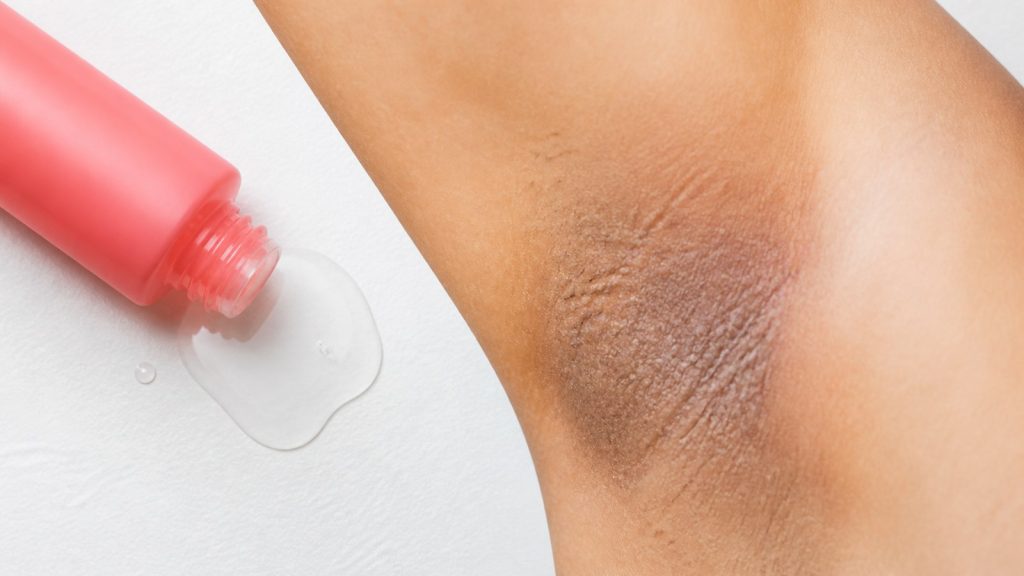
Answer: Glycolic Acid May Not Suit Underarms
If glycolic acid is not working on your underarms, it may be targeting the wrong concern, producing irritation, or being undermined by another part of the routine. If glycolic acid is not working on underarms, first define whether the unresolved problem is darkening, rough texture, odor, wetness, or discomfort. These outcomes have different causes and cannot be judged with one pass-or-fail standard.
Glycolic acid cannot be expected to reduce perspiration because it is not an antiperspirant. Its effect on odor may also be inconsistent because activity, clothing, sweat, washing, and deodorant use can change from one day to another. When visible darkening is the concern, ongoing friction, close shaving, irritation, or product residue may continue even while the acid exfoliates the skin’s surface.
This distinction matters because the usual reaction to disappointing results – applying more – can create a second problem. Increasing the amount or frequency may cause stinging and uneven-looking irritation without addressing the original goal. Skin that becomes uncomfortable or looks darker after repeated use should not be treated as evidence that the product needs more time or stronger application.
A lack of visible improvement without discomfort may simply mean glycolic acid does not match the factor maintaining the appearance. A lack of improvement accompanied by burning, itching, tenderness, swelling, or rawness points instead to a routine that should be stopped. Neither situation is solved by automatically adding another exfoliant.
Start by separating the intended result from any new reaction. Then pause the product, keep other variables as stable as possible, and observe whether the area returns to its usual state. This will not identify every reason for underarm darkening or discomfort, but it provides more useful information than continuing an unsuccessful routine.
Separate Underarm Darkening From Glycolic Acid Irritation
Underarm irritation and persistent darkening can overlap visually, especially when repeated applications make the area look patchy. Timing, sensation, and location are more useful troubleshooting clues than color alone.
If the underarms looked the same before and after glycolic acid and remain comfortable, the product may not be affecting the specific concern. If the area began stinging, itching, feeling tender, or looking less even after applications became more frequent, irritation may now be obscuring any cosmetic result. That connection is not a diagnosis, but it is a clear reason to stop escalating use.
Use the following clues to separate a result mismatch from a reaction:
- Stop glycolic acid when burning, persistent stinging, itching, or swelling starts during or after use, and keep it off until the underarms have returned to their usual comfortable condition; do not repeat the application merely to confirm the pattern.
- Compare uneven areas with points of rubbing when darkening follows a fold, clothing edge, or repeated skin contact, and reduce avoidable friction where possible; do not expect additional exfoliation to cancel continuous rubbing.
- Review hair-removal timing when tenderness appears after shaving, and keep the acid off freshly shaved, nicked, or visibly disrupted skin; do not use discomfort as proof that exfoliation is effective.
- Separate wetness from odor when the area remains damp, and evaluate each concern independently under similar daily conditions; do not judge glycolic acid by whether it prevents sweating.
- Look for residue when several leave-on products collect in underarm folds, and simplify the layers while the skin is comfortable; do not scrub aggressively to remove a visible film.
- Notice whether roughness or bumps appeared after increasing frequency, and remove the newly intensified step while tracking the change; do not add another acid or abrasive product during the comparison.
Location can provide another clue. A reaction limited to the areas where deodorant overlaps with glycolic acid, where a razor passes repeatedly, or where clothing rubs suggests that the routine as a whole needs to be simplified. It does not prove which product caused the problem, but it shows why changing several steps at once would make the cause harder to interpret.
Consider a hypothetical routine in which someone applies glycolic acid more often because the underarms remain dark, shaves more closely to improve smoothness, and wears clothing that rubs the same folds. If the area then stings and appears patchier, the original concern has become mixed with several possible irritation triggers. The useful correction is to stop the escalation, not to decide that the acid is too weak.
An unchanged appearance without irritation is still meaningful. It suggests that further surface exfoliation may have limited value for the intended result. Comfortable skin does not make unlimited use appropriate, and the absence of stinging does not guarantee that more frequent application will create visible improvement.
Pause Glycolic Acid and Track Underarm Changes
A controlled pause helps reveal whether glycolic acid is contributing to discomfort, roughness, or a newly uneven appearance. Keep the rest of the routine stable when it remains comfortable and necessary. Replacing several products during the pause would create new variables rather than clarify the old ones. The site’s Skincare Routine Troubleshooting: A Fix-First Guide explains why changing one relevant step at a time produces clearer information.
Use this isolation process:
- Pause glycolic acid when the underarms sting, itch, feel tender, or look newly irritated, and leave it out until the skin returns to its normal comfortable state; seek qualified help if the reaction worsens instead of settling.
- Wash the area with a previously tolerated method during the pause, and use gentle contact only when ordinary hygiene is needed; avoid brushes, grainy scrubs, and repeated cleansing intended to remove discoloration.
- Remove other exfoliating products from the underarms while observing the change, and avoid introducing a replacement acid during the same period; otherwise, improvement or worsening cannot be connected clearly to the removed product.
- Delay shaving when the area is tender, raw, or visibly disrupted, and avoid repeated razor passes over uncomfortable skin; resume hair removal only after the area has settled.
- Write down one intended result before considering a restart, choosing darkening, texture, or odor as the main concern under observation; do not combine unrelated outcomes such as wetness and skin tone into one judgment.
- Keep a previously tolerated deodorant unchanged only when it remains comfortable, and stop applying it if it stings the affected area; do not cycle through several alternatives while trying to isolate the reaction.
- Inspect the glycolic acid product when its smell, texture, packaging, or storage history seems different, and follow its printed use and disposal directions; do not compensate for uncertainty by applying a larger amount.
During the pause, look for direction rather than expecting the underarms to become perfectly even. If stinging stops and the area becomes calmer after glycolic acid is removed, that is a useful sign that the step may not suit the current routine. If nothing changes, the product may not have been the main source of the appearance, but that does not prove restarting will deliver the desired result.
If the skin has fully settled and the product label supports the intended use, a limited-area test can reduce uncertainty before broader reapplication. The American Academy of Dermatology’s guidance on testing skincare products supports applying a product to a small area as directed before using it more widely.
Do not test on freshly shaved, broken, or uncomfortable skin. A small-area test also has limits because it may not reproduce the combined effects of sweat, friction, clothing, hair removal, and repeated use across the full underarm area. It is an initial screening step, not proof that continued application will remain comfortable.
If you restart, avoid changing the deodorant, shaving method, application amount, and clothing habits at the same time. Reintroduce only the glycolic acid according to its directions while the surrounding routine stays stable. If the same discomfort returns, stop instead of performing repeated restarts.
If no irritation returns but the chosen concern remains unchanged, treat that stable lack of benefit as a decision clue. A product can be tolerable yet still be unhelpful for a specific goal. Leaving it out may be more sensible than buying a stronger formula or adding another exfoliating step.
Stop Applying More Glycolic Acid to Underarms
Applying extra product is a failed troubleshooting response because it increases exposure before confirming that glycolic acid matches the problem. More liquid, more frequent use, or overlapping acids can intensify contact without improving darkening, odor, or texture.
Avoid these escalation mistakes:
- Keep glycolic acid off freshly shaved skin when hair removal has caused nicks or tenderness, and wait until the area is intact and comfortable; do not apply it immediately after shaving to save time.
- Remove overlapping exfoliants when more than one active product reaches the underarms, and keep them out throughout the isolation period; do not alternate them so quickly that the trigger remains unclear.
- Stop abrasive scrubbing when the area already feels rough or sensitive, and use gentle washing under normal hygiene conditions; do not combine forceful friction with a leave-on acid.
- Return to the label limit when extra layers seem tempting, and discontinue use if the directed application remains unsuccessful; do not treat visible wetness from the product as greater effectiveness.
- Avoid home dilution when the formula feels too strong, and stop using the product rather than altering its mixture; added water does not make the resulting formula predictably suitable.
- Judge odor and perspiration separately when evaluating results, and keep expectations tied to the product’s stated purpose; do not increase glycolic acid because the underarms still sweat.
Tingling intensity is not a progress meter. A strong sensation does not demonstrate that discoloration, texture, or odor will improve. Persistent discomfort is a reason to remove the step rather than a stage that must be endured.
A product that once seemed useful may also appear to stop working because other routine conditions changed. Compare only details you can verify, such as the directions, packaging condition, storage instructions, deodorant use, shaving pattern, and application frequency. Memory alone cannot establish that the formula changed when several surrounding habits may also be different.
Once you have defined the goal, removed conflicting steps, and avoided obvious irritation triggers, continued lack of benefit is enough information to stop. You do not need to force a successful outcome or immediately replace the product. Troubleshooting is complete when the routine shows either repeated discomfort or no useful result under stable conditions.
Painful Underarm Reactions After Glycolic Acid Need Care
Stop applying glycolic acid if the underarms become painful, markedly swollen, raw, blistered, or increasingly uncomfortable. Gently rinse away remaining product when needed, avoid rubbing the area, and keep exfoliants, fragrance, deodorant, and hair removal off painful skin while it settles.
This article provides general education and cannot determine the cause of an individual reaction. Seek qualified help if pain is substantial, the affected area is spreading or worsening, the skin does not begin to settle after use stops, or a reaction returns after reintroduction. Keep the product packaging available so its directions and ingredient information can be reviewed if needed.
While waiting for help, do not apply another active product to neutralize the acid, cover painful skin with fragranced layers, or restart glycolic acid to prove it caused the reaction. Repeated exposure adds risk without producing useful troubleshooting information.
Questions About Restarting or Abandoning Underarm Glycolic Acid
Can I keep using deodorant while I pause glycolic acid?
If your underarms remain comfortable, keep a previously tolerated deodorant unchanged so it does not become another troubleshooting variable. Stop using it on the affected area if it begins to sting or the skin becomes raw. When irritation is already present, leave unnecessary products off and seek qualified help if the discomfort worsens rather than testing several deodorants during the pause.
How can I tell whether shaving is hiding any improvement?
Observe whether tenderness or unevenness repeatedly appears along the areas receiving the most razor contact. Keep glycolic acid off freshly shaved or nicked skin, and avoid changing the shaving method and acid schedule together. If the underarms remain unchanged during a stable routine without shaving-related irritation, hair removal may not be the only factor limiting the visible result.
Should I restart if my underarms feel normal but still look dark?
Comfort returning shows only that the recent irritation has settled; it does not show that glycolic acid will improve the remaining darkening. Consider a label-directed, limited-area restart only when the skin is intact and other routine steps can remain stable. If careful use produces no visible benefit or recreates discomfort, leaving the product out is a reasonable result.
Back to top