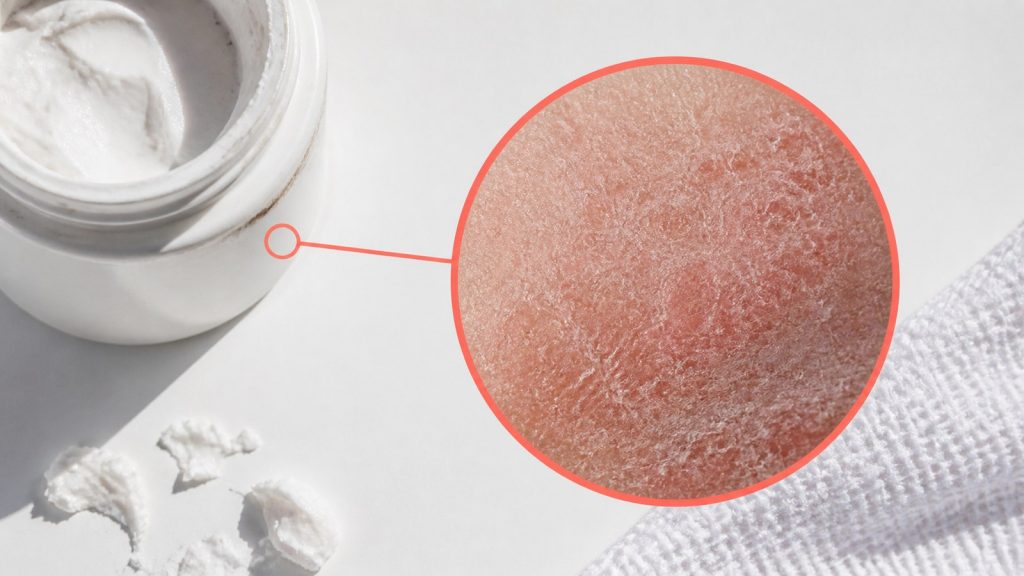
What to Do First When Skin Cream Fails
If your cream is not working on your skin again, stop adding products and check its purpose, condition, application, and place in your current routine before using more. A cream can appear to fail because it is meant for a different job, is being applied incorrectly, no longer layers well with another product, has changed in the container, or is irritating skin that previously tolerated it.
First, define what you expected the cream to do. A basic moisturizing cream may reduce temporary tightness and soften rough-feeling areas, but that does not mean it will correct every visible bump, mark, or uneven patch. A cosmetic cream also should not be judged by expectations taken from a different type of product.
If it has a label with a specific purpose and directions, use those claims – not texture, price, or packaging – as the standard.
When a cream stops working on your skin, check whether anything changed shortly before the problem appeared. A new cleanser might leave skin feeling tighter. A recently added serum, sunscreen, or makeup layer might cause pilling. Applying a larger amount might leave a heavy film or contribute to new bumps. These conflicts can make the familiar cream look responsible even when the whole combination is the problem.
Use four initial checks:
- Read the label again when you are uncertain about the cream’s purpose or application; follow its stated amount, frequency, and warnings without increasing use to force a faster result.
- Inspect the product itself when its performance changed suddenly; stop using it if its smell, color, texture, or container has noticeably changed rather than testing an altered product repeatedly.
- Review recent routine changes when the cream previously worked without obvious trouble; focus on products added before the change and do not replace the entire routine at once.
- Observe the next application when the issue is pilling, heaviness, or uneven coverage; note where and when it happens without adding another layer to conceal the outcome.
The FDA’s consumer information on cosmetics explains that storage, handling, and contamination can affect cosmetic products. Heat, moisture, air exposure, or repeated contact with unwashed fingers may alter a product before the container is empty. That possibility matters when a cream not working on skin also looks, smells, or spreads differently than it once did.
A changed result does not automatically prove that your skin has become used to the cream or that you need something stronger. It means the current result needs to be separated into product condition, application error, layering conflict, irritation, or a mismatch between the cream’s purpose and your expectation.
Match Skin Changes to Possible Cream Triggers
The strongest troubleshooting clues are what changed, where it changed, and when the change appears. These clues cannot confirm one cause by themselves, but they can prevent random product switching.
Stinging shortly after application points toward poor tolerance or a conflict with what was applied before it. Remove the suspected cream if discomfort continues, and do not repeat the application that day merely to confirm the reaction. If stinging started only after adding another product, the combination may be more relevant than either item alone.
Tightness, visible dryness, or flaking can occur when the surrounding routine has become too harsh. A familiar cream may seem too weak after cleansing more often, scrubbing, or layering several exfoliating products. In that situation, applying thicker coats may cover the sensation temporarily without identifying what is creating it.
Pilling or small rolls on the surface usually indicates an application or layering problem rather than proof that the cream did nothing. Excessive amounts, extended rubbing, or incompatible layers can cause products to gather and roll away. Pilling limited to areas under sunscreen or makeup is an especially useful clue because it ties the failure to a particular combination.
The site’s guide to moisturizer pilling explains how application amount and layer interaction can contribute.
New bumps in the exact application area may suggest that the cream, the amount used, or another overlapping product does not suit that area. Compare where the bumps appear with where you apply the heaviest layer. Do not assume every bump has the same cause, and avoid adding exfoliants while the source remains uncertain.
Reduced comfort without visible product changes may reflect a change elsewhere in the routine or environment. For example, a cream can feel less sufficient after a stronger cleanser is introduced, even though the cream itself is unchanged. This is why a cream that is not working on your skin should be assessed alongside the products used immediately before and after it.
No visible change despite comfortable use may mean the expectation does not match the cream’s labeled purpose. A softening or moisturizing effect is different from changing clogged-looking areas or uneven-looking tone. Check what the cream actually claims before deciding that comfortable, uneventful use represents failure.
Location adds another clue. Trouble only near the eyes can result from applying the cream too close to that area or from product moving after application. Pilling only around the mouth may reflect rubbing or repeated movement. Heaviness limited to one oily-feeling area may mean the same amount is not practical across the entire face, provided the label does not require uniform application.
Timing matters as well. Immediate rolling suggests a surface interaction, while discomfort that develops after several new layers have been added is harder to attribute to one product. If salicylic acid seems not to work for blackheads, for example, first confirm that the product is intended for that concern and that irritation or conflicting products are not making consistent use impossible.
Do not respond by stacking additional exfoliating products.
For broader help connecting routine changes with visible clues, use the skincare routine troubleshooting guide to review one variable at a time.
Pause Other Products, Then Retest Your Cream
A controlled retest can help when the failure involves pilling, heaviness, uncertain compatibility, or lack of an expected cosmetic effect. Do not retest a cream that caused a worsening reaction. In that case, stop using it and move to the outside-help boundary below.
During the isolation period, keep familiar basics unchanged and pause only recent, optional additions. The purpose is not to build a new routine. It is to determine whether the cream behaves differently when fewer variables are present.
Follow this sequence:
- Pause the newest optional product when the cream problem began after a routine change; leave previously comfortable basics unchanged and avoid pausing anything a qualified professional instructed you to use without asking first.
- Wait until visible discomfort has settled before considering a cosmetic retest; do not apply the cream to skin that remains sore, cracked, or actively irritated.
- Apply the cream exactly as labeled when the product still appears normal and the earlier issue was not a significant reaction; test it without adding another unfamiliar product during the same comparison.
- Keep the application area consistent when judging pilling, heaviness, or coverage; do not compare results from unrelated areas that receive different products or amounts.
- Record only observable changes while the routine remains stable; note stinging, rolling, dryness, bumps, or comfortable wear without treating ordinary daily variation as proof.
What stays unchanged is as important as what you pause. Continue using the same application order, similar amounts, and the same familiar surrounding products during each comparison. If you change the cleanser, cream amount, sunscreen, and makeup simultaneously, you will not know which adjustment affected the outcome.
When a cream seems not to work on your skin because it pills, test the layers rather than mixing them together. Apply the preceding product, allow it to settle, and then spread the labeled amount of cream gently. If pilling appears only with one particular layer, that interaction is a more useful clue than the cream’s performance by itself.
Do not dilute the cream into another product to improve its texture. Mixing products can make coverage uneven and prevents a fair comparison with the label directions. Likewise, do not rub until the surface feels completely dry; prolonged rubbing can create the rolling you are trying to investigate.
A successful retest has limits. Comfortable application may show that the cream can be used without an immediate problem, but it does not prove that it will meet an unrelated cosmetic goal. A small-area comparison also cannot predict how every area or every product combination will behave.
If results remain confusing, the site’s guide to products that seem not to work can help separate expectation problems from routine conflicts.
Stop Reapplying Cream to Already-Irritated Skin
Applying more is one of the least useful responses to a cream not working on skin. A thicker layer can increase heaviness and pilling. More frequent application can make stinging or dryness harder to interpret. Adding exfoliation may create fresh irritation that hides the original problem.
Avoid four common escalation mistakes:
- Do not reapply the cream over discomfort when the first layer stings or burns; remove it gently if needed and avoid testing it again while the area remains unsettled.
- Do not scrub away visible flakes when they appeared alongside tightness or irritation; pause brushes, scrubs, and repeated rubbing until the skin feels comfortable again.
- Do not cover pilling with another layer when material is already rolling from the surface; remove the excess gently and test a smaller labeled amount during a later, controlled application.
- Do not add another active product when the original concern has not changed; keep the routine stable until you can tell whether the cream, the combination, or the expectation is the problem.
Reapplication also destroys useful timing clues. If the first layer causes slight discomfort and two more layers are added, you cannot tell whether the issue came from the product itself, the cumulative amount, or friction from repeated application. The same is true when several corrective products are added immediately afterward.
If the cream failure followed an increasingly complicated multi-step routine, simplify only the optional steps that overlap with the problem. This is especially relevant when several lightweight layers, creams, sunscreen, and makeup are applied in quick succession. The Korean skincare troubleshooting guide provides a focused approach to reducing irritation and identifying incompatible steps without discarding an entire routine.
The safer correction is to stop, let the area settle, and review the evidence already available. Repeated stop-and-restart cycles are not useful when the same discomfort returns each time.
See a Clinician When Cream Failure Persists
General troubleshooting should end when the problem is worsening, repeatedly returns after the suspected cream is used, spreads beyond the application area, or involves the eyes. Stop using the product and seek help from a qualified clinician or pharmacist rather than continuing home experiments.
Outside help is also appropriate when you cannot determine whether a cream is cosmetic or has specific labeled directions, or when several products were applied together and the reaction cannot be separated safely. Keep the container, label, and a short list of products used on the same area so the professional can a practical review of what helps with what was applied.
While waiting, do not test the suspected cream again, increase exfoliation, or introduce unfamiliar products to compensate. Keep the area free from the products connected with the problem and avoid rubbing it. This page provides general education only; if the problem worsens, stop troubleshooting and seek qualified help.
Questions About a Cream That No Longer Works as Expected
Can my skin become used to a cream and make it stop working?
A weaker result does not prove that your skin has become resistant. The cream’s condition, the surrounding routine, application amount, environment, or your expectation may have changed. Compare the current routine with the period when the cream appeared useful. If the same problem returns despite stable, label-consistent use, avoid increasing the amount and ask a qualified professional to review the product and concern.
Why is salicylic acid not working for my blackheads even with regular use?
First confirm that the cream is labeled for the concern you are trying to address and that you can use it consistently without discomfort. Applying it more often than directed or combining it with several exfoliating products may create irritation without improving the visible result.
If the spots remain uncertain or unchanged, stop escalating the routine and seek qualified guidance rather than assuming that a stronger product is required.
Can I keep using a cream that pills but does not sting?
Pilling without discomfort often points to excess product, prolonged rubbing, or a conflict between layers rather than a worsening skin reaction. Test the labeled amount with fewer overlapping products and allow each layer to settle before continuing. If pilling prevents even coverage, persists when the cream is used alone, or begins alongside discomfort, stop reapplying it and reassess the product’s condition and compatibility.
Back to top