
The Answer: Cleanse, Treat, Moisturize, and Protect
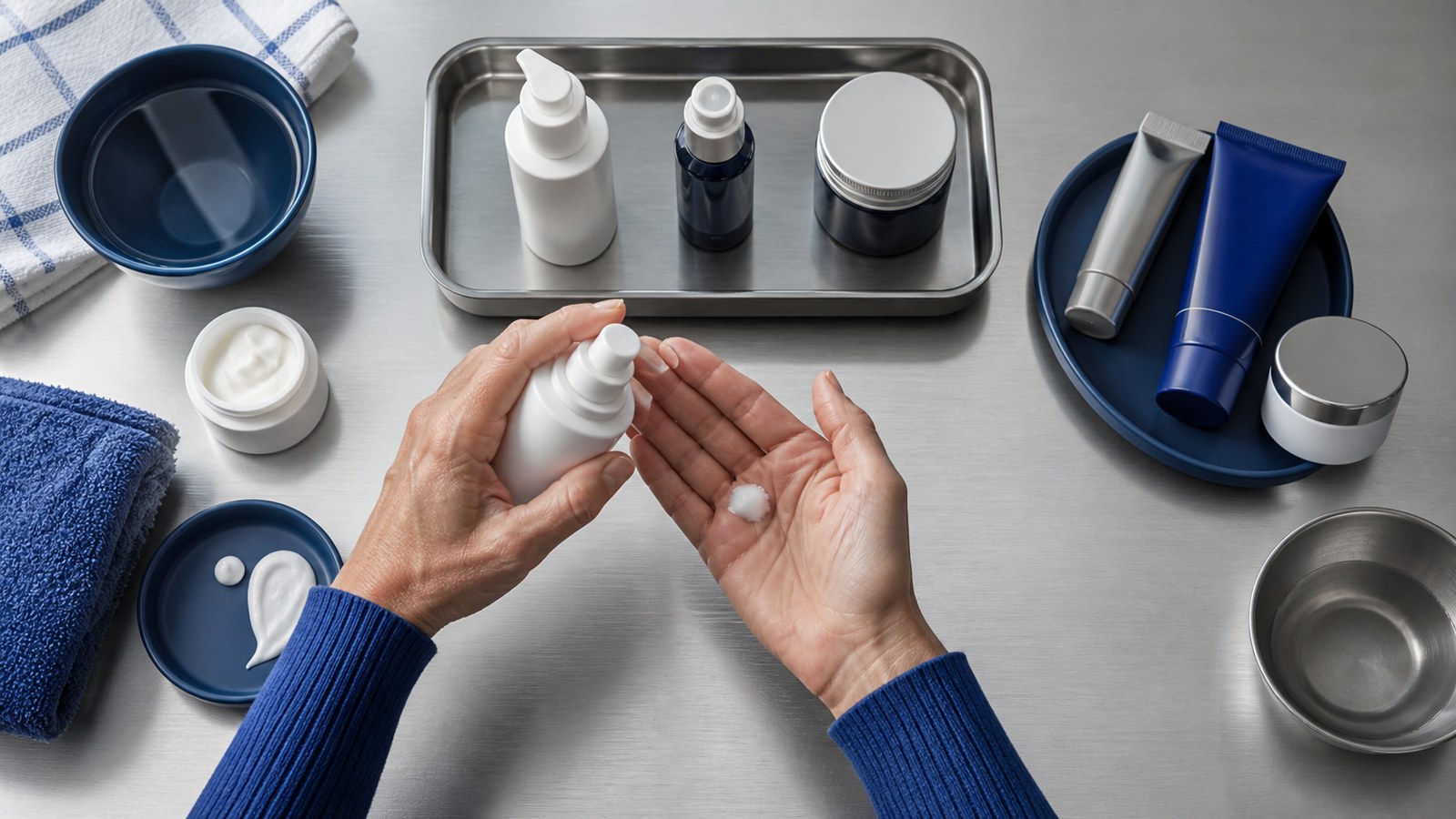
A practical daily skincare routine for women over 40 is to cleanse gently, use one optional treatment that your skin tolerates, moisturize, and apply broad-spectrum sunscreen every morning. At night, remove makeup and sunscreen, apply an optional treatment only when the skin is calm, and finish with moisturizer.
This structure matters more than reaching a particular number of products. Skin may become less comfortable with harsh cleansing, frequent exfoliation, or several strong formulas used together as the years pass. However, age does not automatically determine your skin type or require a separate product for every visible change. Your routine should fit your current comfort, available time, climate, and ability to follow it consistently.
The American Academy of Dermatology identifies gentle cleansing, moisturizing, and sun protection as basic skincare habits. For daytime protection, choose a broad-spectrum, water-resistant sunscreen rated SPF 30 or higher, apply it to exposed skin as directed, and follow its label for reapplication.
If you are wondering what the seven steps of a skincare routine should be, spread them across morning and evening rather than layering seven products at once:
- Cleanse your face in the morning when sweat, oil, or overnight residue needs removal, using lukewarm water and clean fingertips for one brief wash.
- Apply one optional morning treatment after cleansing when the skin already feels comfortable, using only the labeled amount and avoiding additional new treatments that day.
- Smooth moisturizer over your face and neck while the skin is slightly damp or feels dry, using one even layer that does not interfere with sunscreen.
- Apply broad-spectrum SPF 30 or higher as the final morning step whenever exposed skin will encounter daylight, covering often-missed areas such as the ears and neck.
- Remove makeup and sunscreen at night with one gentle, thorough cleanse, adding a second cleansing pass only when visible or noticeable residue remains.
- Apply one optional nighttime treatment to clean skin only when there is no current stinging, tenderness, or unusual dryness, following the formula’s directions for amount and placement.
- Finish with moisturizer at night after the treatment or use it alone on recovery nights, limiting the routine to this step when extra layers feel uncomfortable.
Toner, eye cream, facial oil, masks, and multiple serums are optional. None should displace comfortable cleansing, adequate moisturizer, or daily sunscreen. The FDA’s cosmetics information can also help you understand cosmetic labeling and marketing claims without assuming that every age-related claim requires another routine step.
Establish Your Over-40 Skin Baseline
Build a stable morning-and-night baseline before adding retinol, exfoliants, or several targeted serums. The simplest useful baseline consists of a gentle cleanser, a comfortable moisturizer, and daytime sunscreen. Keeping those steps consistent gives you a reference point for deciding whether a new product improves the process or makes it harder to maintain.
A workable baseline remains neutral during ordinary use. Cleansing should remove surface residue without leaving persistent tightness. Moisturizer should improve comfort without causing ongoing stinging. Sunscreen should layer well enough that you can apply it regularly instead of avoiding it because it pills, feels excessively heavy, or clashes with makeup.
Follow the same core process while you observe that baseline:
- Wash once at night with a mild cleanser whenever makeup, sunscreen, or daily buildup is present, avoiding hot water, rough cloths, brushes, and repeated scrubbing during that session.
- Apply moisturizer immediately after cleansing whenever the face or neck feels dry, using one complete layer before deciding whether another layer is necessary.
- Use sunscreen as the final morning skincare step whenever uncovered skin will receive daylight exposure, allowing earlier layers to settle first if immediate application causes pilling.
- Record one routine change at a time when introducing or removing a product, noting the product and application days without changing several other steps during the same period.
This baseline is especially important in a daily skincare routine for women over 40 because discomfort can otherwise be blamed on age when the actual routine contains too many simultaneous changes. Replacing a cleanser, moisturizer, sunscreen, and treatment together makes it difficult to identify which adjustment affected comfort.
Practical constraints should shape the process. On rushed mornings, cleansing when needed, moisturizing, and applying sunscreen are more valuable than squeezing in several optional layers. During cold, windy, or dry indoor conditions, a more cushioning moisturizer or fewer treatment nights may feel more manageable. In humid weather, one lighter moisturizing layer may sit better under sunscreen. Change texture or frequency before rebuilding the entire routine.
Budget provides another sensible boundary. Prioritize products that perform the essential jobs comfortably and can be replaced when needed. Add an extra step only when you can explain its purpose and monitor its effect. The broader daily skincare routine for women provides additional morning-and-evening guidance without requiring an age-labeled collection.
Patch-Test One Retinoid on Calm Skin
Patch-test one cosmetic retinoid if you want to add retinol or a related formula to your nighttime process. This step is optional, and it should not replace moisturizer or morning sunscreen. Wait until ordinary cleansing and moisturizing feel comfortable; introducing a retinoid while the skin is already dry or irritated makes the outcome difficult to interpret.
A patch test cannot guarantee that every part of the face will respond identically, but it may reveal an obvious problem before wider application. The American Academy of Dermatology recommends testing a new skincare product on a small area for seven to ten days. Product directions still control the amount and frequency, so do not apply a retinoid more often merely to accelerate the test.
Use a controlled introduction rather than changing the whole evening routine:
- Apply a thin layer to one small, discreet test area when that skin is calm and unbroken, repeating the labeled application for seven to ten days without testing other new products nearby.
- Move the retinoid to the face at night only if the test area remains comfortable, applying the labeled amount to clean, dry skin while avoiding the eyelids, lips, and sensitive creases.
- Space the first full-face applications apart when the label permits gradual use, starting with one or two nights per week and leaving several moisturizer-only nights between them.
- Add one layer of moisturizer before or after application when extra cushioning is needed, keeping the order consistent long enough to judge whether that arrangement remains comfortable.
- Continue the established morning routine without new extras throughout the introduction period, using the same cleanser, moisturizer, and sunscreen so another change does not obscure the outcome.
For example, someone who starts a retinoid and an exfoliating serum during the same week may notice flaking but have no clear way to identify which product, schedule, or combination caused it. Introducing only the retinoid while the baseline remains stable creates a more useful decision clue: if discomfort begins, there is one obvious step to pause.
More frequent use is not automatically a better fit. A schedule that repeatedly interferes with washing, moisturizing, sunscreen, or makeup is not serving the daily routine. The retinol daily skincare guide explains how this optional product can fit into an ordinary evening sequence, but the directions for the specific formula remain the application limit.
Scale Back Retinoids When Irritation Starts
Retinoid use can disrupt an otherwise comfortable routine when applications become too frequent, exfoliating products overlap, or the skin was not calm at the start. Increasing tightness, persistent stinging, visible flaking, unusual redness, or discomfort from a normally neutral moisturizer are practical signals to scale back.
Do not add another active product to counter the reaction. Pause the retinoid and set aside scrubs, exfoliating formulas, strong masks, and unfamiliar serums while the skin settles. Scrubbing flakes or repeatedly cleansing the area may make the daily process more uncomfortable.
Replace the failed schedule with smaller actions:
- Use only gentle cleanser and moisturizer at night whenever the skin feels tight, tender, or unusually dry, keeping optional treatments out until those basic steps feel comfortable again.
- Maintain sunscreen in the morning when it can be applied comfortably, avoiding newly introduced layers that could add another source of irritation.
- Restart one retinoid application on a calm evening only after normal cleansing and moisturizing no longer sting, following it with several treatment-free nights before reassessing comfort.
- Remove overlapping exfoliating steps from the schedule when the retinoid returns, keeping only one optional treatment in use until its effect is clear.
- Leave the retinoid out of the routine if repeated, cautious attempts continue to disrupt the baseline, avoiding further experimentation until qualified guidance is available.
Do not treat worsening discomfort as a required phase or copy another person’s application schedule. Individual formulas and routines differ. If several products were introduced together, return to the last comfortable baseline instead of continuing everything while guessing. The guide to routines that keep causing problems offers a focused method for simplifying overlapping steps.
See a Dermatologist for Persistent Skin Changes
Stop the suspected product and seek help from a dermatologist or another qualified professional when discomfort worsens, visible changes spread, the eye area becomes involved, or the problem continues after you return to a minimal routine. General skincare education cannot establish the cause of a persistent or escalating change.
Bring the product labels or a written list of your cleanser, moisturizer, sunscreen, makeup, treatments, and recently discontinued products. Note which items were introduced together and how often they were used. This provides a clearer routine history than relying on marketing terms or memory alone.
While waiting for guidance, do not restart the suspected retinoid, exfoliate uncomfortable skin, or add products in an attempt to cover the reaction. Continue only the cleansing, moisturizing, and sunscreen steps that remain comfortable. This page provides general education rather than individualized medical advice; stop experimenting and obtain qualified help if the problem persists or worsens.
Questions About Keeping the Routine Simple
Can I use vitamin C in the morning and retinol at night?
You may place them in separate routines if each product is comfortable on its own, but the combination is not required. Establish one product first while keeping cleanser, moisturizer, and sunscreen unchanged. Add the second only after the first fits comfortably. If dryness or stinging begins, pause the newer addition rather than changing both products at once.
How do I get a glass-skin look without adding many products?
A luminous appearance is influenced by lighting, makeup, natural texture, and temporary hydration, so skincare cannot guarantee a filtered finish. Support a smoother look by cleansing gently, moisturizing consistently, applying sunscreen, and avoiding repeated irritation. If you add a hydrating layer, use only one and remove it if it pills, stings, or makes the routine difficult to maintain.
Should I change my entire routine during winter or dry indoor weather?
Keep the basic order and adjust one variable first. Skip the morning cleanser when water alone is comfortable, apply moisturizer while the skin is slightly damp, or reduce optional treatment nights when dryness appears. Consider a more cushioning moisturizer only if the existing one no longer maintains comfort. Seasonal conditions rarely require replacing every step simultaneously.
Back to top