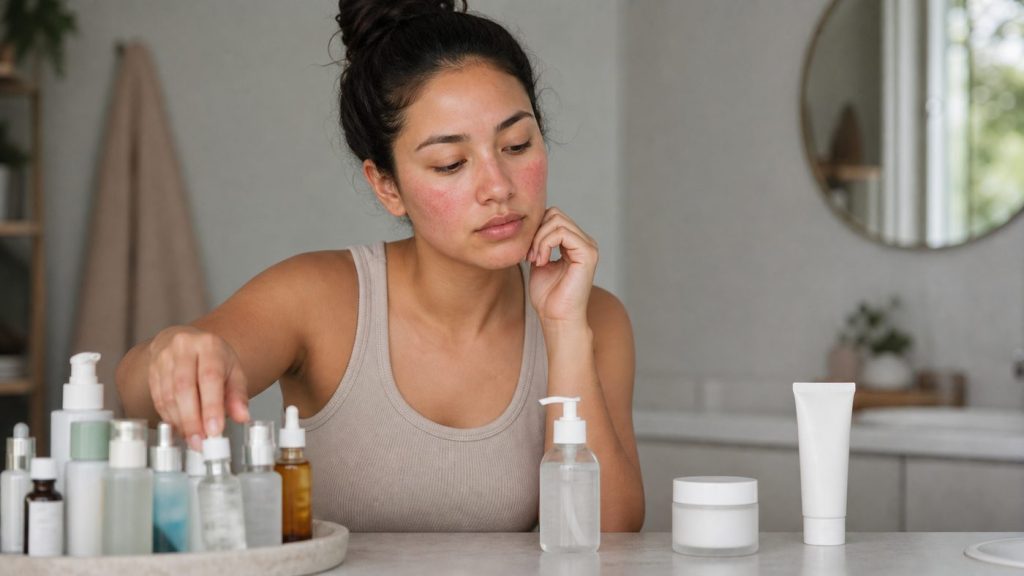
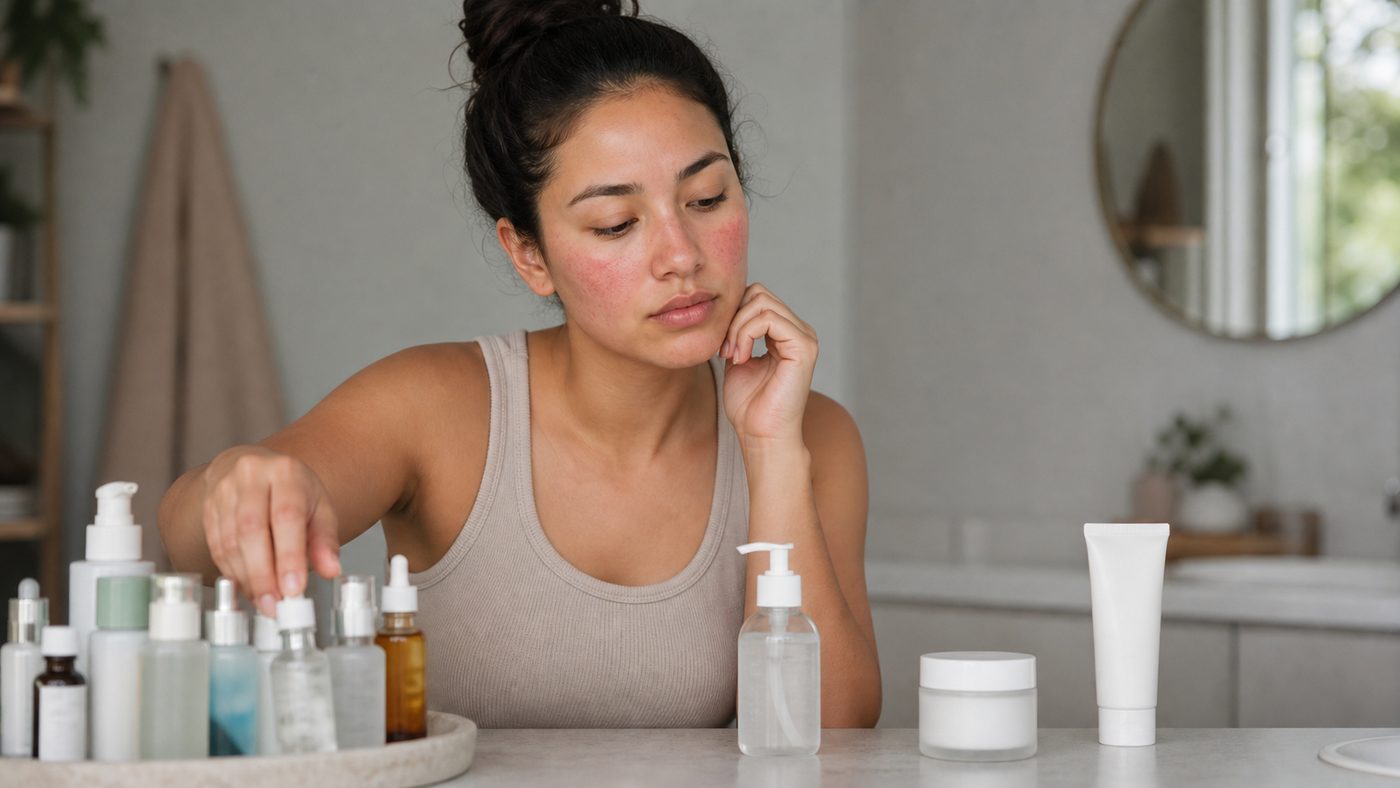
Understanding why daily skincare routine can keep causing problems starts with separating irritation, congestion, allergic reactions, application errors, and unrelated skin conditions. A routine may look sensible product by product yet become too harsh when frequency, quantity, and overlapping ingredients are considered together.
Disclaimer: This article provides general skincare education, not medical advice or a diagnosis. Seek professional care for severe, persistent, or unexplained symptoms.
The First Sign I Trust
When daily skincare routine keeps causing problems, stop adding fixes, return to the last stable setup, and test only the suspected trigger after the problem settles. Outside help is safer if burning, swelling, spreading redness, or unusual breakouts keep worsening after the newest change is removed.
Why a Routine That Once Worked Can Start Failing
Past tolerance does not guarantee that the same routine will always remain comfortable. Skin condition changes with weather, humidity, illness, hormonal shifts, medication use, shaving, friction, and exposure to dry indoor air. A treatment tolerated twice weekly may become irritating when used nightly, particularly if another active ingredient has also been added.
Total exposure matters more than the number of bottles. Two products may use different marketing language while performing similar exfoliating or acne-treating roles. The skin experiences the combined frequency and strength, not the labels as separate routines.
Application habits can also increase exposure. Applying extra product does not necessarily improve results, but it can spread a treatment into the eyelids, corners of the nose, or edges of the lips. These areas often become uncomfortable before the rest of the face. Damp skin may also increase penetration of some products, which can make an otherwise familiar amount harder to tolerate.
A routine can fail for mechanical reasons without causing skin injury. Sunscreen, moisturizer, or makeup may pill when several film-forming layers are applied heavily or rubbed before setting. Pilling without itching, heat, redness, or pain is usually a layering clue rather than proof that the skin barrier is damaged.
Finally, the routine may not be the sole cause. Acne, eczema, rosacea, contact dermatitis, folliculitis, and other conditions can resemble a product reaction. Persistent symptoms therefore should not be managed through endless product substitution.
What Timing, Location, and Sensation Can Reveal
These clues can narrow the possibilities, but they cannot confirm a medical diagnosis on their own.
- Burning during application: Immediate heat or stinging, especially after cleansing or applying a treatment, can indicate irritation. Rinse off the suspected product if the discomfort is significant, and do not treat persistent burning as a necessary adjustment period.
- Tightness followed by oiliness: Skin can feel stripped after aggressive cleansing while still becoming shiny later. Washing again may deepen the tight, flaky feeling rather than correcting the oiliness.
- Small bumps in heavily covered areas: Congestion may be related to a rich texture, residue, friction, or occlusion, particularly when bumps appear only where the product is applied most heavily.
- This pattern may call for different amounts on different facial areas rather than abandoning moisturizer altogether.
- Itching, hives, or swelling: These symptoms raise more concern for an allergic reaction than ordinary dryness. Stop the suspected product.
Swelling of the lips, tongue, or throat, breathing difficulty, or faintness requires emergency help; the NHS guidance on anaphylaxis explains why these symptoms need immediate treatment.
- Breakouts with widespread burning: Do not automatically label this purging.
Ingredients that affect skin-cell turnover can temporarily alter acne patterns, but intense burning, swelling, rash-like redness, or symptoms extending beyond usual breakout areas are not dependable signs of progress.
Timing provides additional context. Symptoms beginning within minutes of one application suggest a different problem from closed bumps developing gradually. Trouble that starts after increasing frequency points toward accumulated exposure, even when each individual application initially seemed tolerable.
Location matters too. Eyelid irritation may result from product migration or residue transferred by the hands. A rash that spreads beyond application areas, keeps returning, or appears without a clear change deserves clinical assessment.
A Calm Baseline Makes the Trigger Easier to See
After a mild problem appears, simplify the routine instead of replacing everything. The goal is to reduce unnecessary exposure while preserving basic care that remains comfortable.
- List every facial product and treatment used during the previous days or weeks. Include cleanser, moisturizer, sunscreen, makeup, shaving products, spot treatments, masks, and products that may transfer from the hair or hands.
- Pause the most likely optional trigger. A newly introduced active, a recent frequency increase, or an unnecessary exfoliating step is usually easier to suspend than every product at once. If several products cause immediate discomfort, stop them and seek advice rather than forcing a baseline that still burns.
- Inspect the suspected formula before considering reuse. Follow label storage and expiration guidance. Do not reuse a product with an unexpected odor, color change, separation, damaged package, or possible contamination.
- Consider a cautious patch test only after a mild reaction has completely settled. The American Academy of Dermatology recommends testing a skincare product on a small area twice daily for seven to ten days, following the product directions. This cannot guarantee that the entire face will tolerate the formula, and it should not be used to investigate a previous severe reaction.
- If reuse is reasonable, reintroduce only the suspected optional product. Follow its label, begin no more frequently than directed, and avoid restarting several paused treatments simultaneously. Stop if burning, itching, swelling, heat, or spreading redness returns.
This process does not require buying a complete replacement routine. If the underlying problem was excessive frequency, too much product, hot water, or duplicate actives, a more expensive formula would not correct the habit. Replacement becomes more reasonable when an essential product repeatedly stings, appears altered, cannot be used as directed, or consistently causes symptoms when other factors remain stable.
Why Adding More Treatment Often Prolongs the Problem
The mistake is not necessarily choosing one inherently unsafe ingredient. The routine became difficult to tolerate because strength, amount, application area, and weekly frequency accumulated.
Several well-meant responses can make the situation harder to interpret:
- Changing every product at once may remove the trigger, but it also prevents a clear comparison. Make only the changes needed for safety, then keep the tolerable baseline consistent.
- Continuing through significant burning can prolong irritation. Adaptation should not be assumed when discomfort is intense, worsening, or accompanied by swelling or a rash.
- Applying a thick layer everywhere may help dry cheeks but leave the forehead or nose congested. Adjust placement and amount if the product itself remains comfortable.
- Copying another person's multi-step schedule ignores differences in skin condition, climate, prescriptions, and previous exposure. Popularity cannot predict individual tolerance.
A short routine is easier to troubleshoot, but minimal does not automatically mean harmless. One remaining cleanser, moisturizer, or sunscreen can still be unsuitable, and simplification cannot treat every underlying skin condition.
When Different Areas of the Face Need Different Amounts
The whole face does not always need identical coverage. Dry cheeks may benefit from more moisturizer while an oily or congestion-prone T-zone needs a thinner layer. Sensitive areas around the eyes, nose, and lips may need treatment products kept farther away.
This creates a practical tradeoff. Applying less can reduce residue and pilling, but using too little sunscreen may compromise labeled protection. Instead of diluting sunscreen or mixing it with another product, allow preceding layers to settle, reduce unnecessary layers underneath, and follow the sunscreen directions.
Climate and schedule matter as well. A rich nighttime layer may feel comfortable in dry weather but become occlusive in humid conditions. A complex morning routine may pill when applied quickly. In that situation, removing a nonessential layer is often more useful than rubbing harder or adding powder to hide the residue.
Choose changes according to the dominant signal. Burning and redness call for less irritation exposure. Localized congestion calls for attention to placement, texture, and residue. Pilling without symptoms calls for smaller amounts, fewer layers, or more setting time. These signals can overlap, so avoid assuming that one adjustment explains everything.
Back to top