An oily skin type can feel obvious because shine is visible, touchable, and often more noticeable as the day goes on. The tricky part is that visible shine does not always mean the skin needs stronger cleansing, more drying products, or a complete change in everything used on the face. Sometimes it means oil is part of the skin's ordinary pattern.
Sometimes it means a product finish is too rich. Sometimes it means the skin has been handled too aggressively and is harder to read.
This is general cosmetic information, individual responses vary, and product labels take priority over broad guidance. The American Academy of Dermatology's skin care basics page at https://www.aad.org/public/everyday-care/skin-care-basics supports a simple, gentle approach to everyday skin care, including using products as directed and avoiding unnecessary irritation.
The goal is not to make the face look matte every hour. The goal is to read the pattern clearly enough to make fewer, better choices.
Answer: Oily skin overproduces surface sebum
A workable oily skin type starts with a simple baseline, one change at a time, and a clear way to judge whether that change helped. In practical skin-type language, oily skin produces more surface sebum than drier patterns, so the face may look shiny, feel slick, or make some cosmetic layers appear glossier than expected.
That does not mean the skin is dirty. It also does not mean every trace of oil needs to be removed. Surface oil is part of how this skin pattern presents itself, and the useful question is whether the shine is steady, repeatable, and visible under ordinary conditions.
Skin type labels are broad reading tools. Normal, dry, oily, combination, and sensitive-feeling skin are not fixed identities or complete descriptions of every day. A person with oily skin can still feel tight after washing. The cheeks can feel normal while the nose looks shiny. A lightweight product can still feel wrong, and a richer product can make shine look louder without changing the underlying type.
A calmer baseline comes from watching what repeats. If the forehead, nose, inner cheeks, and chin become shiny most days even when the morning has been ordinary, oil is probably part of the baseline. If the face only looks slick after a heavy cream, a glossy sunscreen, hot weather, or repeated washing, the label should stay flexible.
The scope limit is important: skin type explains a tendency, not every surface change. It does not prove that a product is good or bad by itself, and it does not require a harsh routine. The oily skin type label is useful only when it helps separate a predictable pattern from a temporary finish, reaction to friction, or overcomplicated product mix.
Midday shine on oily skin
Midday shine is often the first useful clue because it appears after the face has had time to move past the freshly washed stage. Immediately after cleansing, many skin types can look more matte. Several hours later, the face usually gives better information about its normal pattern.
For oily skin, shine commonly returns through the center of the face: forehead, nose, inner cheeks, and chin. The skin may look reflective in photos, fingers may pick up a slick feel after touching the nose, or makeup may separate faster in the T-zone. If the center gets shiny but the outer cheeks stay balanced or slightly dry, the pattern may be combination rather than evenly oily.
The timing matters because it helps rule out simple misreads. Shine that appears only after sweating is not the same as baseline oiliness. A dewy product finish can look like oil when it is really a reflective film. A heavy layer that sits on top of the skin can make the face look slick even if the skin's usual behavior is moderate.
A useful observation is ordinary and repeatable: check the face before washing, a few hours after washing, and later in the day. Do this without adding extra experiments each time. Bright bathroom lighting, a magnifying mirror, or a just-blotted face can distort the read. Normal room lighting and repeated daily patterns usually tell more than one dramatic moment.
For example, if the nose and forehead look shiny by lunch on quiet indoor days, after a gentle morning cleanse and the same light product layers, that pattern supports an oily or combination reading. If the same shine appears only when a rich moisturizer is used under sunscreen, the better conclusion may be that the product mix is too glossy for that area.
The decision detail is consistency. Oily skin keeps showing similar shine in similar places, even when the day has not been extreme.
Harsh cleansing can intensify oily shine
Harsh cleansing is a common overreaction because it gives quick feedback. The face looks matte, feels bare, and seems more controlled for a short time. Then oil returns, sometimes while the skin also feels tight or uncomfortable, and the cycle invites an even stronger wash.
That cycle can make oily shine harder to understand. The cause chain is straightforward: visible oil appears, cleansing becomes more forceful, the surface feels stripped, comfort drops, and the next shine looks like failure. But oil returning after cleansing does not prove the cleanser was too weak. It may simply mean the skin's baseline pattern is returning.
The real-world constraint is that most people judge cleansing by feel. Squeaky, tight, or polished can seem cleaner than soft and comfortable. For skin-type reading, that is not a reliable standard. A face can be clean without feeling dry. If the skin feels tight around the mouth, looks shiny again quickly, or seems uncomfortable under ordinary products, the routine may be creating confusion instead of clarity.
Long or complicated cleansing trends can also blur the read. Multi-step washing, hot water, extended rubbing, and repeated cleansing during the day add too many variables. They may remove surface oil for a moment, but they also make it harder to know what the skin would do with simple handling.
The outcome changes when cleansing is treated as a reset rather than a punishment. A gentle wash, used according to its label, gives the face a clearer starting point. From there, the useful evidence is not whether shine disappears forever. It is whether the same areas become shiny again while the skin still feels comfortable.
A common mistake is stacking every oil-control idea at once: stronger cleanser, more frequent washing, mattifying layers, and blotting until the surface feels dry. That approach may create a matte moment, but it leaves no clean signal. If the goal is to understand an oily skin type, fewer changes reveal more.
Blot, cleanse gently, then reassess shine
A small test works better than a full overhaul. The point is to observe what remains true when the face is handled gently and the number of variables is low. Blotting, simple cleansing, and later reassessment can show whether shine is a stable pattern or mainly a product-finish issue.
Use this limited approach for ordinary days:
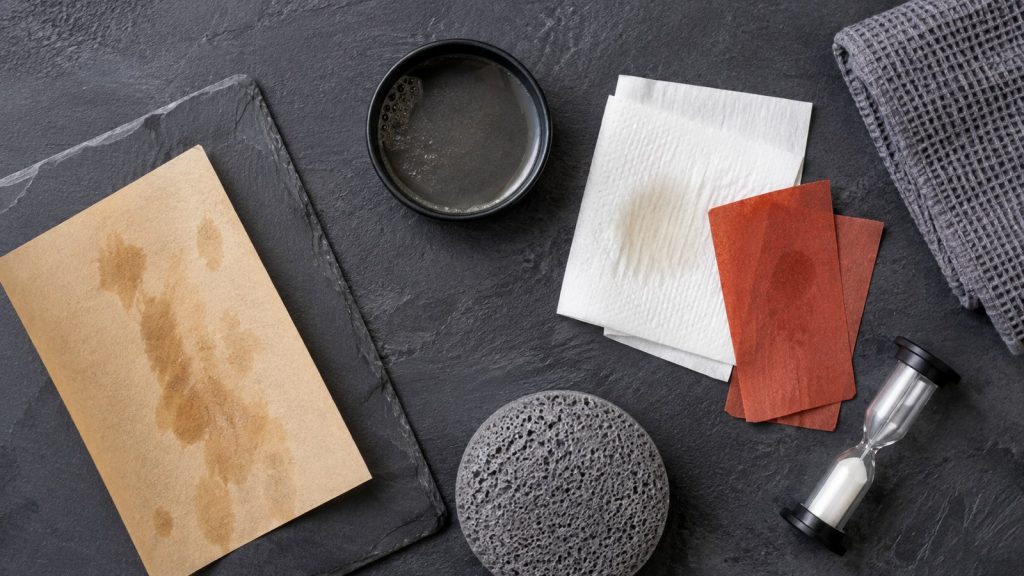
- Blot visible shine with a clean tissue or blotting paper when the surface looks slick, then stop once obvious oil transfer lessens.
- Cleanse when cleansing makes sense for the day, using a gentle product according to its directions instead of scrubbing longer for a drier feel.
- Rinse with lukewarm water, because hot water can encourage more rubbing and a stripped sensation.
- Keep the rest of the face routine steady, especially if the goal is to understand the skin rather than test several products.
- Reassess several hours later in normal lighting, not in the first minutes after washing.
This test works because it separates removal from observation. Blotting takes down surface shine without pretending to change the skin type. Gentle cleansing creates a cleaner starting point without forcing the surface to feel bare. Reassessment shows what returns after the face has settled.
What remains unchanged matters most. If the same areas become shiny again after light handling, the oily or combination label becomes more useful. If shine is dramatically different only after one particular texture, the issue may be product finish. If the skin looks shiny but feels tight, the better next move is usually to reduce drying steps before assuming more oil control is needed.
Do not turn the test into a challenge to stay matte all day. A little shine returning is information, not failure. The practical win is knowing whether the face can feel comfortable while its usual oil pattern shows up.
The U.S. Food and Drug Administration's cosmetics page at https://www.fda.gov/cosmetics explains the U.S. cosmetics category and supports why product labeling and intended use matter when choosing and using cosmetic products.
Persistent oily skin and product guidance
If oily skin remains oily after gentle handling, that may be the baseline rather than a problem to outsmart. The next decision is product fit: choose cosmetic textures and finishes that work with visible oil instead of forcing the face into a dry-skin standard.
A useful decision detail is how a product behaves several hours after application. If a product feels heavy, looks glossy, or seems to sit on the surface in the same areas that already shine, it may be too rich for those zones. If a lighter texture leaves the face comfortable without adding extra slickness, it may be a better cosmetic match.
Product labels still take priority because directions, cautions, and intended use belong to the specific product.
Stop changing several products at once when the skin becomes confusing. If cleanser, moisturizer, sunscreen, and makeup all change together, there is no clear way to know what affected shine, comfort, or finish. Keep the comparison narrow: one product type, one texture difference, one ordinary setting.
This is especially helpful for an oily skin type because finish changes can look like changes in oil production when they are only surface effects.
Should I try to make oily skin matte all day?
No, not as the main goal. Aim for skin that feels comfortable and behaves predictably. A completely matte face all day may require so much absorbing, rubbing, or drying that the skin becomes harder to read. If occasional blotting reduces visible shine and the face still feels comfortable, that may be enough for everyday cosmetic management.
When should I stop adjusting products?
Stop adjusting when changes make the pattern less clear. Hold steady if the same areas shine but the face feels comfortable, because that may be the normal oil pattern. Change direction only when one product clearly adds unwanted gloss, heaviness, pilling, or discomfort under ordinary use.
A practical limit also helps: heat, humidity, exercise, and reflective product finishes can all make shine look stronger. Those factors do not erase the baseline, but they can exaggerate it. Read oily skin by what repeats after gentle cleansing, simple product use, and enough time for the face to settle.
The calm answer is to treat shine as information. If it returns predictably in the same places, choose lighter-feeling cosmetic textures, follow labels closely, and avoid harsh correction. Oily skin does not need to be defeated to be managed well.
Back to top