Disclaimer: This guide on skincare troubleshooting why it happens is for general education only and is not medical advice or a medical diagnosis. If you have burning, swelling, a rash, eye pain, vision changes, or symptoms that keep coming back, talk with a dermatologist, doctor, or qualified clinician.
The Short Answer
The short answer: I look at the exact moment skincare troubleshooting why it happens goes wrong, return to the last setup that felt safer, and pause anything that turns annoyance into damage, pain, or a bigger mess. I keep one detail honest: the exact moment it failed, what I had changed, and the limit that made me pause before I turned one problem into three.
The reason I stopped arguing with the first signals
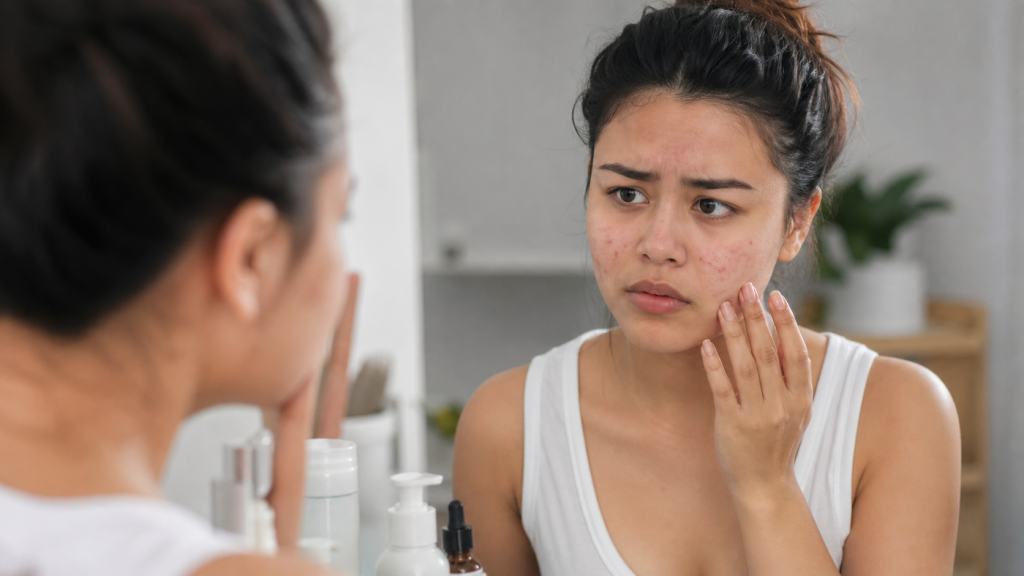
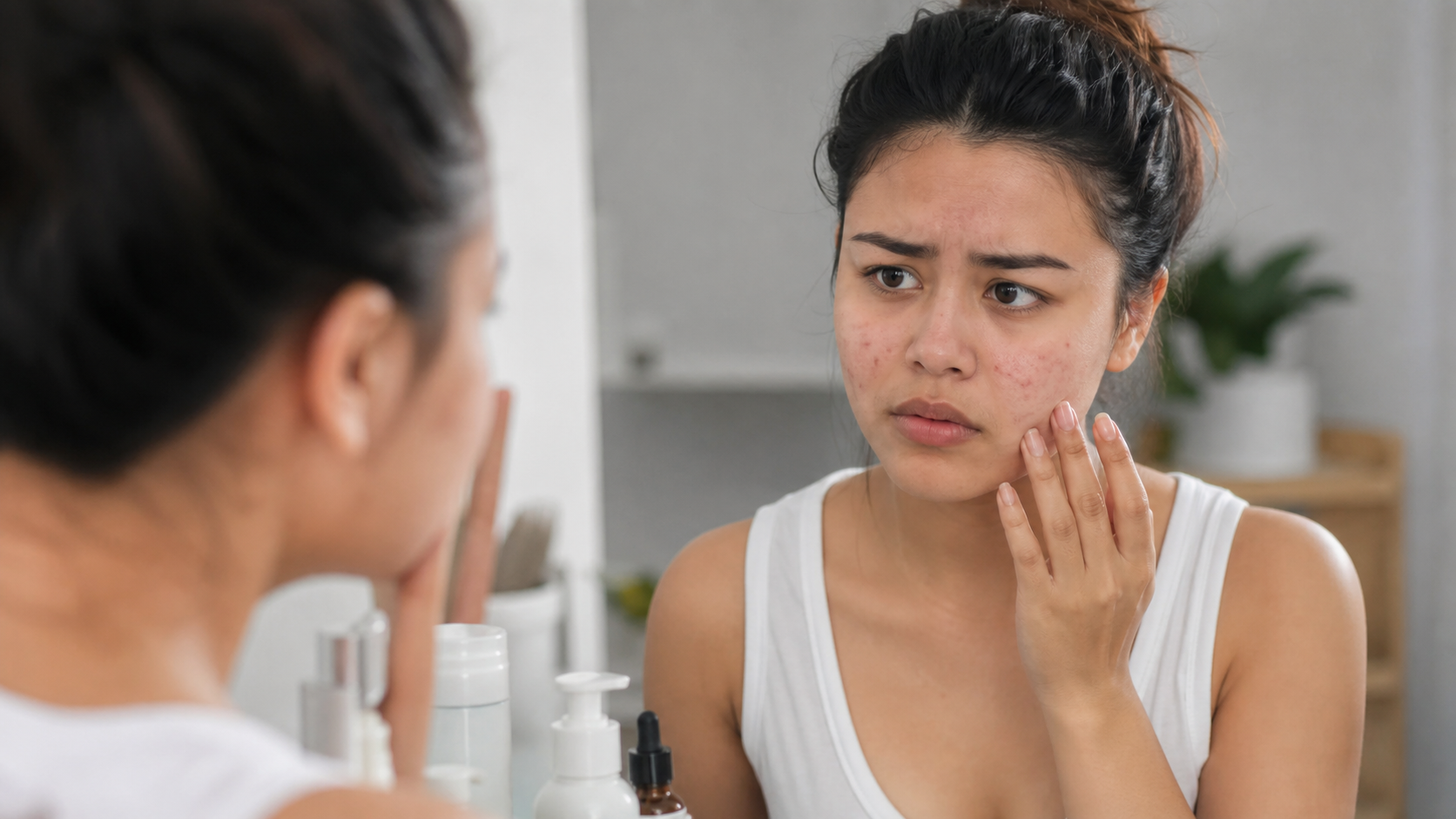
The messy failure that taught me the most was not dramatic at the start. It was a warm cheek after cleansing, a shiny tight forehead, and a little flaking around my mouth that I tried to explain away because I had just bought a new exfoliating toner and a stronger nighttime serum.
By day 10, I had stacked an acid toner, a brightening serum, and a retinoid-style product because each one seemed reasonable on its own. My face looked red under bathroom light, burned when water touched it, and felt like paper when I smiled. I told myself it might be purging because that sounded calmer than admitting I had overdone it.
That is where skincare troubleshooting why it happens gets messy: the skin gives visible signals, but the trigger can be timing, amount, frequency, weather, shaving, fragrance, rubbing, or a product combination rather than one villain ingredient. I now separate what I can see from what I changed. Redness after washing is not the same as a few clogged bumps along the jaw.
Stinging from plain moisturizer is not the same as mild dryness after a windy day. Patchy flaking around the nose after three active nights in a row points to a different kind of stress than one new pimple in a usual breakout zone.
I write it down in plain language because my memory becomes very generous when I want a product to work. I note when the heat starts, whether it fades or keeps climbing, whether tightness shows up before or after moisturizer, and whether the texture feels rough, swollen, waxy, or scraped. I do not label it as a diagnosis at home.
I describe the repeat I finally trusted: "cheeks hot for twenty minutes after cleansing," "chin bumps after heavy cream," "forehead rough after acid night," or "eye area stings even though I kept product away from it." That keeps me from arguing with my skin just because the bottle promised glow.
The physical limit matters too. In winter, my cheeks can sting faster because cold air and indoor heat make everything feel thinner. After a long day, I am more likely to rub cleanser too hard because I am tired and want the routine finished.
Once, I used a textured cotton pad with toner because I was impatient, and the next morning my cheekbones looked polished in the worst way: shiny, sore, and angry. The symptom was redness, but the likely trigger was not only the toner. It was toner plus friction plus a tired hand plus three active nights too close together.
The change I test while everything else stays boring
Day 1 is not when I try to outsmart the problem. I strip the routine back to the least dramatic version I can tolerate: gentle cleansing if I need it, moisturizer that has already been boring on my skin, and sunscreen in the daytime if I am going outside.
The concrete move is to change one thing and make everything else uneventful. If I suspect the new exfoliating toner, I remove that toner and keep the cleanser, moisturizer, and sunscreen the same. If I suspect frequency, I stop nightly use and do not replace it with a different active just because my routine feels empty.
If I suspect amount, I do not dab three products over the same irritated zone to "balance" it. I give my skin a quiet background so the next signal has a chance to be readable.
On Day 3, I look for direction rather than perfection. Is the burning after washing shorter? Does moisturizer still sting? Is redness staying in the same area or spreading toward the neck, eyelids, or corners of the mouth? I also check whether my skin feels tight at rest, not only when I make a face.
A calmer surface by Day 3 does not mean I add everything back.
It means the stripped-back setup is giving me useful information.
Day 7 gives me a better read on whether the routine is stable enough for a careful test. If I still feel heat from plain moisturizer or my face flushes after lukewarm water, I do not reintroduce an active.
If the skin feels mostly settled, I choose one product, use a smaller amount than my ego wants, and apply it away from the most reactive area.
A jawline patch at night has saved me from full-face regret more than once. It feels tedious, especially when the product was expensive, but wasting a week is better than losing another month to burning redness.
The mistake that made the next day harder
My worst next-day setback came from impatience disguised as consistency. After my face calmed slightly, I decided the problem must have been only the acid toner, so I used the stronger serum again on the same night I added a "soothing" mask. The mask tingled.
I kept it on because the tube said calming, and I did not want to waste what I had bought.
Ten minutes later, my cheeks felt hot under the mask. The next morning, washing my face felt like pressing warm water into a scrape.
The correction was embarrassingly plain: I stopped treating product categories as guarantees. A mask can still sting. A barrier cream can still feel wrong if the skin is already irritated. A familiar cleanser can burn if I use it after too many actives. I now judge by the sensation and timeline, not by the marketing role.
If a product burns on compromised skin, I remove it from the experiment even if it is supposed to be gentle.
Another mistake was adding friction when my skin needed less contact. I once used a washcloth to remove sunscreen because I felt grimy after a humid commute. My bathroom was hot, I was annoyed, and I rubbed harder around my nose where sunscreen collects. The next day the creases beside my nose flaked, and every moisturizer settled into the raw edges.
The awkward part is that a smaller routine can feel like doing nothing. I have stood at the sink with three bottles lined up, wanting the satisfaction of a full routine, while my cheeks were clearly telling me to quit for the night.
That is where I make the routine physically smaller: cleanser moved to the front, moisturizer beside it, everything active zipped into a pouch.
I do not rely on willpower at 11:30 p.m. When I am tired and resentful. I change the sink setup so the easier move is also the safer move.
When I reintroduce, the friction is not glamorous. I use the product on one small area, wait, and accept that the rest of my face may not get the "results" that week. I avoid testing right after shaving, after a windy outdoor day, or when I know I will wear a mask for hours and sweat under it.
If a tiny amount stings sharply, I rinse it off instead of trying to prove toughness. Skincare troubleshooting is less about bravery and more about not turning a small clue into a larger injury.
The line where I get help outside my own guesswork
I handle mild confusion at home only while the repeat I finally trusted is improving and the discomfort is limited. The line changes when pain, swelling, spreading redness, rash-like patches, crusting, oozing, eye-area irritation, or repeated burning shows up.
If plain moisturizer hurts, if sleep is interrupted because my face feels hot, or if the same reaction returns every time I try to rebuild the routine, I do not keep cycling through guesses. That is when a dermatologist, doctor, pharmacist, or qualified clinician can help sort risk from routine noise.
I also get help sooner when the reaction sits near the eyes or lips, when skin feels swollen rather than merely dry, or when I cannot tell whether a product reaction, eczema-like flare, acne treatment irritation, allergy, or another issue is involved. Home notes are useful here.
I can bring the timeline, product names, how often I used them, and photos from Day 1, Day 3, and Day 7. That gives the appointment more than "my skin hates everything," which is exactly how it feels when I am frustrated.
The boundary is not a personal failure. It is a safety limit. I can simplify, patch-test, reduce frequency, and remove friction, but I cannot diagnose a persistent rash in the mirror. I cannot make burning safe by renaming it purging. I cannot fix a damaged barrier by adding more active steps because I am scared of losing progress.
When the skin keeps getting louder, the responsible move is to stop experimenting and ask for help outside my bathroom sink.
The questions I wish I had asked sooner
I added a new serum three nights ago and the texture now pills under moisturizer. What should I test before blaming the whole routine?
I would remove only the newest layer first and keep the rest unchanged for a few nights. If the pilling stops, I re-test with less product or a longer wait time before deciding the ingredient itself is wrong for me.
My routine looks fine on paper but one layer feels tacky for hours, and I'm worried the formulas are clashing. Where do I start?
I start with texture and timing, not another active. I apply the watery step alone, then the cream alone, and watch whether the tackiness appears only when the two sit together.
The product color changed slightly after a few weeks, and I'm not sure if my skin is reacting or the formula changed. What would you do?
I would pause that product and compare the smell, color, and texture with how it looked when it was new. If oxidation or separation is obvious, I do not keep testing it on my face just to prove a point.
Quick Summary
- First clear warning sign: I pause the newest change when the label, routine, or product layer makes the repeat I finally trusted harder to read.
- Reset move: I go back to the last boring setup that stayed calm before testing one suspected trigger.
- Stop line: I stop guessing at home if discomfort spreads, daily use gets harder, or a qualified clinician is the safer next step.