Disclaimer: This guide on skin type basics quiz is for general education only and is not medical advice or a medical diagnosis. If you have burning, swelling, a rash, eye pain, vision changes, or symptoms that keep coming back, talk with a dermatologist, doctor, or qualified clinician.
Start With the Clearest Signal
Identify when skin type basics quiz goes wrong, return to the last stable setup, and pause any change that turns inconvenience into damage or pain. Outside help is safer if burning, swelling, spreading redness, or unusual breakouts keep worsening after the newest change is removed.
Why the First Clue Matters
The most useful clue is where oiliness or dryness appears and whether it returns under ordinary conditions. A shiny nose with dry, patchy cheeks points toward a zone difference. Shine covering the forehead, cheeks, nose, and chin is more consistent with an oily tendency. Persistent roughness across most areas supports a dry tendency.
Timing matters too. Skin that feels tight immediately after washing but becomes shiny later may be dehydrated, over-cleansed, oily, or some combination of those states. The immediate tightness does not prove a dry skin type, and later shine does not automatically prove that every zone is oily.
Ask two separate questions:
- Observe what your skin tends to do without strong correction, using memories from stable periods rather than judging it during a current flare or abrupt weather change.
- Observe what your skin is doing today, treating redness, heat, unusual flaking, and sudden discomfort as current-condition information rather than permanent identity.
This distinction explains why online quizzes sometimes feel wrong. In one public discussion about a casual beauty quiz, a commenter who considered their skin very dry received a normal result because an established routine kept their skin comfortable at midday.
That individual report does not establish how often quizzes fail, but it shows the weakness of asking only about skin as it looks while products are controlling it.
A quiz should therefore ask what was on your face before each observation. Moisturizer can soften dry patches. Powder can suppress visible shine. A rich ointment may leave a greasy film. A mattifying sunscreen may make an oily forehead look balanced for several hours. These are useful effects, but they can blur the baseline a quiz is trying to describe.
Sensitivity creates another source of confusion. Stinging after cleansing does not automatically mean dry skin. A person can produce substantial oil and still have a reactive or disrupted barrier. Likewise, acne or visible pores do not settle the question by themselves. Breakouts can occur across skin types, and pore visibility can be affected by oil, congestion, age, genetics, and lighting.
The label also has limits over time. Hormones, age, medications, climate, stress, and other factors can alter skin behavior. A peer-reviewed study of a Polish-language version of the Baumann Skin Type Questionnaire found reliability for certain measured dimensions, but the authors also noted that skin characteristics can vary with hormones, lifestyle, medications, stress, and climate.
That research, available through the National Library of Medicine, does not validate every short online quiz.
A result is more credible when the quiz names its classification system, explains how answers are scored, allows overlapping traits, and admits uncertainty. A polished result page alone does not make a questionnaire clinically validated.
Why the Usual Fix Can Backfire
Mislabeling skin often starts a cause-and-effect loop. A face looks shiny, so washing becomes more frequent or more aggressive. The skin then feels tight and develops patchy flaking, yet shine returns later. That sequence may be interpreted as proof of extreme oiliness, prompting even more cleansing.
The returning shine does not necessarily mean the cleanser made oil glands suddenly produce more sebum. Oil can become noticeable again as the day progresses while the surface remains dehydrated and uncomfortable. The outcome is the familiar contradiction of an oil-slick forehead beside tight or flaky cheeks.
The opposite error happens when every dry patch leads to heavier coverage. A thick occlusive layer may help some dry areas, but spreading it uniformly over an untested T-zone can leave residue, contribute to congestion, or cause sunscreen and makeup to pill. Pilling is not proof that skin is dry, oily, or "rejecting" a product.
It often reflects the amount applied, incompatible textures, incomplete drying between layers, or rubbing during application.
Weather adds another layer. A routine that feels balanced during a humid summer can become insufficient during a cold, dry month. Heat, outdoor activity, and humidity can also make the T-zone look oilier. If a label seems to change with the season, that does not mean the earlier answer was fraudulent. It means the label is conditional.
Problems escalate when several routine changes happen together. Switching cleanser, applying a heavier moisturizer, changing sunscreen, and adding more makeup coverage can create tightness, residue, shine, and pilling at once. At that point, the face is reporting the combined routine – not a clean reading of skin type.
Do not treat discomfort as a quiz challenge to push through. Stinging, heat, marked redness, or worsening patchy flaking suggests that skin condition deserves attention before classification. Continuing to wash aggressively or piling on more layers can make the outcome harder to interpret.
A Small Test Before Changing the Rest
- A bare-face observation can help answer "How can I identify my skin type?" but it should be gentle and limited. It cannot diagnose eczema, rosacea, contact dermatitis, acne, or another medical condition. It can only show how different facial zones behave during a short, controlled window.
- Choose a day when your skin is reasonably calm, the weather is not unusually extreme, and you have not just introduced a product. If your current routine already causes persistent discomfort, skip the experiment and seek qualified guidance rather than withholding supportive care.
- Keep your familiar routine unchanged for two or three comparable days when it is comfortable, limiting the observation to products your skin already tolerates.
- Wash your face once with lukewarm water and a mild familiar cleanser when cleansing is normally due, avoiding brushes, washcloth friction, and repeated washing.
- Leave the skin bare for about 30 to 60 minutes only if it remains comfortable, staying out of direct sun and ending the observation immediately if tightness, stinging, heat, or itching develops.
- Inspect the forehead, nose, chin, inner cheeks, and outer cheeks separately under ordinary light, limiting conclusions to visible shine, roughness, flaking, and comfort rather than pore size alone.
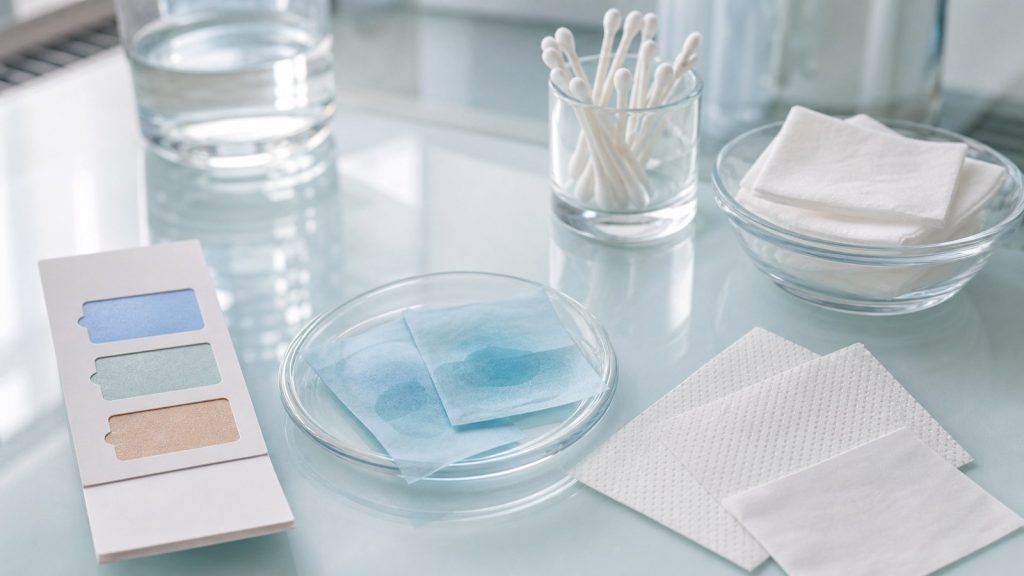
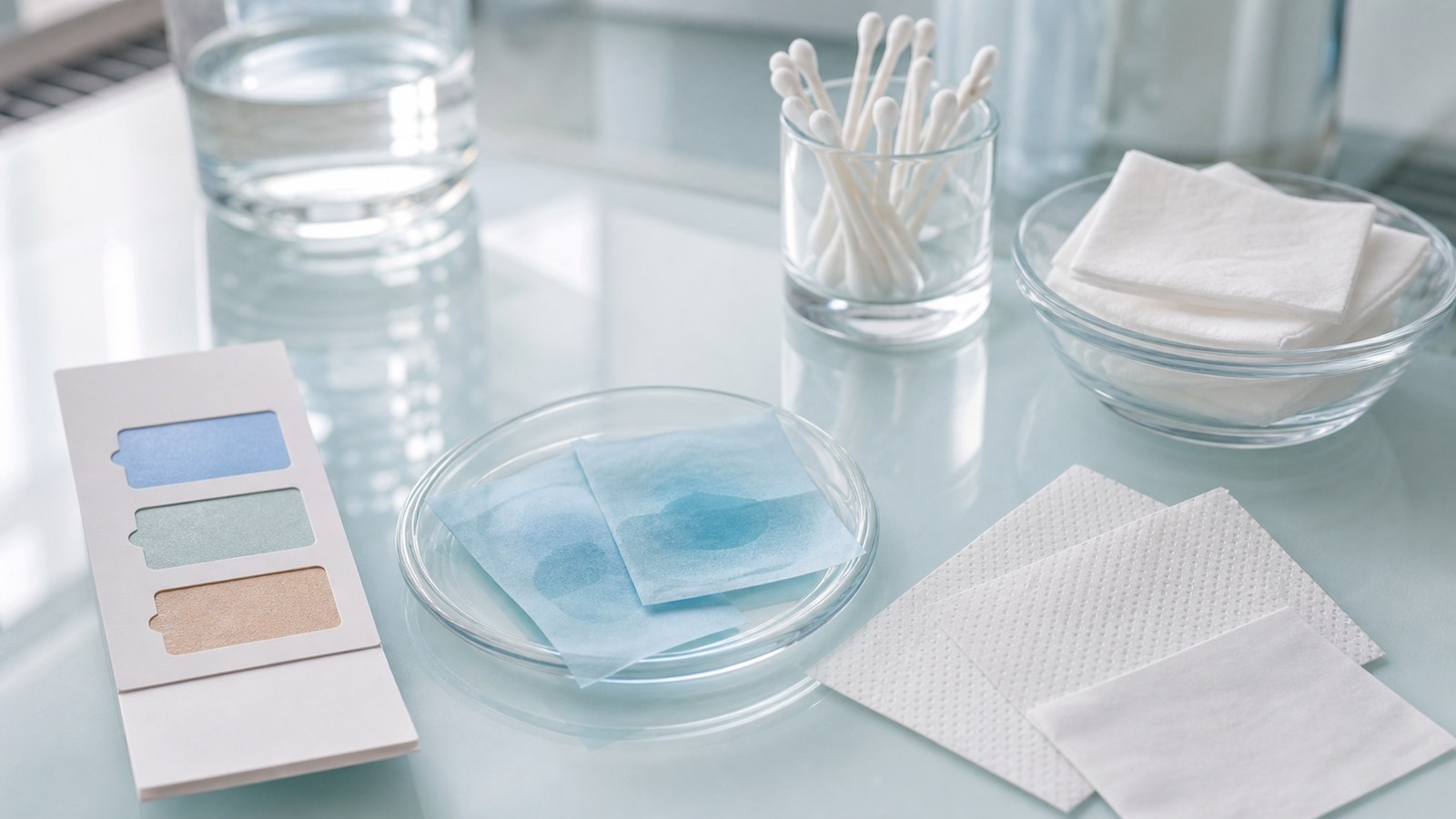
- Press a clean tissue lightly against several zones if shine is difficult to judge, avoiding rubbing and treating product-like residue or sweat as uncertain evidence.
- Apply your usual moisturizer and broad-spectrum sunscreen after the observation as conditions require, rather than leaving skin unsupported for the rest of the day.
- Repeat the observation on another ordinary day if the outcome was mixed, but abandon the exercise if repeated washing or bare-skin time makes your face uncomfortable.
Across observations, dry skin tends to remain tight, rough, or flaky in most zones. Oily skin tends to develop clear shine broadly. Combination skin produces a stable split, commonly with more oil through the forehead, nose, and chin than on the cheeks. Normal skin remains mostly comfortable without pronounced oil or dryness.
Record sensitivity independently. If your oil pattern looks combination but your face frequently stings with routine products, "combination and reactive" is more informative than replacing the combination label with sensitive.
The plain baseline after the quiz is intentionally modest. Keep cleansing gentle, use moisturizer according to comfort and zone, and apply broad-spectrum sunscreen when exposed to daylight. A lighter amount on an oily T-zone and a more supportive amount on dry cheeks may fit better than applying an identical heavy layer everywhere. Introduce unfamiliar cosmetics cautiously and follow their labels.
Patch testing can reduce uncertainty, although it cannot guarantee that a product will never cause a reaction.
Avoid changing the entire routine because of one quiz result. A skin-type label can guide texture and frequency decisions, but it cannot tell you that a particular cosmetic is safe, necessary, or suitable for a medical concern. Cosmetics are not individually preapproved for effectiveness by the FDA in the same way as drugs, and marketing terms do not constitute a diagnosis.
The FDA cosmetics resource explains the agency's role and consumer safety information.
When Outside Help Is the Safer Next Step
Stop trying to classify the problem at home if your face develops swelling, a spreading rash, persistent burning, significant pain, cracks, oozing, eye symptoms, or redness that repeatedly returns. A dermatologist or another qualified clinician can assess whether the pattern reflects a skin condition rather than an ordinary dry, oily, or combination tendency.
Professional guidance is also reasonable when every cleanser seems to leave tightness, every moisturizer appears to create congestion, or your skin alternates between marked oil and uncomfortable scaling despite a restrained routine. Bring a list or photos of what you apply, where you apply it, and when the problem appears.
Avoid adding more unfamiliar products while waiting, because extra variables can obscure the pattern and worsen irritation.
The American Academy of Dermatology advises consulting a board-certified dermatologist when you are unsure of your type before establishing a routine. That boundary is especially relevant when discomfort – not cosmetic preference – is driving repeated changes.
Back to top