The Answer: Cleanse, Moisturize, and Apply Sunscreen
A daily skincare routine for glowing skin should include gentle cleansing, moisturizer, and broad-spectrum SPF 30 or higher sunscreen every morning, followed by cleansing and moisturizer at night. An optional serum can support a smoother, more hydrated appearance. But it should be introduced separately and should never replace the core steps.
Glowing skin generally looks comfortable, hydrated, and smooth rather than scrubbed or excessively shiny. The American Academy of Dermatology recommends gentle cleansing, moisturizing, and sun protection as foundational skincare habits. These steps can support an even-looking complexion, but no routine can guarantee a particular degree of brightness or create the same finish for everyone.
Use this order in the morning:
- Cleanse your face gently with lukewarm water and a nonabrasive cleanser when you wake up oily, sweaty, or covered with overnight product residue, limiting routine washing to twice a day and after heavy sweating.
- Apply one optional serum in a thin layer after cleansing when it has already passed a patch test, using only the amount and frequency stated on its label.
- Smooth moisturizer over your face and neck while the skin is slightly damp when cleansing leaves it dry or tight, stopping after one even layer rather than stacking several moisturizers.
- Apply broad-spectrum SPF 30 or higher sunscreen to exposed skin before daylight exposure, following the product label for the amount, timing, and outdoor reapplication schedule.
Sunscreen should be the final morning skincare layer and should go beneath makeup. If a serum causes pilling under sunscreen, move the serum to the evening rather than applying less sun protection.
At night, remove makeup, sunscreen, sweat, and surface residue with a gentle cleanser. Use your fingertips, rinse with lukewarm water, and pat the skin dry. Apply a tolerated optional serum only on its scheduled nights, then finish with moisturizer.
Double cleansing is not mandatory. Add a separate makeup-removal step only when one gentle cleanse leaves visible makeup or water-resistant sunscreen behind. Repeated washing that makes the face feel tight is not a shortcut to a brighter appearance.
Keep Your Core Skincare Routine Consistent
A stable routine makes it easier to judge whether a new step actually fits. If the cleanser, serum, moisturizer, and sunscreen all change at once, you may not know which product caused dryness, stinging, pilling, or an unwanted change in texture.
Consistency does not mean forcing every product onto uncomfortable skin. It means maintaining a simple baseline and changing one variable at a time. Keep these three anchors steady:
- Use the same gentle cleansing method when it removes the day’s residue without leaving persistent tightness, adding another cleansing step only when visible makeup or sunscreen remains.
- Apply a familiar moisturizer after cleansing when the skin needs comfort, changing its amount or texture before adding several new hydrating products.
- Finish the morning with sunscreen when daylight exposure is expected, following the label instead of relying on makeup or an optional serum for sun protection.
The guide to building a good daily skincare routine offers additional help with basic product order. Written order can be especially useful when rushed mornings or late evenings make a long sequence difficult to remember.
A practical routine must also fit real schedules. If six evening products regularly lead you to skip cleansing altogether, shorten the routine to cleanser and moisturizer. Optional steps provide little value when their complexity prevents you from completing the basics.
Seasonal changes may justify a texture adjustment without requiring a complete rebuild. During cold or dry periods, use a more cushioning moisturizer when the usual one no longer prevents tightness. During hot or humid periods, choose a lighter texture if a heavy layer feels uncomfortable beneath sunscreen. Change one product within its existing slot, then keep the rest of the sequence stable.
Product labels should control frequency and timing because formulas are not interchangeable. The FDA’s cosmetics information explains the importance of following labels and reporting unwanted reactions. Check whether each formula is intended for daytime, nighttime, rinsing, or limited use before placing it in your schedule.
Do not assume a natural, botanical, or homemade product is automatically gentle. Fragrance, plant extracts, and improvised mixtures can still be uncomfortable. A labeled formula used in a simple sequence is easier to assess than a mixture with an unknown strength or storage life.
Patch-Test One Glow Serum Before Daily Use
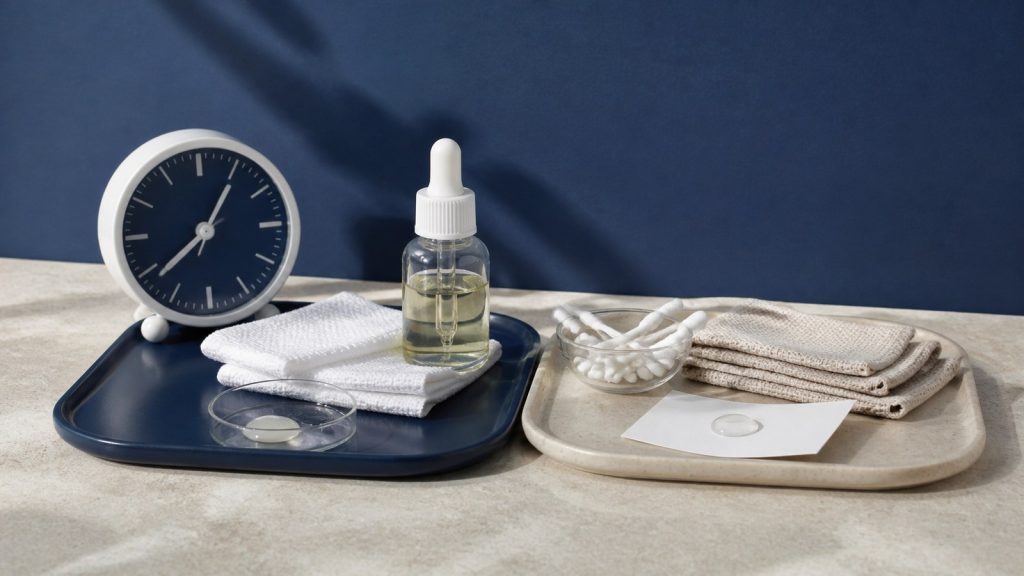
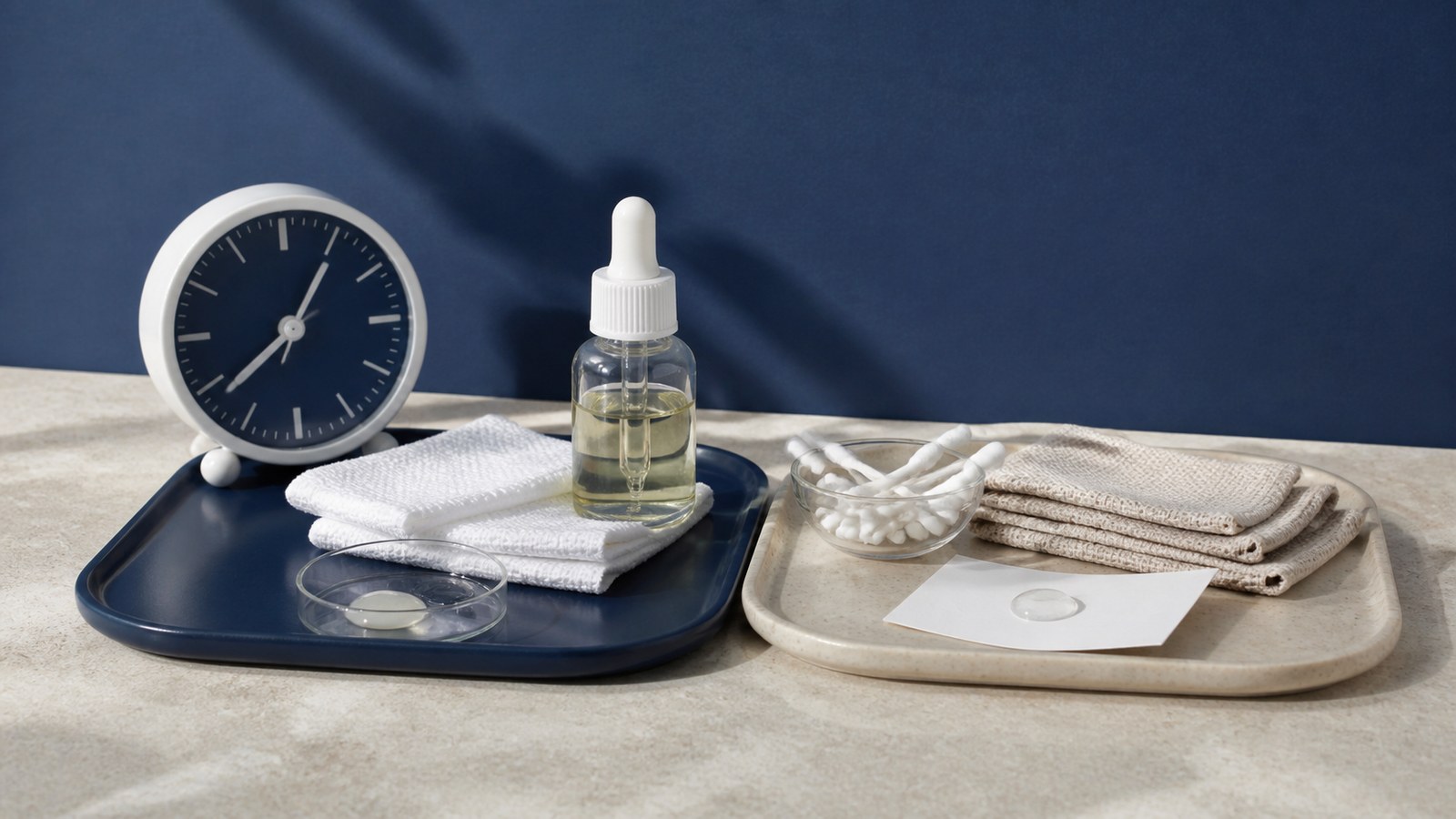
Patch-test one serum on a small area before applying it across your face, and keep every other part of the routine unchanged during the test. The American Academy of Dermatology advises testing a skincare product on a small area twice daily for seven to ten days, using the normal amount and thickness.
A rinse-off product should remain on the test area only for the time stated on its label.
Choose an area that can remain undisturbed, such as the underside of the arm or the bend of the elbow. A patch test cannot predict every response on facial skin, but it provides more useful information than introducing several unfamiliar formulas on the same night.
After a comfortable patch test, add the serum to only one routine slot. Use it in the morning only if its directions permit daytime application and it layers cleanly beneath moisturizer and sunscreen. Otherwise, reserve it for the evening.
If the label allows flexible frequency, start on alternate days rather than assuming daily use is necessary. Apply one thin, even layer and avoid introducing another serum, exfoliant, mask, or retinol product during the same period. Increase the frequency only when the serum remains comfortable and the directions allow more regular use.
This controlled introduction provides a useful decision clue: if the baseline routine feels comfortable but discomfort appears shortly after the new serum is added, pause that serum before changing the cleanser, moisturizer, or sunscreen. Changing the entire routine would make the cause harder to isolate.
Apply most thin serums after cleansing and before moisturizer unless the label gives different instructions. During the morning, sunscreen remains last. More serum is not necessarily better; excess product may stay on the surface, feel sticky, or roll into flakes beneath later layers.
Retinol requires particularly careful scheduling because directions and tolerance differ between formulas. The site’s retinol routine guide explains how to place it within daily care without treating nightly use as an automatic goal.
Reduce Exfoliation When Glowing Skin Turns Irritated
When a glow-focused routine begins causing persistent stinging, burning, redness, tightness, or flaking, reduce exfoliation instead of adding another product or scrubbing harder. Exfoliating acids, physical scrubs, cleansing brushes, retinol products, and frequent masks can become difficult to tolerate when several are used in the same schedule.
These clues do not identify a specific cause, but they do show that the current routine is not comfortable. Take the following smaller approach:
- Pause the newest optional product when discomfort began after its introduction, keeping it out of both morning and evening care until the skin is comfortable again.
- Stop overlapping exfoliating steps when more than one scrub, acid, retinol product, or exfoliating mask appears in the week, returning temporarily to the basic routine.
- Continue only familiar essentials when they remain comfortable, limiting the routine to gentle cleansing, one tolerated moisturizer, and morning sunscreen.
- Avoid introducing a replacement serum while the skin is unsettled, because another unfamiliar formula can obscure which step caused the problem.
Hot water, rough cloths, facial brushes, and repeated cleansing can make an already uncomfortable routine feel harsher. Use lukewarm water and your fingertips, and do not try to polish away visible flaking.
Once the skin feels comfortable with the basic sequence, decide whether the optional product is worth retrying. If you reintroduce it, use it less often than before and keep other exfoliating products out of that routine slot. Discomfort that returns after reintroduction is a clear reason to discontinue the product rather than repeatedly testing the same schedule.
The goal is not to endure irritation in exchange for faster brightness. A simple, comfortable process is easier to maintain than a cycle of heavy exfoliation followed by days of recovery. Visible glow should come from consistent hydration, gentle handling, and sun protection – not from making the skin feel raw.
See a Dermatologist for Persistent Skin Irritation
Stop the suspected product and seek guidance from a dermatologist or another qualified professional when irritation worsens, repeatedly returns, or remains uncomfortable after optional products have been removed. Individual assessment is also appropriate when you cannot identify which part of the routine is causing the problem.
While waiting for guidance, do not restart the suspected serum, exfoliant, or retinol product. Avoid covering the area with a new peel, scrub, fragranced oil, or homemade mixture. Keep the product packaging and ingredient list available so the professional can review exactly what was used and how its label directed you to apply it.
This page provides general skincare education rather than individualized assessment. If a reaction becomes worse or does not settle after simplifying the routine, stop experimenting with cosmetic products and seek qualified help.
Questions About Fitting Glow Steps Into Your Day
Can I skip morning cleanser if washing makes my skin feel dry?
A lukewarm-water rinse may be enough when there is no visible oil, sweat, or heavy overnight residue. If skipping cleanser improves comfort, continue cleansing thoroughly at night and observe whether moisturizer and sunscreen still spread evenly in the morning. Resume gentle morning cleansing when sweat, oil, or residue makes a water-only rinse insufficient, while keeping total routine washing limited.
Should my glow serum go before or after moisturizer?
Most thin, water-based serums go after cleansing and before moisturizer, but the label should determine the final order. A formula with an oil-like or balm texture may have different directions. If the serum pills or feels uncomfortable beneath moisturizer, move it to a separate evening slot instead of adding more product or rearranging several established steps simultaneously.
How can I keep sunscreen from pilling over my morning products?
Apply each product in a thin, even layer and avoid using more serum or moisturizer than needed to cover the skin. Give each layer time to settle before applying the next. If pilling continues, remove the optional serum from the morning routine or use a lighter moisturizer. Do not reduce the sunscreen amount below its label directions merely to preserve another layer.
Do I need the 4-2-4 rule to pursue a glass-skin look?
The 4-2-4 rule in skincare refers to a timed, multi-stage cleansing method, but it is not required for a smooth, reflective-looking finish. If your question is “How do I get glass skin?”, begin with gentle cleansing, consistent moisturizing, and sunscreen rather than prolonged washing. The glass-skin appearance is an aesthetic ideal influenced by natural texture, lighting, hydration, and cosmetics, so identical results are not guaranteed.
Back to top