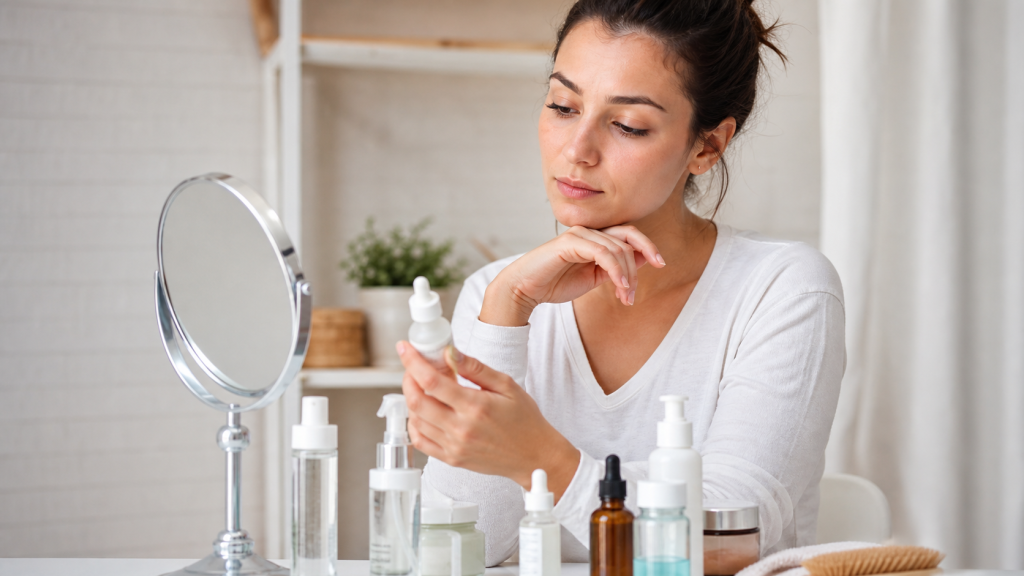
Disclaimer: This guide on skincare ingredients checklist before changing your routine is for general education only and is not medical advice or a medical diagnosis. If you have burning, swelling, a rash, eye pain, vision changes, or symptoms that keep coming back, talk with a dermatologist, doctor, or qualified clinician.
The Short Answer
The short answer: I would give a gentle skin routine about 2-4 weeks. But I would stop the same day if washing starts to burn, redness spreads, or bumps show up in places I do not usually break out. I keep one detail honest: the exact moment it failed, what I had changed, and the limit that made me pause before I turned one problem into three.
The waiting stretch I would actually respect
I would respect a 2-4 week window for a gentle, boring routine if the skin is merely uneven, flaky, or adjusting without sharp discomfort. I would not respect that window for spreading redness, swelling, welts, eye-area pain, or a burning washcloth feeling. Those are not patience problems.
The messy part is that ingredients do not behave like labels on a shelf. L-ascorbic acid can oxidize and turn darker orange or brown, especially with heat, air, and light exposure. Some water-light serums sink fast; some gum up under silicone-rich moisturizers. Oil-heavy balms can block the feel of a watery treatment if applied too soon.
Acne treatments such as benzoyl peroxide and salicylic acid can be helpful for some acne routines. But the American Academy of Dermatology acne resource at https://www.aad.org/public/diseases/acne is also a reminder that acne is a medical skin condition for many people, not just a product-selection puzzle.
I learned this through a routine that was about eight months old by July heat, with one serum opened in spring and kept near a steamy bathroom window. I had spent about $74 replacing products in two small orders because my cheeks looked dull and my nose felt greasy by noon.
The first morning, the vitamin C serum looked slightly tea-colored, but I told myself that was normal because the dropper still worked. The texture was thinner than I remembered, almost slippery instead of cushiony. By lunch, my sunscreen had balled into little gray crumbs around the sides of my nose. I blamed the sunscreen, then blamed my skin, then blamed humidity.
That false confidence cost me more than money. Makeup clung to the dry patches beside my mouth like dust on tape, while my forehead had a greasy residue that made me want to wash again. I tried to fix the texture by adding a hydrating serum under everything.
That created a new problem: water-based serum, aging vitamin C, moisturizer, and sunscreen formed a rolling layer that I could literally rub off with two fingers. I had not improved tolerance. I had built a stack with no spacing and no clue.
Here is the timing I would use now when the routine is not causing emergency symptoms:
- Use the stable base routine for 7 days if the skin is tight, flaky, or confused but not burning, and keep the cleanser, moisturizer, and sunscreen unchanged during that week.
- Wait 10-14 days after adding one active ingredient if the reaction is mild dryness only, and do not add another active during that window.
- Give a gentle moisturizer or sunscreen 2-4 weeks if the only issue is finish, shine, or minor pilling, because texture conflicts can settle once application amount and timing are adjusted.
This is also where those odd notebook labels can help if you already track routines. If a spreadsheet tab says skin type basics practical guide for skincare ingredients 84569b, skin type basics practical guide for skincare ingredients 0eb171, or any other messy file name, the label matters less than the repeat I finally trusted inside it.
The useful part is whether it records ingredient type, date opened, texture, color, application order, and the exact body signal.
Rushing creates a worse decision because ingredient irritation and formula incompatibility can look similar in the mirror. Pilling may be a layering problem. Stinging may be a barrier problem. New bumps may be acne activity, irritation, or a product that is too occlusive for that area.
If I change the cleanser, serum, moisturizer, and sunscreen in the same week, I lose the trail.
The mistake I made by ignoring early signals
The mistake that humbled me was not one dramatic product. It was stacking actives by day 10 because I was annoyed that the first change had not made my skin look smooth fast enough. I used a low-pH vitamin C in the morning, a leave-on acid at night, and then added a retinoid-style product on alternating nights because my chin still looked bumpy. I told myself the burning redness was purging. It was not a useful guess. My barrier collapsed into heat, tightness, and patchy flaking that made even plain water feel hostile.
The early signals were there:
- My cleanser started to sting along the cheekbones even though that cleanser had been fine for months.
- Redness spread beyond the original rough patch and stayed visible after the product dried.
- Bumps appeared high on my cheeks, where I do not usually break out.
- A serum that used to glide began catching on dry areas, like it was dragging over coarse paper.
I tried one failed adjustment before I admitted the stack was the problem. I cut the exfoliating acid in half but kept the vitamin C and the retinoid-style product because I did not want to feel foolish for buying them. That was the wrong kind of compromise.
The skin was already acting hot and overhandled, so leaving two strong variables in place did not protect anything.
I also stopped testing products on the whole face because I was too tired to keep losing the same argument with my own skin.
By Day 3, the clue was not perfect skin. It was reduced heat. My cheeks still looked dull and uneven, but the sink-water sting had softened. The tight film around my mouth was still there, yet it no longer felt like the skin would crack when I smiled. That told me the first goal was tolerance, not glow.
By Day 7, the baseline tension had settled enough that I could tell what remained: flakes at the nostril crease, a little congestion on the chin, and a moisturizer that felt too heavy under sunscreen. That was finally usable information. The skin was not magically fixed, but the noise had dropped.
The boundary I use now is blunt. If a product makes the face feel hotter each use, if redness expands instead of fading, if swelling appears, if the eye area reacts, or if discomfort continues after the product is washed off, I stop using that product and consider professional help. If symptoms keep returning, I do not keep experimenting around them.
The NIH National Library of Medicine at https://www.ncbi.nlm.nih.gov/ is a good place to read medical literature, but reading abstracts at midnight is not the same as getting a clinician to look at the skin.
The test note I keep before I change anything else
The note I keep is intentionally plain because complicated tracking makes me quit. I use one page, one week, and four lines per product. I write the product category, the active or key ingredient type, the date opened if I know it, and what happened on the skin within the next 24 hours. I do not score my face. I describe it.
A useful entry looks like this in normal language: morning, vitamin C serum, opened about three months ago, color now darker amber, applied after cleansing, slight tacky film, sunscreen pilled around nose, cheek redness by afternoon. Another entry might say: night, salicylic acid, used after cleanser, no moisturizer for 20 minutes, chin dry by bedtime, next morning flakes beside mouth.
The object of the note is not to become obsessive. It is to protect the next decision from a foggy memory. I have absolutely convinced myself that a serum was harmless because the first use felt fine, then later found that I had used it on three nights when I also skipped moisturizer.
The product may not have been the only issue; the timing and missing buffer mattered.
I keep these items unchanged while watching a new variable:
- Use the same cleanser at the same time of day if it does not sting, because a cleanser swap can change dryness, oil feel, and residue all at once.
- Apply moisturizer in the same amount and location if it calms the skin, because changing the buffer changes how strong the next active feels.
- Keep sunscreen steady during morning testing if it is tolerated, because sunscreen texture can expose pilling that is actually caused by the layer underneath.
- Avoid adding a second active for 7-14 days after the first active if dryness, tightness, or mild flaking appears, because the delay helps separate tolerance from impatience.
The reintroduction phase is where I usually want to cheat. After a calmer week, I see one stubborn clogged pore or one dull patch and want to fix it immediately. My worst setback happened on a Tuesday night after a long day when I had low energy and no patience.
I washed my face, noticed a rough patch near my chin, and applied an exfoliating acid even though I had used a strong vitamin C that morning. I also put moisturizer on too quickly, before the serum had settled, and the whole layer felt tacky and strange.
The next morning, the skin was not just dry. It was tight, shiny in the wrong way, and red around the mouth. The setback took a full week to undo. That ordinary Tuesday taught me that the calendar matters less than the total stack.
A 10% azelaic acid product, a vitamin C serum, a salicylic acid leave-on, benzoyl peroxide, exfoliating acids, and retinoid-style products may each have a place in some routines, but piling them together can overwhelm tolerance.
L-ascorbic acid and niacinamide are not automatically enemies in modern formulas, yet the combined routine can still be too much if low pH, dryness, friction, and timing are already working against the barrier.
If you keep files with names like skin type basics practical guide for skincare ingredients 6d4c64 or skin type basics practical guide for skincare ingredients 20bfda, use them to record sequence, not just product names. The boring detail that comes back to bite later is often date opened, color shift, wait between layers, or whether the product was used on damp skin.
Damp skin can make some products feel stronger. A heavy oil layer can make a watery serum sit oddly. A silicone-rich sunscreen can pill over a tacky serum even when neither product is bad by itself.
My observation window after touching one variable is usually 7 days for comfort clues and 2-4 weeks for overall routine feel, as long as there are no warning symptoms. I do not add another active just because the first two days were quiet. Quiet skin on Day 2 is not proof that the whole month will tolerate a heavier stack.
The line where I get help outside my own guesswork
I get help outside my own guesswork when the reaction is painful, spreading, recurring, or close to the eyes. Outside help means a board-certified dermatologist when possible, a primary care clinician, an urgent care clinician for concerning acute symptoms, or a pharmacist for questions about over-the-counter drug labels such as acne treatments and sunscreen drug facts. The FDA cosmetics page can explain how cosmetics are regulated, and the FDA over-the-counter medicine resource can help clarify why some acne and sunscreen products are treated differently from ordinary cosmetics.
If you are stuck and annoyed, the useful question is not whether the routine is good or bad. It is whether the current skin can tolerate the next thing you want to ask of it. That answer may change with season, barrier condition, shaving, waxing, sun exposure, medication changes, or a formula that has quietly degraded in the cabinet.
The questions I wish I had asked sooner
I added a new serum three nights ago and the texture now pills under moisturizer. What should I test before blaming the whole routine?
I would remove only the newest layer first and keep the rest unchanged for a few nights. If the pilling stops, I re-test with less product or a longer wait time before deciding the ingredient itself is wrong for me.
My routine looks fine on paper but one layer feels tacky for hours, and I'm worried the formulas are clashing. Where do I start?
I start with texture and timing, not another active. I apply the watery step alone, then the cream alone, and watch whether the tackiness appears only when the two sit together.
The product color changed slightly after a few weeks, and I'm not sure if my skin is reacting or the formula changed. What would you do?
I would pause that product and compare the smell, color, and texture with how it looked when it was new. If oxidation or separation is obvious, I do not keep testing it on my face just to prove a point.
Quick Summary
- First clear warning sign: I pause the newest change when the label, routine, or product layer makes the repeat I finally trusted harder to read.
- Reset move: I go back to the last boring setup that stayed calm before testing one suspected trigger.
- Stop line: I stop guessing at home if discomfort spreads, daily use gets harder, or a qualified clinician is the safer next step.