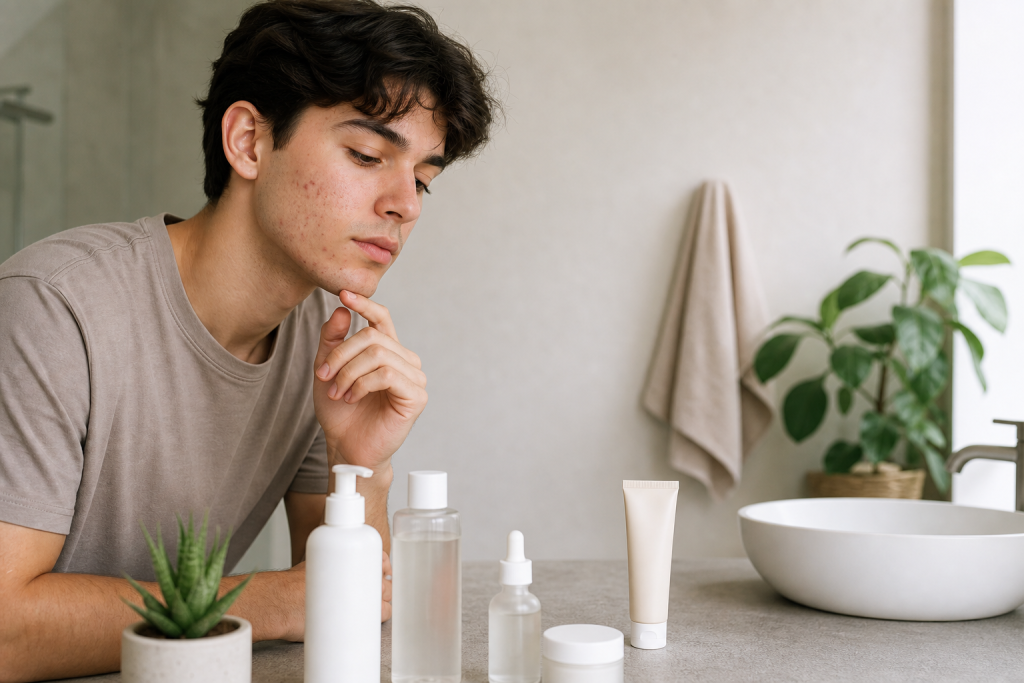
Disclaimer: This guide on acne breakouts mistakes beginners should avoid is for general education only and is not medical advice or a medical diagnosis. If you have burning, swelling, a rash, eye pain, vision changes, or symptoms that keep coming back, talk with a dermatologist, doctor, or qualified clinician.
The Short Answer: Acne Breakout Mistakes Beginners Should Avoid First
The biggest acne breakouts mistakes beginners should avoid are changing too many products at once, over-cleansing, skipping moisturizer, picking spots, using harsh actives daily too soon, and giving up before a routine has time to work. Start simple: gentle cleanser, non-comedogenic moisturizer, sunscreen, and one acne treatment introduced slowly while you track irritation and breakouts.
When you are new to skincare, acne can make every product feel urgent. The problem is that acne-prone skin often needs consistency more than complexity. A routine that is too aggressive can damage the skin barrier, causing stinging, dryness, peeling, and more visible redness-then it becomes harder to tell whether you are purging, irritated, or simply using the wrong product.
Prioritize these beginner fixes first:
- Do not start multiple acne treatments in the same week. Benzoyl peroxide, salicylic acid, retinoids, exfoliating acids, and drying spot treatments can all be useful, but layering them too quickly often leads to irritation. 2. Avoid washing your face until it feels "squeaky clean." Over-cleansing can strip oil and worsen tightness. A gentle cleanser once or twice daily is usually enough. 3. Do not skip moisturizer because your skin is oily. Dehydrated, irritated skin can look shinier and feel more reactive. Choose a lightweight, non-comedogenic moisturizer. 4. Stop picking, squeezing, or scraping breakouts. This increases the risk of scabbing, post-acne marks, and longer healing time. 5. Use sunscreen every morning. Acne marks can look darker and last longer with UV exposure. If sunscreen texture is frustrating, troubleshooting issues like pilling can help; see why sunscreen pills on my face. 6. Give products enough time. Many acne routines need several weeks of steady use before improvement is clear.
A beginner-friendly acne routine should be boring in the best way: cleanse, moisturize, protect in the morning, and use one treatment at night as tolerated. If you need a broader starting point, visit our acne and breakouts guide.
For reliable basics on skin care and acne, the American Academy of Dermatology offers helpful guidance through its skin care basics and acne resource. If your acne is painful, cystic, scarring, or not improving, consider seeing a board-certified dermatologist instead of continually switching products.
Key Takeaways
- Use real-world constraints, cost, fit, and risk signals before changing your plan for acne breakouts mistakes beginners should avoid.
- Prefer one clear change at a time so the outcome is readable.
- Pause the decision when the downside becomes clearer than the benefit.
Mistake 1: Starting Too Many Acne Products at Once
One of the most common acne breakouts mistakes beginners should avoid is changing everything at the same time. When a breakout appears, it is tempting to buy a new cleanser, exfoliating toner, acne serum, spot treatment, clay mask, and medicated moisturizer all in one week.
The problem is that your skin cannot tell you which product is helping, which one is doing nothing, and which one is causing irritation.
Acne-prone skin often benefits from active ingredients, but too many actives at once can disrupt the skin barrier. For example, combining benzoyl peroxide, salicylic acid, retinoids, strong exfoliating acids, and drying spot treatments can lead to redness, stinging, peeling, tightness, or new bumps that look like acne but are really irritation.
Once that happens, beginners may assume the products are "purging" the skin and add even more, making the cycle worse.
A better approach is to build a simple routine first:
- A gentle cleanser
- A lightweight, non-comedogenic moisturizer
- Daily broad-spectrum sunscreen
- One acne treatment introduced slowly
Introduce one new product at a time and give it enough time to show results. Many acne treatments need several weeks of consistent use before you can fairly judge them. The American Academy of Dermatology notes that acne treatment often requires patience and consistent care, especially when using over-the-counter or prescription options (AAD acne resource).
This also helps with product tolerance. If your skin starts burning or flaking after adding three new products, you will not know whether the cleanser is too harsh, the serum is too strong, or the spot treatment is overdrying. But if you add only one product, your skin's reaction is much easier to track.
For beginners, a simple rule is: keep the routine boring before making it powerful. Use your basic routine for a short adjustment period, then add one acne-focused product at night or every other night, depending on the instructions and your skin's sensitivity.
If you are using over-the-counter medicated acne products, read the Drug Facts label carefully; the FDA provides general guidance on using OTC medicines safely (FDA OTC medicines).
If breakouts continue, become painful, or leave dark marks or scars, it may be time to look beyond trial-and-error skincare. You can learn more about acne patterns and treatment basics in our guide to acne and breakouts, or speak with a board-certified dermatologist for a plan that fits your skin.
Mistake 2: Over-Cleansing, Scrubbing, or Trying to Dry Out Breakouts
When breakouts show up, it is tempting to wash more often, scrub harder, or reach for products that make the skin feel "squeaky clean." For many beginners, this is one of the most common this choice because it can make the skin feel tighter, redder, and less tolerant of treatment products.
Acne-prone skin still needs a healthy moisture barrier. If you cleanse too aggressively, use rough physical scrubs, or layer multiple drying products, you can strip away surface lipids and increase irritation. That irritation may not "cause" acne by itself, but it can make bumps look angrier, make active ingredients sting, and lead you to quit products before they have time to work.
A routine may be too harsh if you notice:
- Tight, shiny, or squeaky-feeling skin after cleansing
- Burning or stinging from products that used to feel fine
- Flaking around pimples, the nose, or mouth
- Redness that lingers after washing
- Breakouts that feel more inflamed after scrubbing
Instead of trying to dry out every blemish, aim for consistent, gentle cleansing. The American Academy of Dermatology recommends using skin care in a way that supports the skin rather than irritates it, and its acne resources also emphasize gentle care for acne-prone skin.
For most routines, cleansing twice daily is enough: once in the morning if needed, and once at night to remove sunscreen, makeup, sweat, and oil. If your skin feels dry or reactive, a simple non-scrubby cleanser and lukewarm water may be better than foaming, fragranced, or exfoliating washes used multiple times a day.
Try this adjustment:
- Pause abrasive scrubs, cleansing brushes, and harsh toners for two weeks. 2. Use a gentle cleanser and rinse with lukewarm water. 3. Pat dry instead of rubbing with a towel. 4. Apply a lightweight, non-comedogenic moisturizer before acne treatments if your skin stings easily. 5. Reintroduce active ingredients slowly, one at a time.
This matters especially if you are using benzoyl peroxide, salicylic acid, adapalene, or other acne-focused products. These can be helpful, but combining them with over-cleansing often reduces tolerance. For more routine guidance, see our broader guide to acne and breakouts.
The goal is not to make acne-prone skin feel dry. The goal is to keep it clean, calm, and consistent enough to tolerate the ingredients that actually help breakouts improve.
Mistake 3: Skipping Moisturizer Because Your Skin Is Oily
One of the most common this choice is assuming oily skin does not need moisturizer. It sounds logical at first: if your face already feels shiny, why add more product? But oil and hydration are not the same thing. Acne-prone skin can be oily on the surface while still being dehydrated, irritated, or weakened underneath.
This becomes especially important if you are using acne treatments such as benzoyl peroxide, salicylic acid, adapalene, sulfur, or prescription topicals. These ingredients can be effective, but they may also cause dryness, peeling, tightness, or stinging when your skin barrier is not supported.
When the barrier becomes irritated, your routine can start to feel impossible to tolerate-and some people respond by stopping treatment altogether.
A lightweight moisturizer helps reduce that cycle. The goal is not to make your skin greasy; it is to help your skin stay comfortable enough to keep using acne-fighting ingredients consistently. The American Academy of Dermatology includes moisturizing as part of basic skin care because a healthy barrier helps skin function better overall (AAD skin care basics).
For acne-prone skin, look for a moisturizer that is:
- Oil-free or lightweight, especially if you dislike a heavy finish
- Non-comedogenic, meaning it is formulated not to clog pores
- Fragrance-free, if your skin is easily irritated
- Barrier-supporting, with ingredients such as glycerin, hyaluronic acid, ceramides, niacinamide, or panthenol
- Simple, especially when you are starting acne treatments
A beginner-friendly approach is to apply moisturizer after cleansing and before sunscreen in the morning. At night, use it after your acne treatment unless your treatment instructions say otherwise. If your treatment is irritating, you can also use the "moisturizer sandwich" method: apply a thin layer of moisturizer, then treatment, then another light layer of moisturizer.
The mistake is not having oily skin-it is treating oily skin as if it needs to be stripped. Harsh cleansers, skipped moisturizer, and too many drying products can make your skin feel more reactive.
If you are unsure whether your breakouts are acne, irritation, or product-related congestion, review the basics in our guide to acne and breakouts and consider guidance from the AAD acne resource.
Moisturizer will not "cancel out" acne treatment when chosen well. Instead, it can make your routine more tolerable, reduce flaking, and help you stay consistent long enough to see results.
Mistake 4: Using Strong Actives Without Building Tolerance
One of the most common the core aspect is starting too many strong acne-fighting ingredients at full strength, every day, all at once. Benzoyl peroxide, salicylic acid, retinoids, and exfoliating acids can be helpful, but they can also trigger dryness, stinging, peeling, and a damaged-feeling skin barrier when introduced too quickly.
The goal is not to "attack" acne-prone skin. The goal is to build a routine your skin can tolerate consistently.
Why strong actives can backfire
Many acne products work by increasing cell turnover, unclogging pores, reducing oil, or targeting acne-causing bacteria. That is useful-but beginners often mistake irritation for progress. If your skin becomes red, tight, flaky, or burns when you apply moisturizer, your routine may be too aggressive.
Over-irritated skin can make breakouts look worse because the skin becomes more reactive. You may also stop using the product entirely, which prevents you from seeing steady results. The American Academy of Dermatology notes that acne treatment often takes time, and consistency matters; you can learn more from their acne resource.
A beginner-friendly way to introduce acne actives
Instead of adding several treatments at once, introduce one active at a time. This makes it easier to tell what is helping and what is causing irritation.
| Active ingredient | Beginner approach |
|---|---|
| Benzoyl peroxide | Start with a lower strength or short-contact use a few times weekly |
| Salicylic acid | Use 2-3 nights per week before increasing frequency |
| Retinoids | Apply a pea-sized amount at night, 2-3 times weekly at first |
| Exfoliating acids | Avoid using on the same night as retinoids when starting |
A simple rhythm might look like this: cleanse, moisturize, and use sunscreen in the morning; then use your acne active only a few nights per week at first. On off nights, focus on gentle cleansing and barrier-supporting moisturizer.
Do not stack actives too early
A beginner routine does not need a salicylic acid cleanser, exfoliating toner, benzoyl peroxide gel, and retinoid serum all in the same week. Stacking can increase irritation without improving results. If you want a broader overview of acne-prone skin care, see our guide to acne and breakouts.
Also remember that sunscreen matters when using retinoids or exfoliating acids, since these ingredients can make skin more sun-sensitive. If your sunscreen balls up over your routine, this guide on why sunscreen pills on your face can help.
Start low, go slow, and give each product several weeks before judging it. Tolerance is what turns a strong ingredient into a sustainable acne routine.
Mistake 5: Ignoring Sunscreen During an Acne Routine
Skipping sunscreen is one of the most common the practical outcome, especially when the routine includes exfoliating acids, benzoyl peroxide, or retinoids. Sunscreen does not "treat" acne the way a targeted acne product does, but it helps protect the skin barrier, supports more even-looking skin, and reduces the chance that post-breakout marks appear darker or linger longer.
Acne-prone skin often deals with more than active pimples. After a breakout flattens, many people notice red, brown, or purple-looking marks. UV exposure can make these post-breakout marks look more noticeable, particularly on deeper skin tones or skin that is already irritated. Daily broad-spectrum sunscreen helps limit that visible darkening while the skin naturally recovers.
Sunscreen matters even more if your routine includes.
- Retinoids, which can make skin feel drier or more reactive during the adjustment phase. – AHAs or BHAs, such as glycolic acid, lactic acid, or salicylic acid. – Benzoyl peroxide, which may cause dryness or peeling in some routines. – Professional treatments, including peels or acne-focused resurfacing.
The American Academy of Dermatology recommends basic daily sun protection as part of everyday skin care, and its acne guidance also emphasizes building routines that are consistent and tolerable rather than harsh or overly complicated (AAD skin care basics, AAD acne resource).
For acne-prone skin, look for a sunscreen labeled broad-spectrum SPF 30 or higher. Lightweight lotions, gels, fluids, or oil-free formulas may feel more comfortable if heavy creams tend to clog your routine. "Non-comedogenic" can be a helpful label, but texture and compatibility with your moisturizer, acne treatment, and makeup matter too.
If sunscreen pills, flakes, or balls up, the issue may be layering rather than the sunscreen itself. Apply acne treatments in a thin layer, let moisturizer settle, then apply sunscreen evenly. You can troubleshoot texture issues with this guide on why sunscreen pills on your face.
If you wear makeup, learning how to reapply sunscreen over makeup can help you stay protected without disturbing your routine.
The beginner mistake is treating sunscreen as optional because acne feels like the bigger problem. In reality, sunscreen helps your acne routine work in a calmer environment: less UV stress, fewer visible post-breakout marks, and better tolerance when using active ingredients.
Mistake 6: Picking, Popping, and Treating Every Bump the Same Way
One of the most common your next steps is treating every bump like it needs to be squeezed, scrubbed, or "dried out" immediately. Picking and popping may feel satisfying in the moment, but it can push inflammation deeper, tear the skin barrier, create scabs, and increase the chance of lingering post-breakout marks.
This also turns the routine into a product-tolerance problem. If you pop a pimple, then apply benzoyl peroxide, salicylic acid, retinoid, exfoliating toner, and a clay mask on top, your skin may react with burning, peeling, and more irritation. That irritation can make breakouts look worse, even if the acne treatment itself is not "bad."
Different bumps need different levels of care:
| Type of bump | What it often looks like | Beginner-friendly approach |
|---|---|---|
| Whitehead | Closed or pus-filled bump | Use a spot treatment or hydrocolloid patch; avoid squeezing |
| Blackhead | Dark clogged pore, usually flat | Try salicylic acid consistently; do not dig at it |
| Inflamed pimple | Red, tender, swollen bump | Reduce irritation, use acne treatment carefully, and avoid picking |
| Deep painful bump | Firm, sore, under the skin | Do not pop; consider professional guidance if frequent |
The American Academy of Dermatology acne resource notes that acne can involve clogged pores, bacteria, oil, and inflammation, which is why one aggressive habit rarely solves everything. A blackhead may respond to consistent pore-clearing ingredients, while an inflamed pimple may need a calmer approach that protects the barrier.
A better beginner rule: treat the skin, not just the bump. Cleanse gently, moisturize, use one acne-focused active at a time, and give it several weeks unless irritation is severe.
If you use over-the-counter acne products, follow the directions and avoid stacking multiple strong formulas at once; the FDA's OTC medicine guidance is a useful reminder to read labels and use products as directed.
For a deeper overview of breakout types and routine basics, see our guide on acne and breakouts. The goal is not to attack every pore-it is to reduce inflammation, support healing, and avoid turning one blemish into a longer-lasting skin problem.
Mistake 7: Expecting Overnight Results and Quitting Too Soon
One of the most common this choice is judging a routine after only a few days. Acne care rarely works overnight because pimples form beneath the skin before you see them. Even when a product is a good fit, it usually needs time to reduce clogged pores, calm inflammation, and prevent new blemishes from developing.
A beginner-friendly acne routine is less about constantly chasing the newest treatment and more about staying consistent with a gentle, tolerable plan. If you switch cleansers, serums, spot treatments, and moisturizers every week, it becomes almost impossible to know what is helping, what is irritating your skin, or what is triggering more breakouts.
For many over-the-counter acne ingredients, visible improvement can take several weeks. The American Academy of Dermatology Acne Resource notes that acne treatment takes time, and this is especially true for ingredients like benzoyl peroxide, salicylic acid, adapalene, and other exfoliating or pore-clearing options.
Some products may also cause temporary dryness or mild irritation while your skin adjusts, which is different from a true reaction that makes your skin burn, swell, or peel severely.
A realistic timeline may look like this:
| Time using a new routine | What you might notice |
|---|---|
| First 1-2 weeks | Less oiliness, mild dryness, or no major change yet |
| Weeks 3-6 | Fewer new clogged pores or slightly calmer breakouts |
| Weeks 8-12 | Clearer pattern of whether the routine is working |
That does not mean you should "push through" serious irritation. If your skin feels raw, stings with every product, or develops a rash-like reaction, simplify immediately. Use a gentle cleanser, moisturizer, and sunscreen, then reassess. You can also review broader skin-care basics from the American Academy of Dermatology to keep your routine supportive rather than harsh.
The better approach is to introduce one acne-focused product at a time, use it as directed, and give it a fair trial unless irritation becomes significant. Keep the rest of your routine boring: gentle cleanser, non-comedogenic moisturizer, and daily sunscreen.
If sunscreen texture is making you skip daytime protection, troubleshoot issues like pilling with this guide on why sunscreen pills on my face.
If acne is painful, scarring, widespread, or not improving after consistent care, it may be time to see a dermatologist. For more background on blemish patterns and treatment options, visit our acne and breakouts resource. Patience does not mean doing nothing-it means giving a sensible routine enough time to prove whether it works.
When to Adjust Your Routine or Ask a Dermatologist
Even a simple acne routine can need adjustments, especially when beginners add too many active ingredients at once or confuse irritation with "purging." If your skin feels worse after several weeks, the issue may not be effort-it may be product tolerance, an unsuitable routine, or acne that needs medical care.
Consider scaling back your routine if you notice stinging, burning, tightness, peeling, or redness that does not settle after a few days. A beginner-friendly reset usually means pausing exfoliating acids, scrubs, retinoids, and spot treatments, then using a gentle cleanser, lightweight non-comedogenic moisturizer, and daily sunscreen.
If sunscreen is causing texture issues or flakes, review common causes of product pilling, such as layering too much or applying products too quickly: why sunscreen pills on my face? causes, fixes, and prevention tips.
Ask a dermatologist or qualified healthcare professional if you experience any of these warning signs:
- Painful, deep, cystic bumps that linger or return in the same areas
- Acne that is leaving dark marks, pitted scars, or raised scars
- Sudden severe breakouts, especially if they feel unusual for your skin
- Persistent acne after 8-12 weeks of consistent over-the-counter care
- Severe dryness, swelling, hives, blistering, or a rash after using a product
- Breakouts that worsen with menstrual changes, medication changes, or other health symptoms
- Acne affecting your confidence, sleep, or daily life
Over-the-counter ingredients like benzoyl peroxide, salicylic acid, and adapalene can help many mild breakouts, but they can also irritate the skin if used too often or layered incorrectly. The American Academy of Dermatology Acne Resource explains that acne can vary in severity and may require prescription treatment when it is painful, persistent, or scarring.
You can also review general skin-care basics from the American Academy of Dermatology and safety information about over-the-counter products from the [U.S.
A helpful rule: do not keep pushing through intense irritation just because a product is popular. One of the biggest the core aspect is constantly changing products without knowing what is triggering the reaction. Introduce one new product at a time, patch test when possible, and track changes for a few weeks. For more acne-focused guidance, visit acne and breakouts.
Professional advice is not a last resort-it can prevent scarring, reduce trial-and-error, and help you build a routine your skin can actually tolerate.
Frequently Asked Questions
What matters most when deciding if an acne routine is working or irritating my skin?
The most important factor is whether your skin is improving without becoming more inflamed, dry, itchy, or painful. Beginners often mistake burning, peeling, or sudden widespread breakouts for "progress," but those can be signs of irritation or a poor product match.
Start with a simple routine, introduce one active at a time, and give your skin enough time to show a clear pattern.
For a broader overview of acne causes and care options, see our guide to acne and breakouts or the American Academy of Dermatology's acne resource.
How do I compare acne products or routines quickly?
First, remove anything that does not fit your skin's must-have needs, such as fragrance-free formulas for reactive skin, non-comedogenic moisturizers for clog-prone skin, or sunscreen that layers well. Then compare the routine by irritation risk, ease of use, price, and whether you can use it consistently.
A basic routine that you can tolerate usually beats a complicated one you abandon after a week.
When is the cheaper acne product good enough?
A lower-cost product is often good enough when it contains a proven ingredient, fits your skin type, and does not cause extra irritation or dryness. Many effective acne products use familiar ingredients like benzoyl peroxide, salicylic acid, or adapalene, but the right choice depends on your skin and tolerance.
Check product directions carefully, especially with over-the-counter treatments. The FDA has helpful information on OTC medicines and cosmetics.
What warning signs should make me pause a new acne treatment?
Pause if you notice severe burning, swelling, hives, intense itching, crusting, or worsening irritation that does not settle. Also be cautious if a product claims that aggressive peeling, stinging, or "purging" is always necessary. Some mild adjustment can happen with certain acne actives, but painful or escalating reactions are not something to ignore.
If symptoms are severe, persistent, or unusual for your skin, consider speaking with a dermatologist.
How much do reviews matter when choosing acne products?
Reviews can help when the reviewer has a similar skin type, acne pattern, climate, and routine. They are less useful when they only say a product "worked overnight" or "destroyed my skin" without explaining how it was used. Look for reviews that mention timing, other products in the routine, side effects, and whether the person used sunscreen and moisturizer.
Acne results are highly individual, so reviews should guide your shortlist, not make the final decision for you.
What details are easiest to miss in a beginner acne routine?
The easiest details to miss are product strength, how often to apply it, whether it conflicts with other actives, and whether your sunscreen or moisturizer is causing pilling or congestion. Layering too many treatments is one of the most common beginner mistakes.
If sunscreen texture is part of the problem, read why sunscreen pills on your face and how to reapply sunscreen over makeup without disrupting your routine.
What should I check after the first few uses?
Check whether your skin feels calmer, more irritated, oilier, drier, or more congested than before. Track one change at a time so you can tell whether the issue is the cleanser, treatment, moisturizer, sunscreen, or application frequency. If something fails, adjust the narrow problem instead of restarting your entire routine.
Final Thoughts
The biggest beginner mistake is changing too much too quickly. Keep your acne routine simple, introduce products slowly, watch for irritation, and choose the option your skin can tolerate consistently.
Related Angles Worth Checking
- Compare benzoyl peroxide vs salicylic acid for face acne against the skincare routine or product-tolerance question, especially cost, timing, usability, and risk.
- Compare features to look for against the skincare routine or product-tolerance question, especially cost, timing, usability, and risk.
- Compare affordable the core aspect review against the skincare routine or product-tolerance question, especially cost, timing, usability, and risk.